
If you want a quick, cold breakfast
If you want to mix muesli straight into yoghurt, quark, milk or a plant-based alternative, a cold option fits easily into your morning routine.


For a breakfast that doesn’t need heating, choose a wholegrain muesli you can mix straight into yoghurt, quark, milk or a plant-based alternative. Brinta wholegrain cereal breakfast, on the other hand, needs to be prepared hot. Compare mueslis of the same type per 100 g for fibre and sugars, and check the ingredients and allergens for the variety you choose. A crunchy texture or a claim about added sugar won’t, by itself, tell you which muesli is right for your morning.
If you want to mix muesli straight into yoghurt, quark, milk or a plant-based alternative, a cold option fits easily into your morning routine.
You want to see which grains are in the mix and how much fibre the nutritional information lists per 100 g. Voedingscentrum recommends comparing products on the same basis.
Before buying, you want to check which sugars and ingredients the variety contains and whether its allergen information meets your needs. Check the current packaging to be sure.
First decide whether you want a cold muesli you can mix straight away or have time to prepare a hot cereal breakfast. Then compare similar mueslis by checking the label; if you have an allergy, checking the exact variety takes priority.
| What to look for | What to check when buying | Who it matters to |
|---|---|---|
| Wholegrains and fibre | See which grains are listed as wholegrain and compare the fibre per 100 g in similar mueslis. | If wholegrains and fibre content are my starting point, I want to be able to compare them side by side on the label. This is the most important consideration for around 36% of consumers. |
| Preparation and texture | Check whether you can mix the muesli cold or whether the cereal breakfast needs to be prepared with heated milk. | On a busy morning, I want to choose between mixing something straight away and preparing a warm bowl. Preparation method comes first for around 29% of consumers. |
| Sugars and ingredients | For similar products, compare total and added sugars per 100 g; also read the ingredients list. | When choosing between plain, crunchy and fruit-and-nut varieties, I want to know what the wording on the packaging means for the ingredients. Around 21% of consumers prioritise this comparison. |
| Allergens | Check the allergen information and any ‘may contain’ statement on the packaging of the exact variety you’ve chosen. | If I need to avoid an ingredient, the information for that variety must be clear before I buy it. This is the main concern for around 14% of consumers. |
Texture doesn’t tell you how much sugar has been added to a muesli. Albert Heijn lists 9 g of added sugars per 100 g for AH Biologisch Krokante muesli naturel.
Compare a crunchy variety with a standard muesli of the same type using the nutritional information per 100 g, and check the ingredients.
A claim about added sugar isn’t the same as the figure for all sugars. A fruit-and-nut muesli, for example, may contain sugars from dried fruit.
Read both the total sugars in the nutrition table and the added-sugar information, and check which ingredients are in the mix.
Mueslis can contain different grains and nuts, and information about possible allergens can also vary between varieties.
Check the ingredients, allergen information and ‘may contain’ details on the packaging of your chosen product, even if you already know the brand.
Wholegrain cereal breakfast for anyone who prefers a warm bowl to cold muesli.
Crunchy muesli for anyone who’s mainly looking for that texture.
Own-brand range with both standard and crunchy wholegrain muesli.
Own-brand range that includes organic wholegrain muesli with fruit and nuts.
Lidl brand with an organic muesli for a cold breakfast.
ALDI own-brand range with wholegrain muesli and separate crunchy varieties.
The two Quaker Cruesli varieties are suitable for a cold muesli breakfast; Brinta is a wholegrain alternative for anyone who can prepare a warm bowl. Whichever option you choose, check the exact ingredients, nutritional information and allergen details.
 No image available
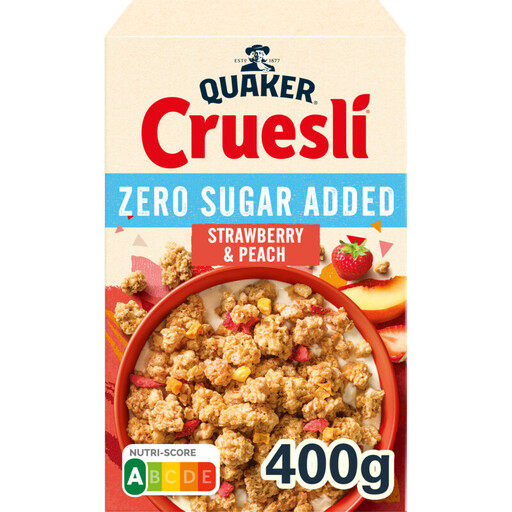
A Cruesli variety for anyone looking for cold muesli with strawberry and peach.
Check the current packaging for nutritional information and details of cereals containing gluten, milk and nuts if allergens are important to you.
 No image available
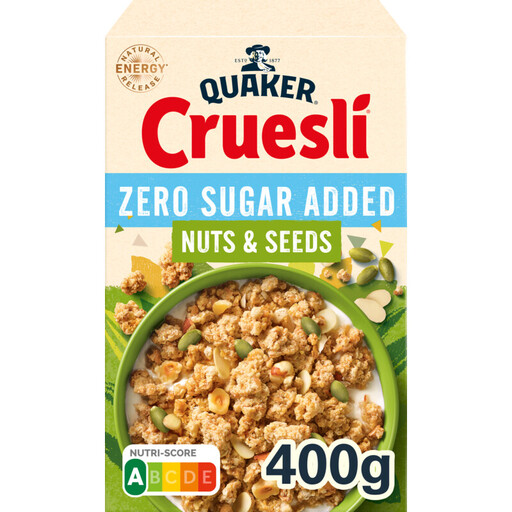
A Cruesli variety for anyone who wants nuts and seeds in a cold breakfast.
Check the current allergen information carefully: the available details about ingredients and milk allergens aren’t clear. Also look out for information about nuts and cereals containing gluten.
 No image available
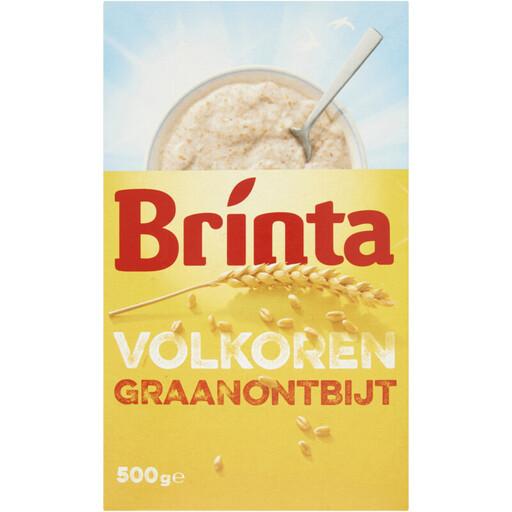
This hot cereal breakfast is suited to mornings when you have the time and facilities to prepare a bowl; it isn’t a cold muesli you can mix and eat straight away.
The variety described by Albert Heijn is made from 100% wholegrain wheat and lists 10 g of fibre per 100 g. The preparation uses 35 g of product with 250 ml of warm milk. Check the current packaging for allergens, including possible cross-contamination.
Check the product name and ingredients list to see which grains are described as wholegrain. Voedingscentrum defines wholegrain cereal products as products made from the entire grain; for a muesli mix, check the individual grains and the nutritional information too.
Start by comparing similar mueslis per 100 g. This lets you compare their nutritional values on the same basis; then consider the portion you actually eat.
No. The total sugars figure can also include sugars that occur naturally in the ingredients. Albert Heijn lists 0 g of added sugars and 0,7 g of total sugars per 100 g for AH Biologisch Muesli volkoren; for each variety, check both figures alongside the ingredients list.
Only decide by checking the current packaging for the exact product. The mueslis in this article may contain cereals containing gluten or nuts; check the ingredients as well as the allergen and ‘may contain’ information.
Follow the storage instructions on the packaging you’ve chosen and seal the bag properly after use. The AH and Jumbo product pages described recommend storing the products in a cool, dry, dark place.