What should you look for when choosing?
Start with the ingredients list and nutritional information per 100 g. Then check that the chosen variant suits all your guests and that the quantity is practical for your stay.
| What to consider |
What to check when buying |
Who is this most important for? |
| Wholegrain base and fibre |
Check which wholegrains appear near the top of the ingredients list and compare the fibre per 100 g in similar products. |
If I’m eating the same granola for several mornings, I want to know whether wholegrains really form the base. Around 40% of consumers prioritise a wholegrain base and fibre. |
| Sugars |
Read the ingredients list alongside the ‘of which sugars’ figure per 100 g; don’t rely on wording on the front of the pack alone. |
For a simple breakfast, I want to choose a flavour with no added sugar while still being able to compare the sugar content. Around 30% of consumers prioritise this consideration. |
| Allergens |
Check the allergen information on the exact pack, including any ‘may contain’ statements. |
When I’m buying for a group that includes people with allergies, the chosen variant needs to be suitable for everyone. This is the main concern for around 20% of consumers. |
| Supplies and storage |
Match the pack weight to the number of breakfasts; also check the best-before date and storage instructions. |
For a short stay, I want to buy enough breakfast without taking lots of leftovers home. Around 10% of consumers prioritise planning their supplies. |
Brands to consider
Always compare the exact variant: ingredients, nutrition values and allergens can differ within the same brand.
Zonnatura
Zonnatura Classic Crunchy lists wholegrain spelt flakes and wholegrain oat flakes as its main ingredients.
- The ingredients list clearly shows the wholegrain base of this variant.
- According to Zonnatura’s product information, Classic Crunchy contains wheat, gluten and soya, and may contain nuts, milk and sesame.
Jumbo's
According to Jumbo, Jumbo's Granola Nuts combines wholegrain oat, spelt and barley flakes with nuts and seeds.
- For this variant, Jumbo lists 19 g of fibre and 2,8 g of sugars per 100 g.
- Check that the nuts and gluten-containing grains are suitable for all your guests.
Quaker Cruesli
Quaker Cruesli is a crunchy breakfast cereal worth comparing with granola, not another name for the same product category.
- For Quaker Cruesli Nuts 0% Added Sugar, Joybuy’s product information lists wholegrain oat and wheat flakes, 20 g of fibre and 3,5 g of sugars per 100 g.
- This nut variant contains gluten-containing grains and nuts; check the current allergen information on the packaging.
Albert Heijn
Albert Heijn’s range includes products such as AH Granola Nuts and AH Granola Nuts 0% Added Sugar.
- The different variants give you the opportunity to compare flavours, packaging and labels.
- Assess the ingredients and nutrition values for each variant; a range does not have one set of nutritional values.
Golden Bridge
ALDI sells Golden Bridge granola in 500 g packs, including variants with nuts and seeds or red fruits.
- The pack weight is useful to consider when planning breakfast for several mornings.
- Before choosing this variant for a group, check the wholegrain ingredients, nutrition information and allergens on the exact pack.
Breakfast cereals at Joybuy
These products are mostly Quaker Cruesli variants, alongside one crunchy muesli with nuts. You can compare them with granola as breakfast options, but they are not all granola; check the exact category, ingredients and allergens if that distinction matters to you.
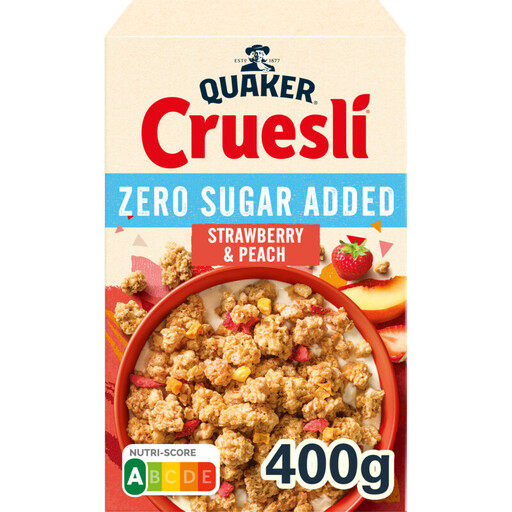 Image unavailable
Quaker Cruesli Zero Sugar Added Strawberry & Peach – 400 g
A fruit-flavoured option to consider for several holiday breakfasts. Compare the nutrition information per 100 g and, if anyone has an allergy, check the current packaging.
Pack size: 400 g.
View at Joybuy
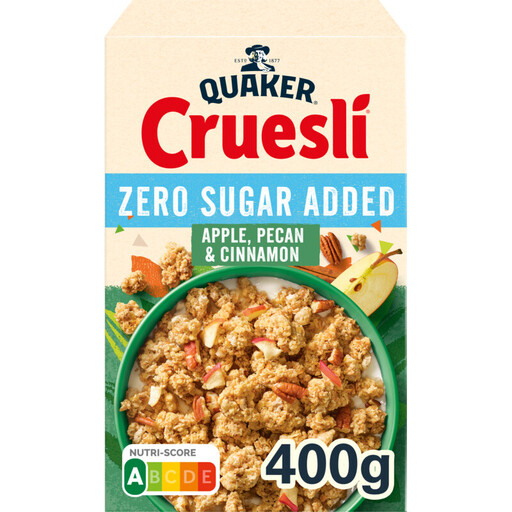 Image unavailable
Quaker Cruesli Zero Sugar Added Apple, Pecan and Cinnamon – 400 g
For anyone who likes apple, pecan and cinnamon for breakfast. Before buying, check that the nuts and other allergens listed on the current packaging are suitable for your group.
Pack size: 400 g.
View at Joybuy
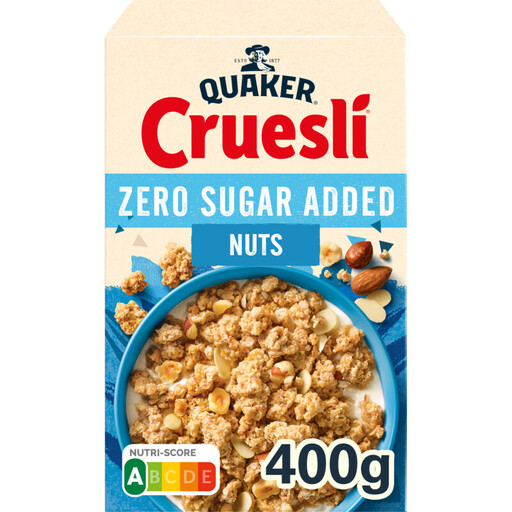 Image unavailable
Quaker Cruesli Nuts Zero Sugar – 400 g
For anyone looking for a nutty Cruesli variant. Joybuy’s product information for Quaker Cruesli Nuts 0% Added Sugar lists 20 g of fibre and 3,5 g of sugars per 100 g, so the name does not mean the product contains no sugars.
Pack size: 400 g. As it contains nuts and gluten-containing grains, check the current allergen information.
View at Joybuy
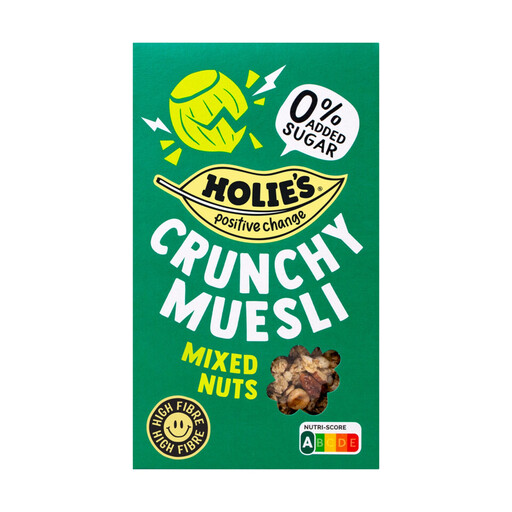 Image unavailable
Holie's Crunchy Muesli Mixed Nuts – 400 g
A crunchy muesli with mixed nuts to consider as an alternative to granola. Read the allergen information on the packaging before choosing this variant for several guests.
Pack size: 400 g.
View at Joybuy
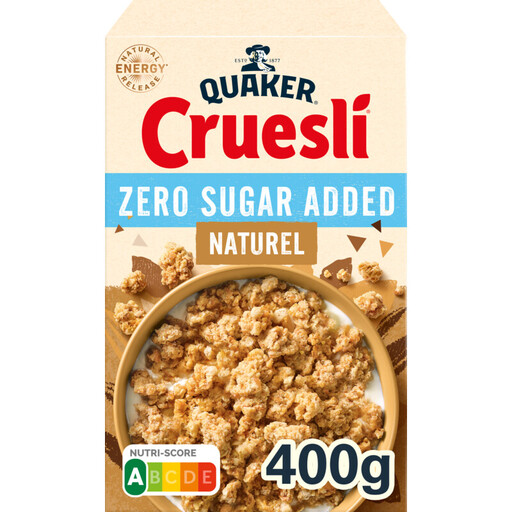 Image unavailable
Quaker Zs Cruesli Natural – 400 g
For anyone wanting to compare a plain Cruesli variant with fruit and nut options. Compare the label per 100 g and read the allergen information on the current packaging before buying for the group.
Pack size: 400 g.
View at Joybuy
Frequently asked questions
How do I compare two types of granola?
Compare the fibre and sugar content per 100 g, then read the ingredients list to see which grains form the base. The Netherlands Nutrition Centre recommends comparing products per 100 g rather than per portion.
Is granola labelled ‘wholegrain’ automatically suitable as an everyday breakfast?
No. The word ‘wholegrain’ alone doesn’t tell you everything about the product’s composition. Check which wholegrain ingredients it contains, and compare the fibre, sugars and other nutrition values on the label.
What should I check if a guest has a food allergy?
Read the allergen information on the exact pack, even if you’ve bought the product before. According to the Netherlands Food and Consumer Product Safety Authority, allergen information for pre-packed products must be shown on the label; also check for any ‘may contain’ statements.
How should I store breakfast cereals in a holiday home?
Follow the storage instructions on the packaging and seal an opened pack securely. If you’re buying enough for several breakfasts, also check the stated best-before date.
Is a larger pack convenient for a short stay?
Only if the quantity suits the number of guests and the breakfasts they plan to eat it for. Check the pack weight and think about how much you’d have left after your stay.


