
Those looking for wholegrain breakfast cereal
You want to see how much of the cereal is genuinely wholegrain for your Sunday breakfast, rather than relying on the look of the packaging.


Looking for wholegrain breakfast cereal for your Sunday breakfast? Don’t choose based solely on the words ‘granola’ or ‘wholegrain’ on the front of the pack. Check the proportion of wholegrains and compare fibre and sugars per 100 g. Crunchy granola or muesli is a good choice if texture matters to you; if added sugar is more important, compare wholegrain muesli with no added sugar too. Always check allergens separately.
You want to see how much of the cereal is genuinely wholegrain for your Sunday breakfast, rather than relying on the look of the packaging.
You’re looking for crunchy granola or muesli and want to compare the ingredients, fibre and sugars in different varieties too.
You need to look out for ingredients such as cereals containing gluten or nuts when choosing. Warnings about the possible presence of allergens on the packaging matter too.
Start with the proportion of wholegrains, then compare the nutritional values per 100 g and check the ingredients and allergens for the exact variety.
| What to look for | What to check when buying | Who is this important to? |
|---|---|---|
| Wholegrains and fibre | Check which cereals are wholegrain and what proportion is stated. Compare fibre per 100 g within the same product type. | If wholegrains are my starting point, I want to know how much is in my breakfast cereal. Around 33% of consumers put this, along with fibre, first. |
| Added sugar and total sugars | Check the ingredients list for added sweeteners and compare sugars per 100 g; these are two different types of information. | I want crunchy breakfast cereal without basing my choice on a single sugar claim. For around 27% of consumers, understanding added and total sugars is the first priority. |
| Allergens | Check the allergen information and any ‘may contain’ warning on the pack you’re buying. | If I need to avoid certain ingredients, checking this comes before choosing a flavour or texture. Around 20% of consumers put allergen information first. |
| Practical considerations | Check the exact variety, pack size and availability just before buying; read the storage advice too. | For a planned Sunday breakfast, I want to be able to buy a suitable pack and store it after opening. Around 20% of consumers give these practical considerations top priority. |
A wholegrain ingredient doesn’t automatically make the whole product wholegrain. For example, the Granola Oats, Seeds & Berries described by Jumbo lists 76.7 g of wholegrain oat flakes per 100 g of finished product; Albert Heijn explicitly describes its Organic Wholegrain Crunchy Muesli Four Nuts as 100% wholegrain.
Check the wholegrain statement and ingredients for the exact variety, and compare granola with granola or muesli with muesli.
The nutrition table also includes sugars that occur naturally in ingredients. Muesli with fruit can therefore contain sugars even if no sugar has been added.
Read both the ingredients list and sugars per 100 g before comparing two products.
A wholegrain claim says nothing about whether a product is suitable for someone with an allergy. The breakfast cereals discussed here may contain cereals containing gluten or nuts, among other ingredients.
If you have an allergy, always check the allergens and warnings on the packaging of the product you’re actually buying.
The online range can change. Jumbo marked the Granola Oats, Seeds & Berries discussed here as no longer part of its online range, and a separate protein variety as temporarily unavailable.
Check whether the exact variety is available shortly before doing your Sunday food shop. If necessary, choose another variety using the same label information.
Crunchy breakfast cereal for anyone looking for the texture of Cruesli; the proportion of wholegrains varies by variety.
A crunchy wholegrain muesli with nuts for anyone looking for an explicit wholegrain statement.
A granola range where you need to check the ingredients and nutritional values for each variety.
A muesli to compare with crunchy granola if added sugar is a key consideration for you.
A granola with wholegrain oats, coconut and seeds to assess using the information for the exact variety.
These are crunchy muesli varieties for anyone looking for a granola-like texture. They aren’t ranked against one another by wholegrain content or nutritional value: check the nutrition information per 100 g and the allergens on the pack for your chosen variety.
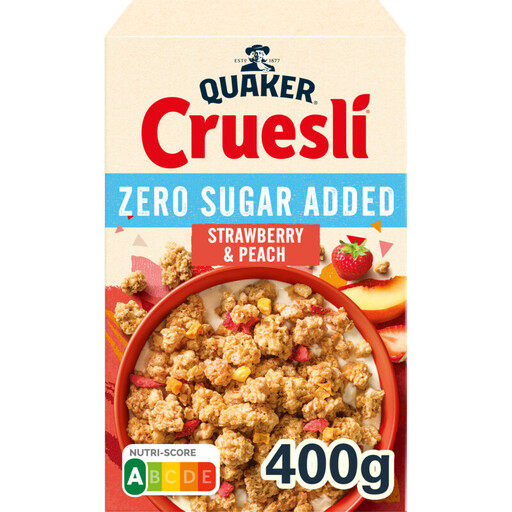 Image unavailable
An option if you’re looking for crunchy muesli with strawberry and peach. Compare fibre and sugars only after checking the values per 100 g on the pack; check the allergen information too.
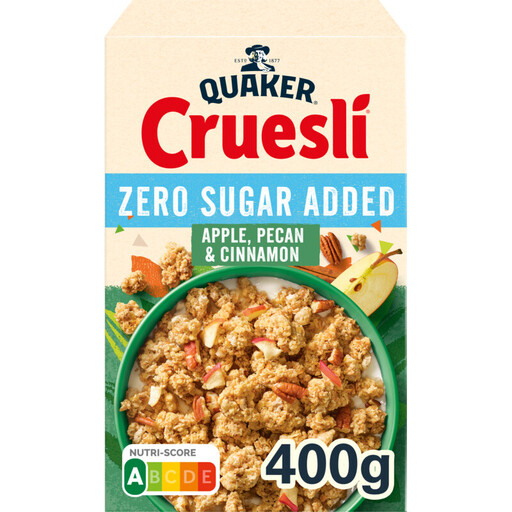 Image unavailable
For anyone looking to compare crunchy muesli with apple, pecan and cinnamon. Check sugars and fibre per 100 g on the pack; if you have a nut allergy, pay particular attention to the allergen information.
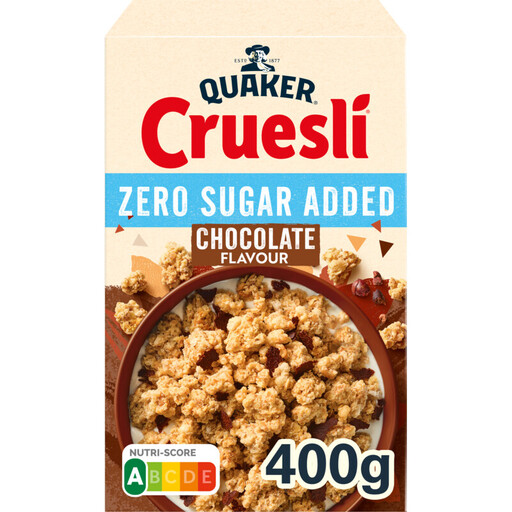 Image unavailable
A crunchy muesli variety with a chocolate flavour. To compare it with other flavours, check the nutrition information per 100 g and look for milk, cereals and possible traces of nuts in the allergen information.
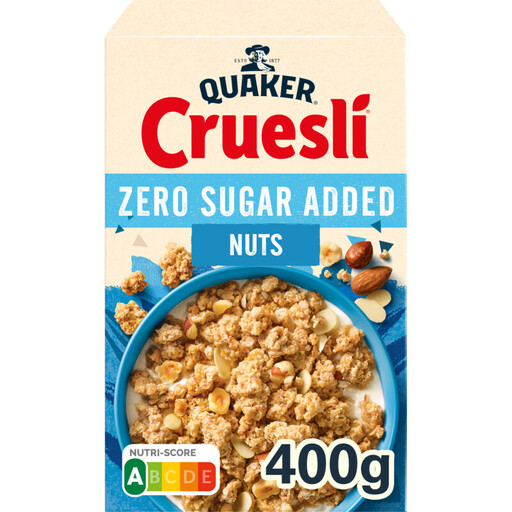 Image unavailable
For anyone looking for crunchy muesli with nuts. Compare nutritional values per 100 g and, if you have an allergy, check the current packaging for nuts and cereals containing gluten.
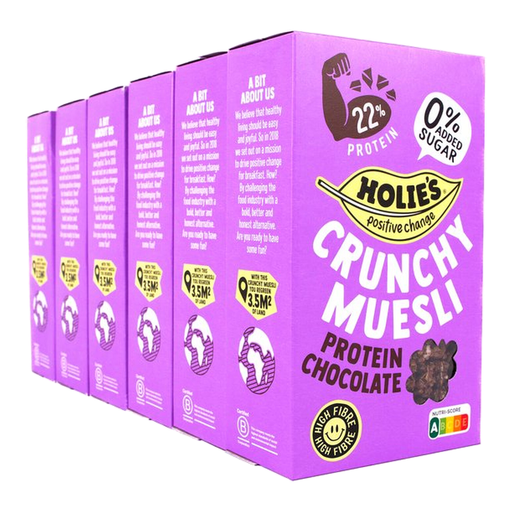 Image unavailable
A pack of six bags of crunchy chocolate muesli for anyone planning several breakfasts. Compare the nutritional values per 100 g and check the allergens on each pack before choosing this variety.
Compare the nutrition information per 100 g, not just per serving. The Voedingscentrum recommends using this basis because manufacturers may use different serving sizes; for example, compare the fibre and sugars in similar breakfast cereals.
No. The nutrition table also includes naturally occurring sugars. According to the product information, Zonnatura Muesli Rijkgevuld contains 0% added sugar but 12 g of sugars per 100 g, so check both the claim and the table.
Read the allergen information and any ‘may contain’ warning on the pack for the exact variety. The Netherlands Food and Consumer Product Safety Authority describes the mandatory allergen information on food labels; a wholegrain claim is no substitute for checking.
Follow the storage advice on the packaging for your product and seal it securely after use. The product varieties described recommend storing in a dry place, among other advice; check the instructions again if you’re buying enough for several Sundays.