
Breakfast shoppers looking for wholegrains and fibre
You want to stock up on granola for several mornings and check the ingredients list to see which grains are wholegrain. To compare packs, look at the fibre per 100 g too.


When choosing granola for your weekly shop, don’t rely on the product name alone: check whether your chosen variety contains wholegrains, and compare similar breakfast cereals per 100 g for fibre, sugars and energy. If you mainly want to limit added sugar, check the ingredients list too. If crunch is less important, you could consider wholegrain muesli as an alternative product type.
You want to stock up on granola for several mornings and check the ingredients list to see which grains are wholegrain. To compare packs, look at the fibre per 100 g too.
You’re looking for a crunchy breakfast cereal, but want to compare the ingredients and total sugars. Even with a variety that contains no added sugar, check the rest of the nutritional information.
You’re choosing a pack for several breakfasts and checking the quantity and storage instructions. If a toasted, crunchy texture isn’t essential, you could also consider wholegrain muesli.
Start with the ingredients and product type. Then compare the nutritional information on the same basis and check that the pack suits your breakfast plans for the week.
| What to look for | What to check when buying | Who it matters to |
|---|---|---|
| Wholegrains and fibre | Check which ingredients are specifically labelled as wholegrain and compare fibre per 100 g. | When I buy granola for my regular breakfast, I want to see which grains are wholegrain. For around 40% of consumers, wholegrains and fibre are the top priority. |
| Added sugar and nutritional value | Read the ingredients list and compare sugars, fat and energy per 100 g. | I want to choose a crunchy variety without relying only on the wording on the front of the pack. Around 30% of consumers give limiting added sugar the highest priority. |
| Pack size and weekly supplies | Check the quantity, product type and storage instructions after opening. | For several mornings, I want to know how long a pack will last; muesli is another option if crunch isn’t essential. Stocking up is the top priority for around 20% of consumers. |
| Allergens and dietary requirements | Read the ingredients, highlighted allergens and any warnings on the current pack. | If an allergen is relevant to me, I need to be able to check the exact variety before using it. For around 10% of consumers, suitability is the main concern. |
Granola describes the type of product; it doesn’t automatically tell you which grains are used in the variety you’ve chosen. An attractive front-of-pack design is no substitute for the ingredients list.
Check for a wholegrain label, then compare fibre per 100 g before stocking up for the week.
A statement about added sugar doesn’t tell you on its own how much energy or fat a granola contains. The nutritional information for the exact variety is still what matters when comparing them.
As well as the ingredients, check sugars, fat and energy per 100 g, and bear in mind how much you use.
Ingredients and allergen information can vary between varieties. This is especially important if you need to avoid a particular allergen.
Whenever you try a new variety, check the current ingredients list, highlighted allergens and any warnings.
Jumbo describes its 400 g Zero Sugar Added Granola Naturel as a mix containing wholegrains, with no added sugars or sweeteners.
Jumbo describes its 350 g Granola Noten as granola with wholegrain flakes and nuts.
Albert Heijn lists Zonnatura Granola classic crunchy vezelrijk as a specific 350 g variety.
ALDI lists both granola and wholegrain muesli under Golden Bridge. These product types aren’t interchangeable if you’re specifically looking for crunchy granola.
Albert Heijn has a dedicated muesli and granola category, with product pages for different brands and varieties.
Lidl lists its Super Berry and Super Nutty granola varieties as products available in store only.
These five 400 g Quaker Cruesli varieties are for anyone looking for a crunchy breakfast cereal for their weekly shop. First choose the flavour you want, then check the ingredients, nutritional information and allergens for the exact variety.
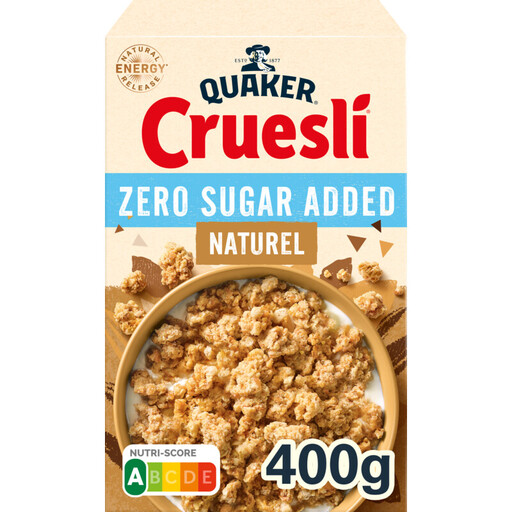 No image available
For anyone looking for a plain variety of crunchy Cruesli. The pack contains 400 g; check the ingredients, nutritional information and allergens for this variety.
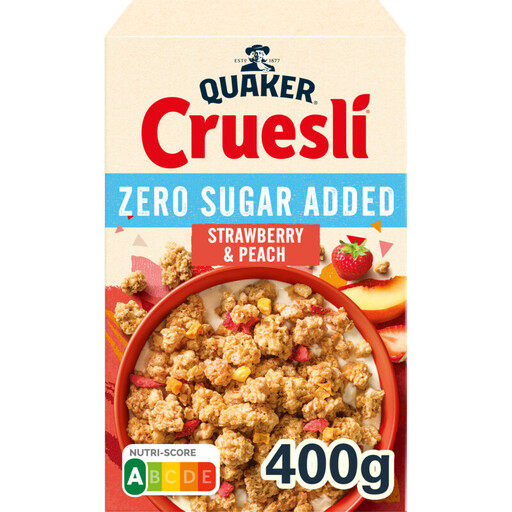 No image available
For anyone looking for a fruity variety with strawberry and peach. The pack contains 400 g; check the nutritional information and allergens for the exact variety.
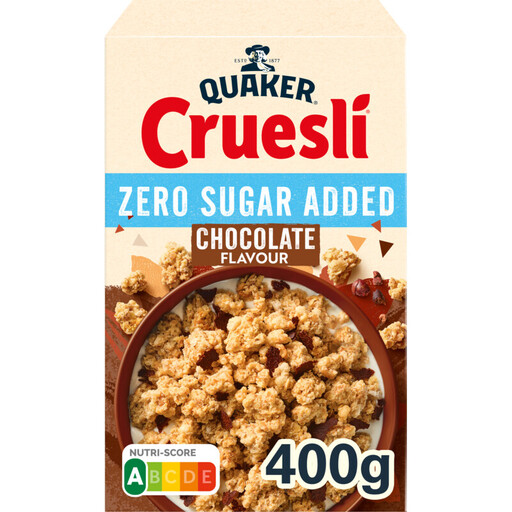 No image available
For anyone looking for a chocolate flavour among these Cruesli varieties. The pack contains 400 g; check the allergen information for this variety too.
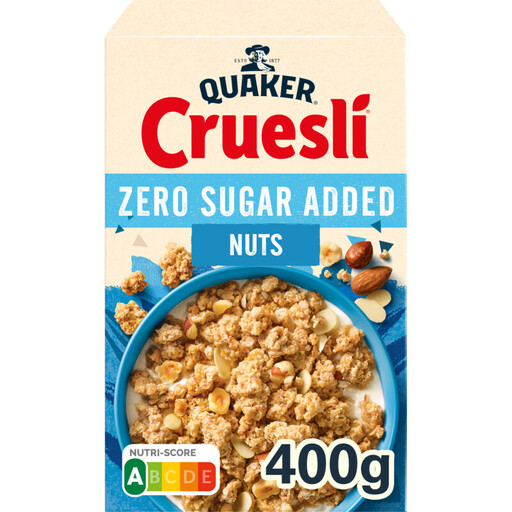 No image available
For anyone looking for a Cruesli variety with nuts. The pack contains 400 g; check the ingredients and allergens carefully if nuts are relevant to you.
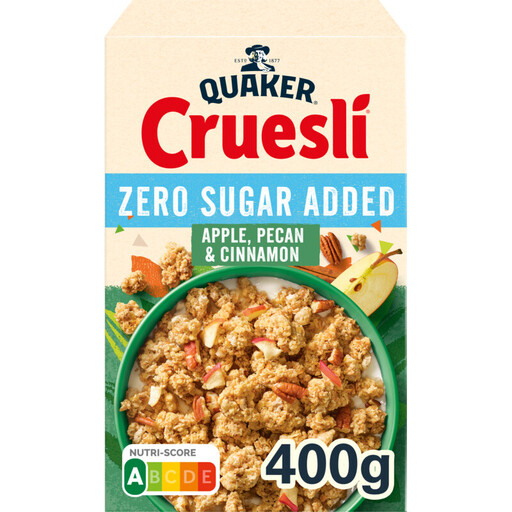 No image available
For anyone looking for a crunchy breakfast cereal with apple, pecans and cinnamon. The pack contains 400 g; check the nutritional information and allergens for this variety.
Compare similar products per 100 g so different serving sizes don’t skew the picture. The Voedingscentrum recommends checking factors including sugars and fibre per 100 g when comparing breakfast cereals.
No, the name granola doesn’t confirm that your chosen variety contains wholegrains. Look for an explicit wholegrain label in the ingredients and check the nutritional information on the exact pack too.
According to the Netherlands Food and Consumer Product Safety Authority, allergen information should appear on the label of prepacked granola. For your chosen variety, check the ingredients and any warnings too, especially if an allergen is relevant to you.
Follow the storage instructions on the pack for the exact variety. For the Quaker and Jumbo varieties mentioned, Jumbo recommends storing them in a cool, dry place and sealing or rolling the bag closed tightly after opening.
Yes, the Voedingscentrum’s Kies Ik Gezond? app can help you compare nutritional values such as sugar, fat and salt. When making your final choice, check the current label too, as product information can change.