
If you’re looking for a wholegrain base
You want to choose granola for Easter brunch, so you’re looking beyond the front of the pack. The ingredients list and fibre per 100 g help you compare different varieties.


If you’re choosing wholegrain granola for Easter brunch, start by checking the wholegrain claim and ingredients list. Then compare the nutritional information per 100 g and read the allergen information for the guests you’re serving. A variety with nuts or seeds may suit the flavour you’re looking for, but be sure to check the label carefully.
You want to choose granola for Easter brunch, so you’re looking beyond the front of the pack. The ingredients list and fibre per 100 g help you compare different varieties.
You’re putting one or more brunch bowls on the table and need to check in advance which ingredients and cross-contamination warnings appear on each pack. The Netherlands Food and Consumer Product Safety Authority highlights the importance of allergen information on labels.
You’re looking for a crunchy topping for yoghurt, quark or fruit, and choosing between, for example, a fruit, chocolate or nut variety. The net weight also matters when you’re serving several guests.
First, decide what ingredients your guests need; then compare the nutritional information on a like-for-like basis. The Netherlands Nutrition Centre recommends using the values per 100 g when comparing packs.
| What to consider | What to check when buying | Who it matters to |
|---|---|---|
| Wholegrain and fibre | Read the wholegrain claim and ingredients list; compare fibre per 100 g. | If I’m specifically choosing wholegrains, I want to see which grain ingredients are in the granola. Around 33% of consumers prioritise wholegrains and fibre. |
| Sugars and nutritional information | Compare sugars, fibre, saturates and salt per 100 g; also check the ingredients. | For a sweet brunch bowl, I want to be able to assess the ingredients without relying on the flavour name. For around 27% of consumers, sugars and the other nutritional values are the most important factors. |
| Allergens | Read the listed allergens and any cross-contamination warnings on the pack you choose. | If I’m serving someone with a relevant allergy, I need to know what the label says before I buy. Suitability is the top priority for around 20% of consumers. |
| Flavour and quantity | Choose the ingredients and texture you want; match the net weight to the number of guests. | If I’m serving granola with yoghurt and fruit, I want a flavour that goes well with them and enough for brunch. For around 20% of consumers, this combination is the deciding factor. |
A granola may contain wholegrain ingredients without making it clear what all the grain ingredients are.
Look for a clear wholegrain claim and check which grains appear in the ingredients list. The words ‘oats’ or ‘multigrain’ alone aren’t enough to go on.
Packs may give different serving sizes, so the values listed per serving aren’t always directly comparable.
Compare sugars, fibre, saturates and salt per 100 g. Then decide how much you want to serve.
Ingredients and cross-contamination warnings vary between varieties. This matters if a guest has a relevant allergy.
Check the allergen information on the pack you choose before buying, and keep the pack to hand during brunch.
A brand or shop name alone tells you little about the ingredients in a particular granola. Use these examples to help you decide which labels to compare.
Quaker Cruesli is available in a range of crunchy varieties. A Zero Sugar Added Granola Naturel described by Jumbo contained wholegrain oat flakes.
Albert Heijn lists muesli and granola from various brands, including an Eat Natural granola with wholegrain oats and seeds.
Jumbo lists its own granolas as well as granolas from other brands, including varieties with nuts, seeds or berries.
Lidl promotes wholegrain products as a product category.
Aldi lists granola, wholegrain muesli and wholegrain porridge oats as separate Golden Bridge products.
Zonnatura describes its Granola Classic Crunchy as containing wholegrain spelt flakes and wholegrain oat flakes.
These Joybuy products are Cruesli varieties for anyone looking to put together a crunchy breakfast bowl or brunch platter. Cruesli is crunchy muesli, so don’t automatically treat these varieties as wholegrain granola. Check the grain ingredients, nutritional information and allergens on the pack before choosing.
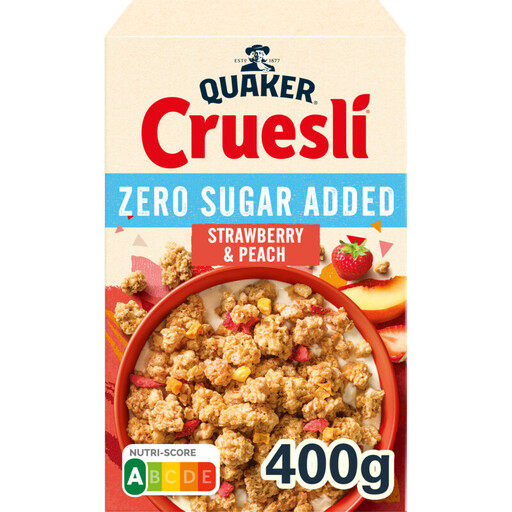 Image unavailable
Worth considering if you’d like a strawberry and peach flavour for brunch. Check the ingredients and allergens on the pack you choose; the product name alone doesn’t confirm that the entire grain base is wholegrain.
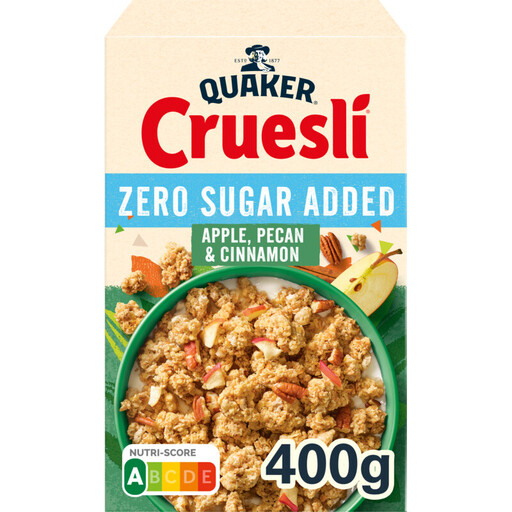 Image unavailable
A good option for a brunch bowl with apple, pecans and cinnamon flavours. If you’re serving guests with a nut allergy, take extra care to check the ingredients and allergen information; check the wholegrain claim separately too.
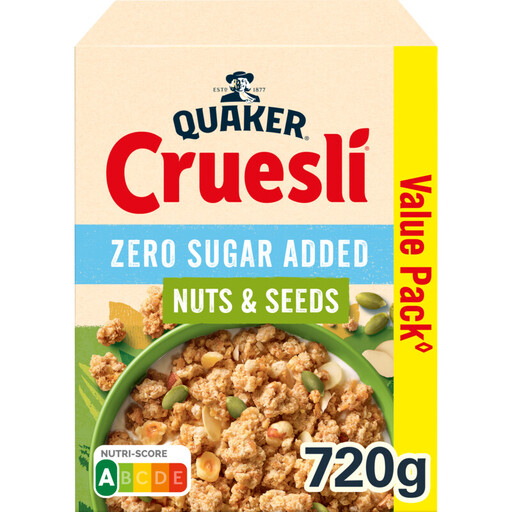 Image unavailable
One to consider if you’d like nuts and seeds in your brunch bowl. The pack contains 720 g; work out how much you’ll need for your guests and read the latest allergen information.
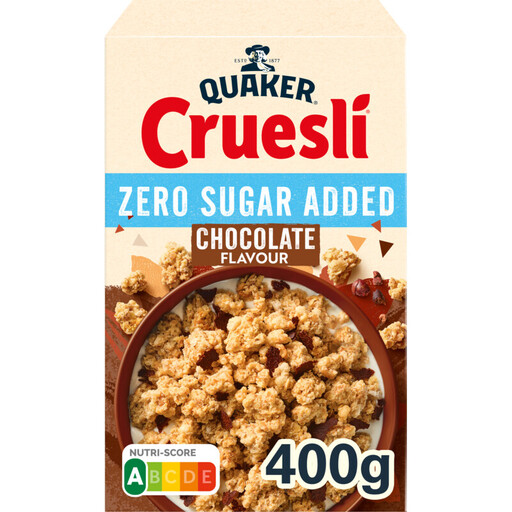 Image unavailable
If you’re looking for a chocolate variety for Easter brunch, compare the sugars and other nutritional values per 100 g with your other options, and check the label for allergens and grain ingredients.
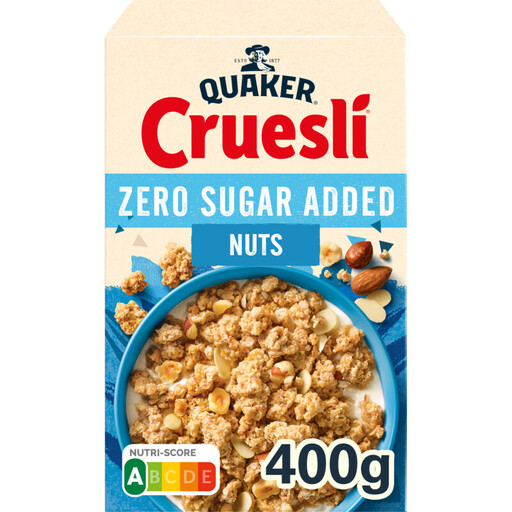 Image unavailable
A nut variety for anyone who’d like to serve that flavour at brunch. Before buying, check which nuts and other allergens are listed on the pack; a nut variety won’t suit every guest.
Look for a clear wholegrain claim and check which grain ingredients are listed on the pack. The Netherlands Nutrition Centre explains that wholegrain cereal products are made from the entire grain; a reference to oats or multigrain alone doesn’t tell you how the whole grain base is made up.
Compare the nutritional information per 100 g. Look at sugars, fibre, saturates and salt, for example, then read the ingredients list. Values per serving are less useful for comparing packs directly when the stated serving sizes differ.
Read the allergen information and any cross-contamination warnings on the pack you plan to serve. Relevant ingredients vary depending on the granola and the guest, so don’t rely on a flavour name or a claim such as wholegrain alone.
Follow the storage advice on the pack you’ve chosen and seal it tightly after use. That way, you can follow the instructions for that particular granola.