
Quick yoghurt breakfasts
You want to add granola or muesli to yoghurt, milk or a plant-based alternative without cooking. A clear serving size and storage instructions are useful if you prepare breakfast in advance.


If you’re looking for crunchy granola for a quick breakfast, choose a variety whose ingredients clearly show which grains are wholegrain. Also compare fibre and sugars per 100 g, and check the allergens on the packaging. If crunchy texture matters less to you, wholegrain muesli is another option. It’s a different product, so compare the varieties you’re considering separately.
You want to add granola or muesli to yoghurt, milk or a plant-based alternative without cooking. A clear serving size and storage instructions are useful if you prepare breakfast in advance.
You look beyond the crunchy texture, checking the ingredients list for wholegrain cereals and the nutrition information for fibre. According to the Netherlands Nutrition Centre, wholegrain cereal products are made from the entire grain.
You take breakfast with you and want to know in advance which sugars and allergens are listed for the variety you’ve chosen. If you have an allergy or intolerance, always base your choice on the current packaging.
First decide whether you need a clearly identifiable wholegrain base, a breakfast that’s quick to portion, or precise control over the ingredients. Then compare granola and any muesli alternatives using their own labels.
| What to consider | What to check before buying | Who it matters to |
|---|---|---|
| Wholegrain base and fibre | Check which grains are listed as wholegrain in the ingredients and compare fibre per 100 g. | If I choose wholegrain cereals deliberately, I want to see what the grain base contains. For around 39% of consumers, a wholegrain base with fibre is the most important factor. |
| Quick to prepare and take with you | Check the serving size and whether you can take the product with you dry, then mix it just before eating. | For breakfast on the go, I want to be able to prepare a serving without cooking. This convenience is the priority for around 38% of consumers. |
| Sugars and allergens | Compare ingredients and sugars per 100 g. If you have an allergy, check both the allergens and any possible traces listed on the current packaging. | If I need to avoid certain ingredients, the label on the exact variety I’m buying needs to be clear. Around 23% of consumers give checking sugars and allergens the highest priority. |
A product can contain wholegrain cereals alongside other types of flour. The Quaker Cruesli Nuts & Seeds Zero Sugar Added described by Albert Heijn contains rice flour and wheat flour as well as wholegrain oats and wheat.
Read the full ingredients list if a wholegrain cereal base is essential to you.
A statement about added sugar doesn’t automatically tell you the total amount of sugars or the rest of the nutritional value.
Check the ingredients and compare the nutrition information per 100 g and per serving.
Ingredients and possible traces vary between varieties. So a familiar brand name doesn’t tell you enough about a different pack in the same product range.
If you have an allergy or intolerance, check the allergen information and any warning about possible traces on the current packaging before buying.
The online range and what’s available in a shop don’t always match. The Jumbo Granola Oats, Seeds & Berries we looked at was listed as no longer part of the online range, while Lidl presented its named granola varieties as in-store products.
Check where your chosen variety is available and compare the label on the pack in store.
The notes below relate to the named product varieties and store information, not to every product from a brand or shop.
The Granola Classic Crunchy High Fibre described by Albert Heijn lists wholegrain spelt and oat flakes.
The Quaker Cruesli Nuts & Seeds Zero Sugar Added described by Albert Heijn is a crunchy breakfast cereal variety with wholegrain oat and wheat flakes, nuts and seeds.
The product information for the Zonnatura and Cruesli varieties mentioned above offers a starting point for comparing ingredients and nutritional values.
Jumbo described its Granola Oats, Seeds & Berries as containing wholegrain oats.
Lidl described its Super Berry and Super Nutty granola varieties as in-store products.
Golden Bridge Wholegrain muesli is an alternative for anyone not specifically looking for granola.
This selection includes granola and crunchy muesli for anyone looking for a dry breakfast cereal with wholegrain ingredients. Choose by product type and pack size, and check the ingredients and allergens for each variety separately.
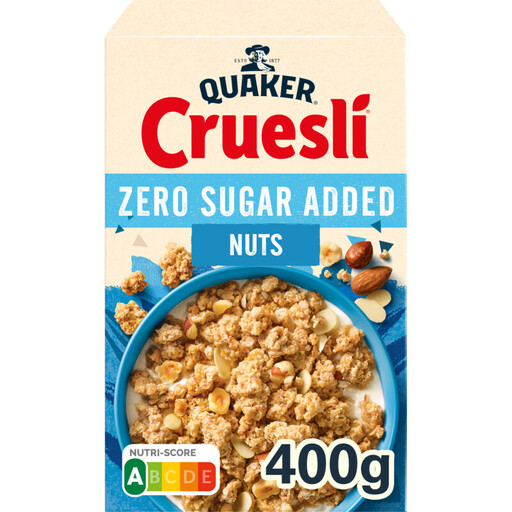 No image available
A crunchy option if you like breakfast cereal with yoghurt or milk. Check the current ingredients and allergens before choosing; the product information mentions oats, wheat and hazelnuts, among other ingredients, and possible traces of milk.
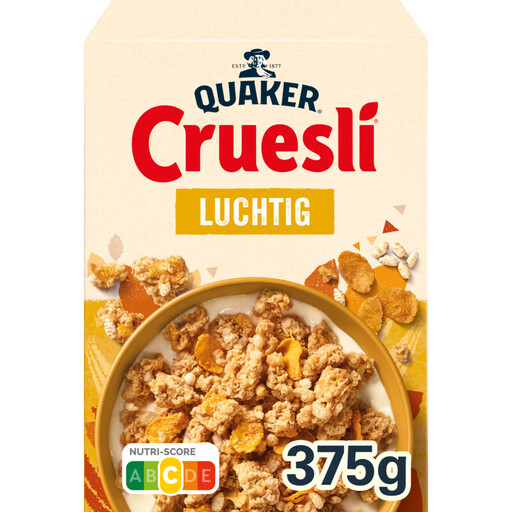 No image available
Crunchy muesli to consider if you enjoy breakfast with yoghurt. To find out how much wholegrain this variety contains, read the current ingredients list rather than relying solely on a claim on the front of the pack. If you have an allergy, also check the listing for cereals containing gluten and possible traces of milk, nuts and soya.
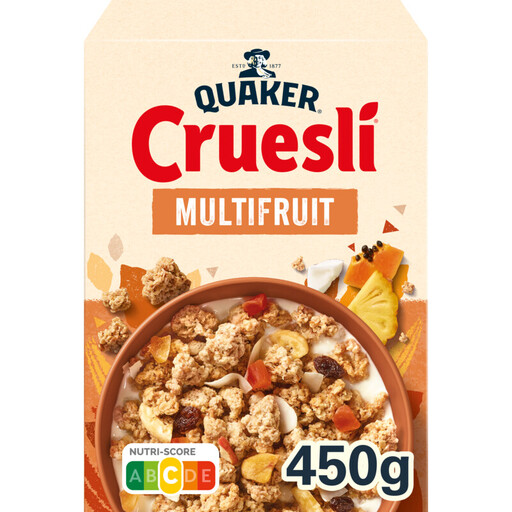 No image available
A crunchy muesli for putting together a yoghurt breakfast. For this variety, compare the wholegrain cereals in the current ingredients list with any claims on the front of the pack. Also check the listing for cereals containing gluten and possible traces of milk and nuts.
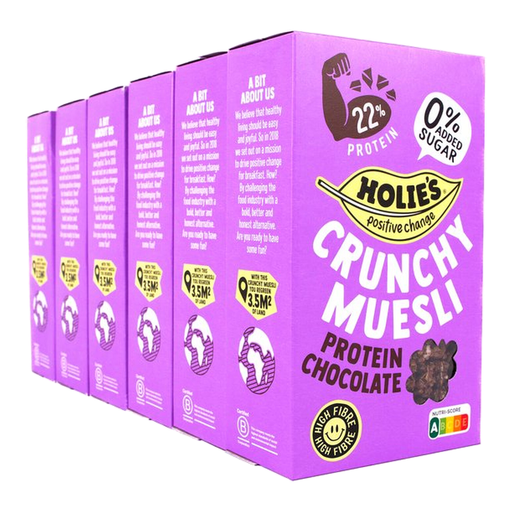 No image available
This crunchy muesli is an alternative if granola isn’t essential and you like breakfast cereal with milk or yoghurt. The pack contains six 400 g units, so check whether that quantity suits your breakfast habits. If you have an allergy, look out for oats and wheat, and for the listed possible traces of milk, nuts and peanuts.
 No image available
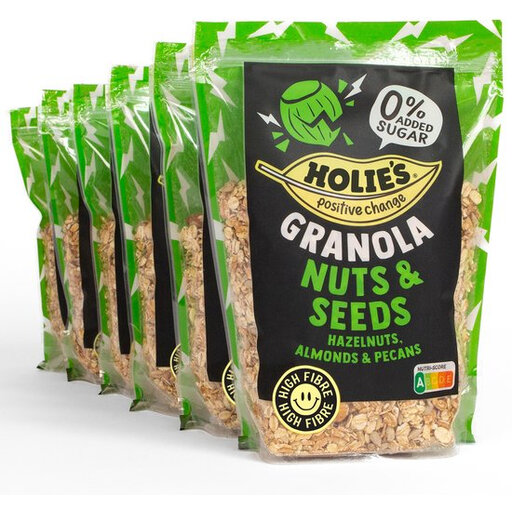
A granola option if you’re specifically looking for this type of product rather than crunchy muesli. Consider whether six 350 g packs suit your needs, and check the ingredients and serving information on the current packaging. The product information lists allergens including soya, peanuts, hazelnuts and almonds.
Check which cereals are explicitly described as wholegrain in the ingredients list. According to the Netherlands Nutrition Centre, a wholegrain cereal product is made from the entire grain. Having some wholegrain ingredients doesn’t automatically make the entire cereal base in a granola wholegrain.
Yes, if you can take a portion with you dry and mix it with yoghurt, milk or a suitable plant-based alternative when you’re ready to eat. Check the storage instructions for your product and choose a way of carrying it that works with the packaging.
No. A statement about added sugar doesn’t mean the product contains no sugars. Check the ingredients list and the ‘of which sugars’ line in the nutrition information for the variety you’ve chosen.
Check the ingredients and the separate warnings about possible traces on the current packaging. Look out for the allergens relevant to you, such as cereals containing gluten, nuts, milk or soya; ingredients vary between varieties.
Yes. If you’re not specifically looking for granola’s crunchy texture, wholegrain muesli can be an alternative for breakfast. It’s still a different type of product, so compare ingredients, fibre and sugars per 100 g, and check the allergens in the variety you want to buy.