
The brunch host looking for wholegrain and fibre
You want to serve a wholegrain breakfast cereal and compare the ingredients and nutritional values per 100 g, rather than relying on the front of the pack.


For a crunchy bowl at your Easter brunch, choose flakes whose wholegrain status and ingredients you can check. If you’d prefer a warm, soft bowl, cereal such as Brinta is another option. When comparing similar breakfast cereals, check the fibre and sugars per 100 g, and always read the current label if any of your guests have an allergy.
You want to serve a wholegrain breakfast cereal and compare the ingredients and nutritional values per 100 g, rather than relying on the front of the pack.
You’re serving several guests and need to check each product for ingredients or allergens that may affect them, such as wheat or other gluten-containing cereals.
You’re choosing between crunchy flakes and a warm bowl, and considering which pack size and serving style suit your brunch plans.
First decide whether you want to serve flakes or a warm bowl. Then check the wholegrain description, nutritional values and ingredients that matter to your guests for each product.
| What to consider | What to check when buying | Who is this most important for? |
|---|---|---|
| Wholegrain and fibre | Read the wholegrain description and ingredients; compare fibre per 100 g across similar products. | If I want to serve wholegrain breakfast cereal, I want to know what it actually contains. Around 36% of consumers prioritise wholegrain and fibre. |
| Allergens | Check the current label for ingredients, allergens and any warnings. | If a guest needs to avoid certain ingredients, I need to be able to check what the product contains before serving it. For around 29% of consumers, this check is the top priority. |
| Texture and preparation | Choose the product type and, if necessary, read the preparation instructions: flakes are served differently from warm cereal. | For my brunch, it matters whether I want to offer a crunchy bowl or something warm and soft. This serving style is the top priority for around 21% of consumers. |
| Pack size and availability | Check the pack size and whether the product is available in your shop or through your preferred way of ordering. | If I’m shopping for several guests, I want to be able to find a suitable pack size. Around 14% of consumers prioritise this practical consideration. |
Having several types of grain or added bran doesn’t in itself mean that the entire grain base is wholegrain. For example, Kellogg’s lists rice, whole wheat and barley as ingredients in Special K Original.
Read the exact wholegrain description and ingredients list instead of relying on words such as ‘multigrain’ or ‘bran’.
Serving sizes can vary from one product to another, so the figures aren’t necessarily comparable.
Compare similar dry breakfast cereals using the nutritional information per 100 g, including fibre and sugars.
If someone has an allergy, the information on the pack of the product you’re going to serve is important. Albert Heijn also recommends reading the ingredients and allergy information on the packaging.
Check the current label before buying and again before serving, even if you’ve bought the product before.
Brinta is made with warm milk and makes a soft bowl; it’s served differently from loose flakes with milk or yoghurt.
Choose the product type based on the texture you want to serve at your brunch.
Wholegrain cereal for a warm, soft bowl instead of a serving bowl of crunchy flakes.
The range includes products such as All-Bran Flakes and Special K Original, with different ingredients and nutritional values.
Its own-brand range includes AH Bran flakes volkoren, alongside other breakfast cereals.
A shop range of different breakfast cereals, including cereal flakes, flakes and muesli.
An own-brand range that includes a 7-grain wholegrain breakfast cereal.
A shop option featuring a 7-grain breakfast cereal made with wholegrains.
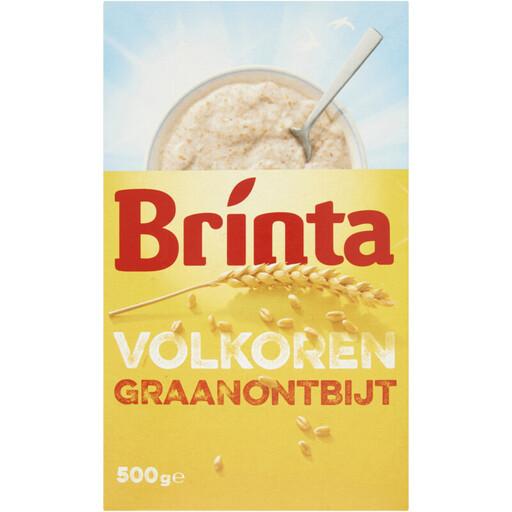
This product is a good fit if you want a warm, soft bowl for Easter brunch; if you’d rather serve crunchy flakes, look for a different product type.
 No image available
For a warm, soft brunch bowl instead of crunchy flakes.
Albert Heijn lists this Brinta variety as containing 100% whole wheat and 10 g of fibre per 100 g. The product contains wheat and gluten-containing cereals; if you have an allergy, check the current label too.
Look for a wholegrain description and check which cereals are listed in the ingredients. The Netherlands Food and Consumer Product Safety Authority links the term ‘wholegrain’ to a grain ingredient made entirely from wholemeal flour; a multigrain name doesn’t provide that information.
No. ‘Multigrain’ doesn’t tell you how much of the grain used is wholegrain. Check the ingredients of the specific flakes before choosing them as a wholegrain option for Easter brunch.
Compare similar products per 100 g, not just per serving. The Netherlands Nutrition Centre recommends using the nutrition table to compare fibre and sugars in breakfast cereals.
Read the allergen information on the packaging of every product you serve and keep it available for your guests. For cereal products in particular, check which types of grain are used and whether there are any other allergens that may affect them.