What should you look for when choosing?
Start with your guests’ requirements, as these determine which packs are suitable in the first place. Then compare the wholegrain labelling, nutritional information and quantity you’d like to serve.
| What to consider |
What to check when buying |
Who it matters to |
| Wholegrain and fibre |
Look for the wholegrain label and compare the fibre per 100 g in the nutritional information. |
If fibre is the main reason my household chooses crispbread, I want to compare the values on the same basis. This is the top priority for around 36% of consumers. |
| Allergens and gluten |
Read the ingredients and allergen information; if someone needs to follow a strict gluten-free diet, look for an explicit gluten-free label. |
If a guest needs to avoid certain grains or other allergens, their requirements take priority over my preference for a particular variety. This is the first priority for around 29% of consumers. |
| Quantity for your group |
Compare the pack weight with the stated number of pieces or servings. |
When I’m serving several people, I want to know in advance whether one pack will be enough. For around 21% of consumers, quantity is the deciding factor. |
| Serving and storage |
Check the product’s shape and follow the storage instructions, especially once opened. |
If I prepare the crispbread in advance, I want to know how to keep any unused pieces dry and properly sealed. Around 14% of consumers prioritise this convenience. |
Brands to consider
These product examples can help you compare packs and labels; a brand name alone won’t tell you which variety is right for your guests.
Wasa
Wasa Wholegrain, 260 g, is an example for anyone specifically looking for wholegrain rye.
- Albert Heijn’s product information lists 100% wholegrain rye, three ingredients and 20 g of fibre per 100 g for this variety.
- Because it contains rye, it isn’t suitable for someone following a strict gluten-free diet. Check the current pack for other allergens and warnings too.
Albert Heijn
AH Wholegrain Crispbread is a 375 g pack made with wholegrain wheat and rye flour.
- Albert Heijn lists 12 g of fibre per 100 g, so you can compare this variety with other packs on the same basis.
- The product lists gluten-containing grains and sesame. If you have allergies, check the warnings about possible traces of other allergens too.
Jumbo
Jumbo Wholegrain Crispbread comes in a 375 g pack with 25 stated servings.
- Jumbo lists wholegrain wheat and rye flour, and 10.9 g of fibre per 100 g.
- The product contains wheat and rye. If you’re serving guests with allergies, check the rest of the label information too.
Lidl
Lidl lists a 250 g pack of Wholegrain Crispbread, available in store only.
- The stated weight gives you a starting point for planning how much you’ll need.
- Check the label in store if fibre, ingredients or allergens will determine your choice.
ALDI / Goud Gebakken
The listed Goud Gebakken wholegrain crispbread comes in a 375 g pack containing 25 pieces.
- The number of pieces can help you plan for a table of several people.
- Check the nutritional information and allergens on the pack before comparing this variety for fibre content or suitability for particular diets.
Ryvita
Ryvita features several crispbread categories in its international range.
- The product category is a useful starting point if you’re looking for a particular variety.
- Assess the specific variety using its own packaging; the international category doesn’t tell you about the ingredients or nutritional value of an individual product sold in the Netherlands.
Crispbread at Joybuy
These packs offer different quantities of crispbread to serve with toppings. For St Nicholas’ Eve, choose based on the label, the quantity you need and your guests’ requirements. Don’t treat the word ‘wholegrain’ in a product name as a substitute for the information on the pack.
 Image unavailable
Wasa Sourdough Rye Crackers 235 g
A rye variety to consider as a base for toppings on the evening. The pack contains 235 g; if you’re serving guests with allergies, check the ingredients and allergens on the label.
View at Joybuy
 Image unavailable
Wasa Lightweight Crackers 300 g
A 300 g pack to consider if you’d like to serve crispbread with a selection of toppings. Before serving it to guests, check the grains, milk ingredients and other allergens on the current label.
View at Joybuy
 Image unavailable
Bolletje Whole Grain Crispbread 265 g
A 265 g pack for anyone looking for crispbread labelled as wholegrain. When choosing, check the fibre per 100 g and, if you’re serving guests with allergies, check the pack for grains and sesame.
View at Joybuy
 Image unavailable
Wasa Wholegrain Crispbread 260 g
A 260 g pack for anyone looking for wholegrain crispbread to serve with toppings. If fibre content is a deciding factor, compare the value on the pack, and check the allergens before serving it to guests.
View at Joybuy
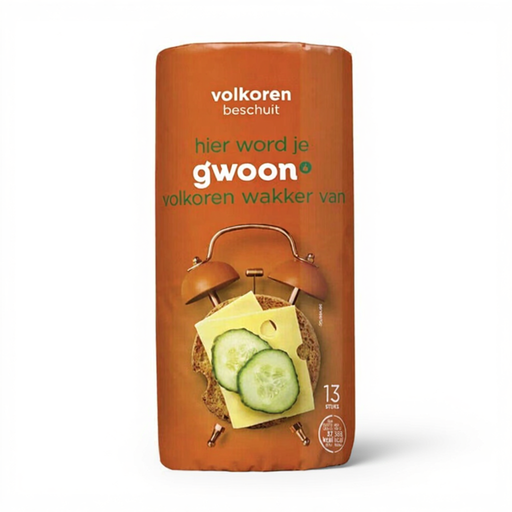 Image unavailable
g'woon Wholegrain Crispbreads 125 g
A 125 g pack for anyone looking to serve a smaller quantity of crispbread with toppings. Check the wholegrain label on the pack and read the ingredients and allergen information, especially if a guest needs to avoid wheat, gluten or egg.
View at Joybuy
Frequently asked questions
Is dark crispbread automatically wholegrain?
No, colour alone doesn’t tell you that. Check whether the product is actually labelled wholegrain. According to the Netherlands Nutrition Centre, crackers with this label are made entirely from wholemeal flour; then compare the fibre value on the label too.
How do I compare the nutritional value of different packs?
Compare fibre, sugars, fat and salt per 100 g so that differences in serving sizes don’t skew the comparison. Then check the nutritional information per serving if you want to know what one piece of that particular product contains.
Can a guest with coeliac disease eat ordinary wholegrain rye crispbread?
No. Ordinary rye crispbread isn’t suitable for anyone who needs to follow a strict gluten-free diet, as rye contains gluten. Look for a product explicitly labelled gluten-free and read the ingredients and other allergen information on the pack.
Does all crispbread contain iodine because of baker’s salt?
No. The rules on iodine-containing baker’s salt don’t mean that every crispbread is made with it. If the use of baker’s salt is relevant to your choice, check the ingredients of the individual product.
How should I store crispbread for St Nicholas’ Eve?
Follow the instructions on the pack you choose and seal it properly after opening. For its wholegrain variety mentioned here, Albert Heijn recommends storing the crispbread in a sealed tin once opened; Jumbo advises keeping its variety cool and dry and resealing the pack securely after opening.


