Who is this relevant for?

Households comparing fibre content

If you’re choosing wholegrain crispbread for breakfast, lunch or a snack, look at the amount of fibre per piece as well as per 100 g. The Netherlands Nutrition Centre gives an average of 1.4 g of fibre for a 10 g piece of wholegrain crispbread; the weight and nutritional values may differ for the pack you buy.

Parents who need to check allergens

If you’re packing lunch for a child with a food allergy or who follows a gluten-free diet, the packaging of the specific product you choose is what matters. According to the Netherlands Nutrition Centre, wheat, rye and barley contain gluten. Also read the other allergen information and check the arrangements in place at the school or class.

Households alternating bread with crispbread

If you regularly serve crispbread instead of bread, consider the whole meal and your overall diet. The Netherlands Nutrition Centre lists wholemeal bread and breakfast cereals as sources of fibre, among other nutrients. Don’t assume crispbread provides the same amount of iodine as bread without checking the label.

What should you look for when choosing?

What to consider What to check when buying Who it matters to
Wholegrain and fibre Look for the wholegrain wording on the pack. Compare fibre per 100 g and per piece. When I choose crispbread for breakfast or lunch, I want to know whether it’s genuinely wholegrain and how much fibre my portion contains. Around 42% of consumers put this combination first.
Allergens and school rules Read the ingredients, allergen information and any warnings on the exact pack; ask what arrangements are in place at school. For a child who needs to avoid certain ingredients, I want to know before packing whether this product and lunch are suitable for school. This check is the top priority for around 33% of consumers.
Portion and meal Check the weight per piece and what else is going into the lunchbox. If you’re replacing bread, also check whether baker’s salt is listed. If crispbread is going into the lunchbox more often, I want to choose a suitable portion and consider the rest of the lunch too. This practical consideration comes first for around 25% of consumers.

Common mistakes

  • Assuming ‘multigrain’ or ‘high in fibre’ means ‘wholegrain’

    Those words alone don’t tell you whether all the flour used is wholegrain. According to the Netherlands Nutrition Centre, ‘wholegrain’ on crispbread and similar products means that the product is made entirely from wholegrain flour.

    Look for an explicit wholegrain claim, then compare the fibre content and ingredients of the product you’ve chosen.

  • Checking only for gluten

    Crispbread may also contain sesame or carry warnings about other allergens. The information you need depends on the product and the child.

    Read all the allergen information on the pack you’re putting in the lunchbox and check the arrangements at the school or class.

  • Assuming crispbread is a reliable source of iodine instead of bread

    The amount of iodine depends on the product’s ingredients. The Netherlands Nutrition Centre points out that using baker’s salt in bread isn’t compulsory, so don’t assume crispbread provides a consistent amount either.

    If you regularly replace bread, check the label for baker’s salt and consider your overall diet.

  • Comparing fibre without checking the weight per piece

    Crispbread pieces don’t always weigh the same. So a value per 100 g won’t tell you how much fibre is in the portion you’re putting in the lunchbox.

    Use the nutritional information per 100 g alongside the weight of one piece or the portion you plan to serve.

Brands compared

Wasa

Wasa Wholegrain is worth considering if you want to compare crispbread made with an explicitly wholegrain rye base and a short ingredients list.

  • Product information from Albert Heijn lists Wasa Wholegrain as made with 100% wholegrain rye, with three ingredients and 20 g of fibre per 100 g.
  • This product contains rye and gluten. The same product information says it may also contain lupin, milk, mustard, sesame and soya. Check the exact pack if you have allergies.

Bolletje

Bolletje Wholegrain crispbread, high in fibre, is a wheat and rye option to compare for ingredients, portion size and fibre content.

  • Product information from Albert Heijn lists this product as containing 100% wholegrain cereals and 14 g of fibre per 100 g.
  • The ingredients include wheat, rye, barley, wheat gluten and sesame. Check the current label if any of these ingredients need to be avoided.

Albert Heijn

AH Wholegrain Crispbread is an own-brand option you can compare with other crispbreads by checking the packaging.

  • Albert Heijn lists its own-brand product in its crispbread range alongside products from Wasa and Bolletje.
  • Ingredients, nutritional values and allergy information can change. Check the current packaging of the product you choose.

Crispbread and crackers on Joybuy

These products feature different rye and wholegrain descriptions to consider for a school lunch. Check the ingredients, fibre per portion and allergens on each pack; the product name alone doesn’t confirm the full ingredients for every option.
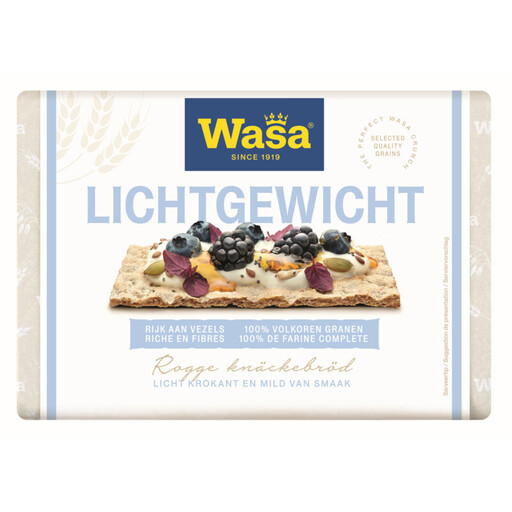
Wasa Lightweight crackers, 300 g pack

Wasa Lightweight crackers 300 g

Consider these crackers for a lunch with toppings; check the wholegrain wording and allergen information on the pack before putting them in the lunchbox.

Pack size: 300 g.

View on Joybuy

Wasa Sourdough Rye crackers, 235 g pack

Wasa Sourdough Rye crackers 235 g

A rye option to consider for breakfast or lunch; for a fibre comparison, read the nutritional information per portion on the pack.

Pack size: 235 g.

View on Joybuy

Bolletje Whole Grain crispbread, 265 g pack

Bolletje Whole Grain crispbread 265 g

Consider this wholegrain option when comparing crispbread for lunch; check the ingredients and allergens on this pack before putting it in the lunchbox.

Pack size: 265 g.

View on Joybuy

Wasa Wholegrain crispbread, 260 g pack

Wasa Wholegrain crispbread 260 g

A wholegrain option for a lunch with toppings; compare the nutritional information per 100 g with the amount you’ll actually pack.

Pack size: 260 g.

View on Joybuy

Wasa Rustic crispbread, 215 g pack

Wasa Rustic crispbread 215 g

If you want to use this as a wholegrain option for a school lunch, check the wholegrain wording on the pack. Also read the allergen information.

Pack size: 215 g.

View on Joybuy

Frequently asked questions

When is crispbread wholegrain?

According to the Netherlands Nutrition Centre, the term ‘wholegrain’ on crispbread and similar products means that the product is made entirely from wholegrain flour. If the packaging only says that a product contains wholegrain flour, check the product name and ingredients before choosing it as fully wholegrain.

Can wholegrain crispbread go in the lunchbox of a child who needs to eat gluten-free?

Don’t assume it’s suitable if the crispbread contains wheat, rye or barley: according to the Netherlands Nutrition Centre, these grains contain gluten. Check that the specific product is explicitly labelled gluten-free, and read the ingredients and allergen information too. If your child has a wheat allergy, check specifically for wheat.

Which other allergens matter for a school lunch?

That depends on the child and the product you choose. As well as checking for gluten, read the other ingredients and allergen information on the pack. The Netherlands Food and Consumer Product Safety Authority explains how allergens are listed in the ingredients of prepacked foods. Also ask what arrangements are in place at the school or in the class.

Does crispbread always provide iodine when it replaces bread?

No, don’t assume crispbread provides a consistent amount of iodine. The Netherlands Nutrition Centre points out that even the use of baker’s salt in bread isn’t compulsory. If you regularly replace bread, check the ingredients of the specific product and consider your overall diet.

How should you store crispbread after opening?

Follow the storage instructions on the packaging of your product. Wasa Wholegrain should be stored in a dry, dark place; Bolletje Wholegrain crispbread, high in fibre, should also be kept sealed after opening.
