For a fibre-conscious Mother’s Day breakfast, first choose crispbread labelled wholegrain, then compare the fibre per 100 g. A larger pack may be more practical for brunch with several guests, but check the grain, allergens and nutritional information on the packaging you buy for both options.
Who is this choice relevant to?
If you want to compare fibre
You’re looking for a wholegrain option for Mother’s Day breakfast and want to compare the fibre per 100 g. Don’t rely solely on the colour or a description on the front of the pack: according to the Voedingscentrum, crackers can only be labelled wholegrain if they’re made entirely with wholegrain flour.
If you’re serving guests with allergies
You want to know whether your chosen variety is suitable for the people at the table. Check the ingredients and allergens on the current packaging; the products described contain different grains and may have different traces of other allergens.
If you’re planning brunch for several people
You want enough crispbread for your guests and need to account for toppings and leftovers. Compare the pack size and any serving information, and think about how to keep an opened pack dry and sealed.
What should you look for when choosing?
First decide what matters most to you: the wholegrain label and fibre content, suitability for your guests, or the quantity you’ll need for brunch. Then compare the information on the packaging of the varieties you’re considering.
| What to consider | What to check before buying | Who it matters to |
|---|
| Wholegrain and fibre |
Look for the wholegrain label and compare the fibre per 100 g in the nutritional information. |
I want to choose a wholegrain option for breakfast and compare its fibre content, rather than judging it by appearance alone. This is the top priority for around 42% of consumers. |
| Grain and allergens |
Read the ingredients and allergen information for the variety you’ve chosen, including any warnings about possible traces. |
If someone at the table needs to avoid certain ingredients, the pack you choose must be suitable for them. Suitability for guests is the main concern for around 33% of consumers. |
| Pack size and storage |
Compare the pack size and any serving information; also check the storage instructions for after opening. |
When I’m hosting brunch for several people, I want to serve enough without leaving an opened pack lying around for too long. Around 25% of consumers prioritise this kind of planning. |
Common mistakes
-
Assuming a dark cracker or the term ‘high in fibre’ means it’s wholegrain
The fibre content alone doesn’t tell you whether the flour used is entirely wholegrain. According to the Voedingscentrum, a cracker can only be called wholegrain if it’s made entirely with wholegrain flour.
Check the wholegrain label, then compare the fibre per 100 g.
-
Assuming the allergens listed on one pack apply to another
Ingredients and warnings vary between varieties. The products described, for example, list different grains and possible traces of other allergens.
Before buying and serving, check the allergen information on the exact pack you’re using.
-
Looking only at the size of the pack
A larger pack is only useful if it suits the number of people you’re serving and you can store the leftovers according to the instructions.
Compare the pack size with your brunch plans and seal any opened pack properly.
-
Assuming all crispbread contains iodised baker’s salt
You can’t tell which salt has been used in a particular variety just from the product category.
If you want to know about a specific product, read the ingredients list or ask the manufacturer.
Brands compared
These examples show which details on the label are useful when comparing different wholegrain varieties. The features mentioned apply to the products described, not to every product from each brand.
Wasa
Wasa Wholegrain is a 260 g pack made with wholegrain rye flour.
- Jumbo’s product page lists 20 g of fibre per 100 g for Wasa Wholegrain.
- The variety described contains rye, a grain that contains gluten; also check the allergen warnings on the pack.
Albert Heijn
AH Wholegrain Crispbread is a own-brand variety in a 375 g pack.
- Albert Heijn lists 12 g of fibre per 100 g and a 15 g serving for this variety.
- The ingredients include wholegrain wheat and rye flour; check the current packaging for sesame and other allergens too.
Jumbo
Jumbo Wholegrain Crispbread comes in a 375 g pack, which Jumbo says contains 25 servings.
- Jumbo lists 10.9 g of fibre per 100 g for this variety.
- The variety contains rye and wheat. The product information also mentions possible traces of nuts, egg, milk, mustard, sesame and soya, among other allergens.
Goud Gebakken
ALDI describes Goud Gebakken wholegrain crispbread as a 375 g variety.
- ALDI’s product information says this specific variety contains wholegrain cereals.
- Check the nutritional information, ingredients and allergens on the pack before choosing it for a guest with specific requirements.
Crispbread for breakfast or brunch
These Joybuy products are crispbread varieties to consider as a base for a Mother’s Day breakfast or brunch. Compare the wholegrain label, fibre per 100 g, ingredients and pack size for each one; if you have allergies, always refer to the current packaging.
 Image unavailable
Wasa Sourdough Rye Crackers, 235 g
A pack to consider if you’re looking for crispbread to serve with toppings at breakfast.
Pack size: 235 g. To compare fibre, check the nutritional information per 100 g. If you have allergies, read the ingredients and warnings on the pack.
View on Joybuy
 Image unavailable
Wasa Wholegrain Crispbread, 260 g
A wholegrain option to compare if fibre per 100 g is an important factor in your breakfast choice.
Pack size: 260 g. Read the nutritional table for the variety on offer and, if you have allergies, check the current packaging.
View on Joybuy
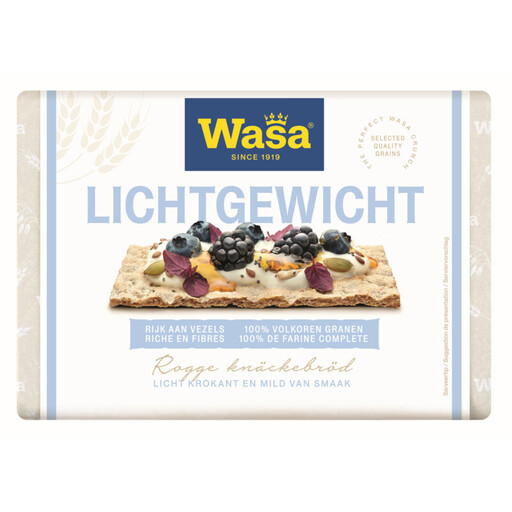 Image unavailable
Wasa Lightweight Crackers, 300 g
A pack to consider if you’d like to offer a range of toppings at brunch.
Pack size: 300 g. For a fibre-focused choice, compare the value per 100 g on the pack; also check the allergen information for this variety.
View on Joybuy
 Image unavailable
Bolletje Whole Grain Crispbread, 265 g
A wholegrain crispbread variety to consider for breakfast or brunch with toppings.
Pack size: 265 g. Compare the fibre per 100 g and read the ingredients and allergen information on the packaging before serving it to guests.
View on Joybuy
 Image unavailable
Wasa Rustic Crispbread, 215 g
A smaller pack to consider if you’re looking for crispbread for a smaller number of people.
Pack size: 215 g. If fibre is your deciding factor, compare the nutritional information per 100 g on the packaging; also check the allergens.
View on Joybuy
Frequently asked questions
How can I recognise wholegrain crispbread?
Look for the word ‘wholegrain’ on the packaging, then read the ingredients. According to the Voedingscentrum, a cracker can only be called wholegrain if the flour used is entirely wholegrain; you can compare the fibre per 100 g separately in the nutritional information.
Is rye crispbread suitable for someone who needs to avoid gluten?
Don’t assume ordinary rye crispbread is safe for them: rye is a grain that contains gluten. Check the ingredients and only choose a product specifically labelled gluten-free if it meets that guest’s requirements.
Does all Dutch crispbread contain iodised baker’s salt?
You can’t tell from the name ‘crispbread’ alone. Read the ingredients list for the variety you’ve chosen or ask the manufacturer which salt has been used.
How should I store crispbread until Mother’s Day breakfast?
Follow the storage instructions on the packaging and seal an opened pack properly. Albert Heijn recommends storing its described variety in a sealed tin after opening; Jumbo recommends sealing its described variety properly after opening.


