For a work-from-home lunch, start by choosing crispbread whose ingredients list wholegrain as the main ingredient. Then compare fibre and salt per 100 g, as well as the amount you actually eat, and choose a texture that works with your toppings. Check the allergens for each variant, and if you replace bread, don’t assume that crispbread provides the same amount of iodine.
Who is this choice relevant to?
Working from home and keeping an eye on fibre
You want to see which grains are used and how much fibre the crispbread contains per 100 g and per portion you eat. According to the Voedingscentrum, fibre also comes from other plant-based foods, so crispbread isn’t the only source in your lunch.
Working from home and looking for a quick topping
You’re looking for a lunch base you can top straight away. A thin cracker and a heartier seed-topped variety have different textures, so choose whichever works best with the toppings you use.
Checking labels for salt or allergens
You compare salt levels and check the ingredients of the exact variant. The Wasa, Bolletje and Jumbo products described contain rye, wheat or barley, among other ingredients; sesame is also present in some variants.
What should you look for when choosing?
Start with the grain ingredients. Then compare the nutritional information on the same weight basis and consider how the crispbread, toppings and portion you eat come together to make your lunch.
| What to consider |
What to check when buying |
Who it matters to |
| Wholegrains and fibre |
Check which wholegrains are listed in the ingredients. Compare fibre per 100 g, then per portion you eat. |
When I’m looking for a wholegrain lunch base, I want to compare the fibre content without mixing up different portion sizes. This is the top priority for around 33% of consumers. |
| Toppings and putting lunch together |
Check the texture and size, and think about which toppings you’d like to use. |
For a lunch between tasks, I want something I can top quickly that works with the cracker I’ve chosen. Around 27% of consumers say this practical lunch choice is their top priority. |
| Salt and iodine |
Compare salt per 100 g and per portion. If you’re replacing bread with crispbread, check the label to see which salt has been used. |
If I regularly replace bread, I don’t want to assume that the salt content or iodine contribution will be the same. This is the biggest concern for around 20% of consumers. |
| Ingredients and allergens |
Read the allergen information for the exact variant, including any statements about possible traces. |
If I have a relevant food allergy or need to follow a specific diet, I need to know which grains and seeds are in this particular product. For around 20% of consumers, this is their first priority when buying. |
Common mistakes
-
Assuming ‘wholegrain’ means the highest fibre content
Wholegrain describes the grain used, but it doesn’t tell you how much fibre is in a portion you eat. Products and portion sizes can vary.
First compare the nutritional information per 100 g, then consider how much you eat at lunch.
-
Taking bread’s iodine contribution for granted
According to the Voedingscentrum, bread is an important source of iodine in the Netherlands. That doesn’t mean every crispbread provides the same amount when you use it instead of bread.
Check the ingredients of the product you choose and take regular bread replacements into account when considering your overall diet.
-
Overlooking allergens in seed varieties
The wholegrain varieties described may contain gluten-containing grains; sesame may also be relevant in a seed variety. The ingredients in one variant don’t automatically apply to another.
Always read the latest allergen information on the packaging of the product you choose.
-
Looking only at the crispbread
Crispbread is a base for toppings, not a description of your whole lunch. The amount and type of toppings also affect what you end up eating.
Consider the crispbread and your planned toppings together, especially when comparing salt levels.
Brands and product ranges to consider
Wasa
Rye varieties for anyone looking for a simple wholegrain base or a sourdough option.
- Wasa Wholegrain states that it contains 100% wholegrain rye, with an ingredients list of wholegrain rye flour, yeast and salt.
- This variant contains 1,25 g of salt per 100 g and includes rye, which contains gluten. Check the ingredients for each Wasa variant; the sourdough rye variety has a different composition.
Bolletje
The Bolletje Oerknäck Robuust Wholegrain described here is an option if you’re looking for a heartier texture with seeds.
- According to Jumbo’s product information, this variant contains 100% wholegrain wheat, rye and barley, and 12 g of fibre per 100 g.
- The ingredients include wheat, rye, barley and sesame, among other things. This composition is worth checking if you have a relevant allergy or dietary restriction.
Jumbo
A 375 g own-brand pack for anyone planning ahead for several work-from-home lunches.
- Jumbo Wholegrain Crispbread lists 10,9 g of fibre and 0,71 g of salt per 100 g.
- This variant contains wheat and rye. Check the packaging you buy for information about other allergens.
Albert Heijn
AH Wholegrain Crispbread is an own-brand option to compare as part of your regular shop.
- Use the wholegrain claim as a prompt to check the grain ingredients on the packaging.
- Albert Heijn says that ingredients, nutritional values and allergen information may change. So check the latest label before you choose.
Goud Gebakken
An ALDI own-brand option if you’d like to add a pack of wholegrain crispbread to your cupboard.
- ALDI Nederland lists Goud Gebakken Wholegrain Crispbread in a pack of 25 pieces.
- Compare fibre, salt and allergens using the nutritional information on the latest packaging.
Wholegrain crispbread at Joybuy
These products offer a range of wholegrain crispbread and cracker options for a topped work-from-home lunch. As well as the size, pay particular attention to the ingredients, nutritional information per 100 g and the portion you eat.
 Image unavailable
Wasa High-Fiber Crackers 300 g
An option if you’re looking for crackers to top for lunch and want to compare fibre content. Use the nutritional information per 100 g, check how many crackers you eat, and read the allergen information too.
View at Joybuy
 Image unavailable
Bolletje Whole Grain Crispbread 265 g
Consider this variant if you’d like to compare a wholegrain crispbread with seeds for lunch. Check the packaging for fibre per portion you eat, and look out for grain and sesame information if it’s relevant to your choice.
View at Joybuy
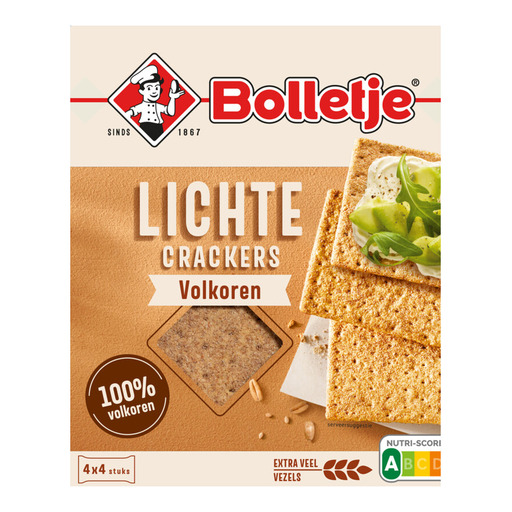 Image unavailable
Bolletje Light Whole Grain Crackers 190 g
A thin cracker for anyone who wants to spread toppings across smaller pieces. Compare the nutritional information based on how much you eat, and read the allergen information for this variant.
View at Joybuy
 Image unavailable
g'woon Wholemeal Crispbread 375 g
The 375 g pack may be handy if you often have lunch at home. Check the grain ingredients individually: a wholegrain claim in the name doesn’t mean that every grain ingredient is wholegrain.
View at Joybuy
 Image unavailable
Wasa Wholegrain Crispbread 260 g
A rye base for anyone who likes to vary their lunch toppings and wants a short ingredients list. The product information lists wholegrain rye flour, yeast and salt, and 1,25 g of salt per 100 g. It contains rye, which contains gluten; check the latest label and availability before choosing.
View at Joybuy
Frequently asked questions
Does all wholegrain crispbread contain iodine?
No. Don’t assume it provides the same amount of iodine as bread. According to the Voedingscentrum, bread is an important source of iodine in the Netherlands. Check the ingredients of your chosen crispbread and consider your overall diet if you regularly replace bread.
How do I compare the fibre in different varieties?
First compare the amount of fibre per 100 g so you’re using the same weight basis. Then check the weight of the pieces you actually eat: a figure per 100 g isn’t necessarily the amount in your lunch portion.
Is wholegrain crispbread gluten-free?
No. The Wasa, Bolletje and Jumbo varieties described contain gluten-containing grains such as rye, wheat or barley. If you need to follow a gluten-free diet, check only the explicit gluten-free claim and allergen information for the exact product you intend to buy.
How can I keep crispbread crunchy after opening?
Keep it somewhere dry and seal the pack tightly after opening. The storage advice for the Wasa and Jumbo products described recommends protecting them from moisture; also follow the instructions on your own packaging.


