What should you look for when choosing?
Start by looking for the word ‘wholegrain’. Then decide which factor matters most for your holiday home: fibre, suitable ingredients or packaging that suits the length of your stay.
| What to consider |
What to check |
Who is it for? |
| Fibre |
The ‘wholegrain’ label and the amount of fibre per 100 g; if needed, work out how much that is for the serving you eat. |
If you mainly want to choose based on fibre for breakfast or lunch, comparing products per 100 g is more useful than looking only at the front of the pack. Fibre content is the top priority for around 42% of consumers. |
| Ingredients and allergens |
The grains, sesame and other allergens listed, including any relevant ‘may contain’ statements. |
If someone in your household needs to avoid certain ingredients, you’ll want to know whether this particular variety is suitable before packing it. Ingredients and allergens are the top priority for around 33% of consumers. |
| Stock and storage |
The pack size and number of pieces, the salt per 100 g and the storage instructions after opening. |
For a holiday lasting several days, I want to take enough without an opened pack becoming difficult to keep dry. Salt may also affect which variety I choose. Around 25% of consumers place the greatest importance on these practical considerations. |
Crispbread and crackers at Joybuy
These wholegrain crispbreads and crackers are options to compare for breakfast or lunch at your holiday home. Check the packaging of the variety you choose for the nutritional information, ingredients and storage instructions that matter to your household.
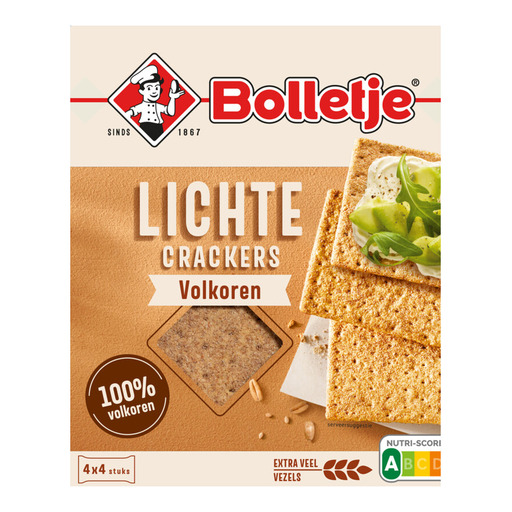 No image available
Bolletje Light Whole Grain crackers 190 g
For anyone wanting to take wholegrain crackers for breakfast or a snack at their holiday home.
- 190 g pack.
- Check the current packaging for ingredients and allergens before choosing this variety.
View at Joybuy
 No image available
Bolletje Whole Grain crispbread 265 g
For anyone wanting to take wholegrain crispbread for several breakfasts or lunches.
- 265 g pack.
- If ingredients affect your choice, read the allergen information on the current packaging.
View at Joybuy
 No image available
Wasa Lightweight crackers 300 g
For anyone considering a pack of crackers for several mealtimes at their holiday home.
- 300 g pack.
- If wholegrain ingredients or fibre content are key, compare the label and nutritional information on the pack.
View at Joybuy
 No image available
Wasa Wholegrain crispbread 260 g
For anyone looking for wholegrain crispbread as a base for breakfast or lunch during their stay.
- 260 g pack.
- For a fibre-conscious choice, compare the nutritional information per 100 g on the current packaging.
View at Joybuy
Frequently asked questions
How can I tell if crispbread is wholegrain?
Check that the pack explicitly says ‘wholegrain’ and read the ingredients list. According to the Netherlands Nutrition Centre, a cracker can only be called ‘wholegrain’ if it is made entirely from wholemeal flour; ‘made with wholemeal flour’ does not, on its own, tell you how much wholemeal flour it contains.
How do I compare the fibre in different varieties?
First compare the amount of fibre per 100 g, then consider the serving you eat. The Netherlands Nutrition Centre lists 1.4 g of fibre for a 10 g piece of wholegrain crispbread. Product values vary: Albert Heijn lists 12 g per 100 g for AH Wholegrain Crispbread, while Jumbo lists 14.0 g per 100 g for the Bolletje variety mentioned above.
Can crispbread completely replace bread at a holiday home?
Not without considering your overall menu if you end up eating much less bread. According to the Netherlands Nutrition Centre, cutting out bread can reduce your iodine intake. Bread can provide iodine when it is made with iodised baker’s salt, but bakers are not required to use it. So don’t assume crispbread provides a similar amount of iodine.
How should I store crispbread after opening?
Follow the instructions on the pack you choose and seal the product securely. For AH Wholegrain Crispbread, Albert Heijn recommends storing it in a sealed tin in a cool, dark and dry place after opening. For its wholegrain variety, Jumbo recommends storing it in a cool, dry place and sealing it tightly after opening.
Are wholegrain varieties suitable if I need to avoid gluten or sesame?
You can’t tell from the word ‘wholegrain’ alone. The varieties described from Albert Heijn, Jumbo and Bolletje contain gluten-containing cereals; Albert Heijn and Bolletje also list sesame as an ingredient. For the specific variety, check both the ingredients and any ‘may contain’ statements on the current packaging.


