For your holiday supplies, start by choosing crispbread labelled wholegrain, then compare the fibre and salt per 100 g on the packaging. A simple rye variety suits anyone looking for a short ingredients list. A variety with several grains or seeds offers a different flavour and texture, but means you’ll need to pay extra attention to allergens and keeping it dry after opening.
Who is this choice relevant to?
Households keeping an eye on fibre
You’re looking for crispbread clearly labelled wholegrain and want to be able to compare its fibre content per 100 g. According to the Netherlands Nutrition Centre, wholegrain cereal products contain more fibre than comparable products made with refined flour.
Households checking for allergens
You need to know which grains and other allergens a particular variety contains. The recipes we looked at differ, among other things, in whether they contain milk and sesame. Even within the same brand, it’s important to check the label on the pack you choose.
Families taking supplies on holiday
You’re looking for a pack size that suits your stay and want to be able to keep opened crispbread dry and sealed. Follow the storage instructions on the pack.
What should you look for when choosing?
Start by checking that it’s labelled wholegrain. Then compare the nutritional information and decide whether the ingredients and packaging suit your holiday plans.
| What to look for |
Check |
Who it matters to |
| Wholegrain and fibre |
Look for the wholegrain label and compare fibre per 100 g. |
If fibre is my top priority, I want to know whether the grain ingredient is wholegrain and how much fibre is listed on the pack. Around 36% of consumers put this first. |
| Allergens |
Check the current label to see which allergens the product contains and which may be present. |
If someone in my household needs to avoid certain ingredients, the variety I choose must suit that restriction. This is the top priority for around 29% of consumers. |
| Packaging and storage |
Check the pack size, best-before date and storage advice for after opening. |
On holiday, I want to protect an opened pack from moisture, even if we don’t eat it straight away. This practical approach to choosing supplies comes first for around 21% of consumers. |
| Salt and ingredients |
Compare salt per 100 g and check which grains, seeds or other ingredients have been used. |
When choosing between recipes, I want to consider the salt content and other ingredients as well as fibre. This is the top priority for around 14% of consumers. |
Common mistakes
-
Mistaking brown or multigrain for wholegrain
Colour and a fibre claim don’t mean the same thing as a wholegrain label. In 2024, the Netherlands Food and Consumer Product Safety Authority reported that 51 of 190 wholegrain products it examined should not have been labelled as such. The study did not focus exclusively on crispbread.
Look for the wholegrain label and check which types of flour appear in the ingredients list.
-
Looking only at fibre
A wholegrain variety may also contain milk ingredients or sesame. According to Wasa, Wasa Lightweight contains milk ingredients; the Bolletje Oerknäck variety examined contains, among other things, gluten-containing cereals and sesame.
As well as fibre, compare salt per 100 g and check the allergens on the pack you buy.
-
Opening a large pack without being able to keep it dry
Moisture can affect the crisp texture of opened crispbread. The storage advice for the products we looked at includes keeping them dry and sealed after opening.
Choose an amount you can finish, or take a dry, tightly sealed container for the rest.
-
Assuming every pack contains iodine
The Netherlands Food and Consumer Product Safety Authority explains that iodine compounds may be present in bakery products through baker’s salt. That doesn’t mean every crispbread contains iodised salt.
If the type of salt used matters to you, check the ingredients on the specific product.
Brands compared
Wasa
The varieties we looked at offer different rye products: Wholegrain has a short ingredients list, while Lightweight has a thin texture.
- For Wasa Wholegrain, Jumbo lists wholegrain rye flour, yeast and salt, and 20 g of fibre per 100 g.
- According to Wasa, Wasa Lightweight contains milk ingredients. Also check the packaging for information about possible allergens.
Bolletje
The wholegrain varieties we looked at differ in their grain blends and the addition of seeds.
- Jumbo describes Bolletje Wholegrain Fibre-Rich Crispbread as made with wholegrain wheat, rye and barley.
- According to Jumbo, the Oerknäck Robuust Wholegrain we looked at contains several gluten-containing cereals and sesame.
Albert Heijn
A supermarket own-brand option to compare with other wholegrain varieties when you can check the current packaging.
- An organic wholegrain variety is described on an Albert Heijn product page.
- Ingredients, nutritional values and allergy information can change from one product to another. Compare the details on the pack you actually choose.
Goud Gebakken / ALDI
ALDI describes a 375 g pack of Goud Gebakken wholegrain crispbread containing 25 pieces.
- The stated pack size makes it easy to compare with the amount you need for your holiday supplies.
- Check the ingredients, allergens and nutritional information on the pack before comparing this variety with other products.
Ryvita
Ryvita describes a range of rye crispbread varieties on its UK product pages.
- According to Ryvita, Original contains 88 g of wholegrain rye flour per 100 g of product, while Dark Rye contains 92 g per 100 g.
- Don’t use this UK product information as label information for a Dutch pack. Check any variety sold locally separately.
Crispbread for your holiday supplies
These products range from a simple wholegrain rye base to thin crackers and a filled sandwich variety. First decide whether you want crispbread as a base or as a snack, then check the label on the pack you choose.
 No image available
Bolletje wholegrain crispbread 265 g
An option if you’re looking for a wholegrain variety made with several grains for your holiday. The pack contains 265 g. Compare the fibre and salt per 100 g, and check the allergen information on the pack.
Shop at Joybuy
 No image available
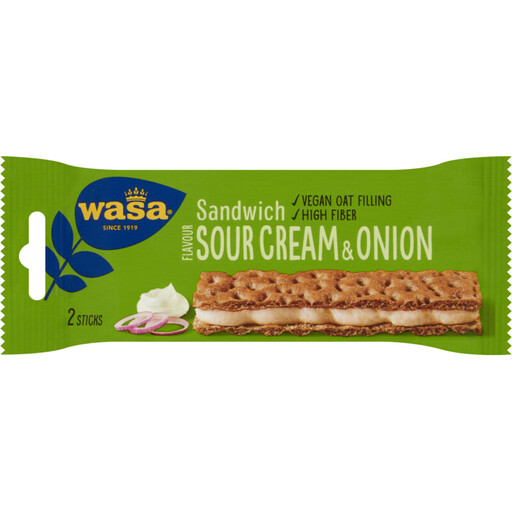
Wasa Sandwich Sour Cream & Onion 99 g
This filled sandwich variety is a good choice if you want to take crispbread as a snack, rather than looking for a plain base to add toppings to. The pack contains 99 g. Check the wholegrain label, ingredients and allergens for this variety separately.
Shop at Joybuy
 No image available
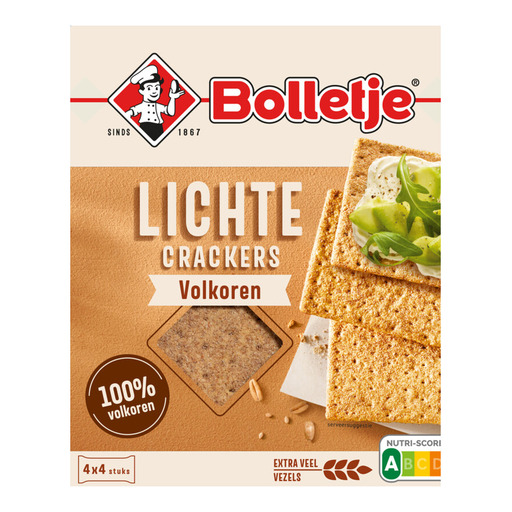
Bolletje Light wholegrain crackers 190 g
A smaller pack to consider if you don’t want to open a large one during your holiday. It contains 190 g. Check the nutritional information and allergens on the label, rather than drawing conclusions about its nutritional value from the name Light.
Shop at Joybuy
 No image available
Wasa Lightweight crackers 300 g
A thin rye variety for anyone who prefers a lighter texture to a robust cracker. The pack contains 300 g. Wasa lists milk ingredients in Lightweight. Check the label for other allergens too, and compare fibre with other products on the same per-100 g basis.
Shop at Joybuy
 No image available
Wasa Wholegrain crispbread 260 g
An option if you’re looking for a plain wholegrain rye base with a short ingredients list. For the 260 g pack of Wasa Wholegrain, Jumbo lists wholegrain rye flour, yeast and salt, and 20 g of fibre per 100 g. Check the current label for salt content and allergens.
Shop at Joybuy
Frequently asked questions
How can I recognise wholegrain crispbread?
Look for the wholegrain label, then check the ingredients list. According to the Netherlands Nutrition Centre and the Netherlands Food and Consumer Product Safety Authority, the grain ingredient in a product labelled wholegrain must consist entirely of wholegrain flour. A brown colour or the term multigrain isn’t enough.
Should I compare salt levels in wholegrain crispbread too?
Yes. The wholegrain label on its own says nothing about salt content. Compare the amount of salt per 100 g shown on the packs, and also consider the portion you’d usually eat.
How should I store opened crispbread on holiday?
Follow the storage advice on the pack and protect opened crispbread from moisture. The varieties we looked at advise keeping it dry and sealed after opening to maintain its crisp texture.
Does all Dutch crispbread contain iodine because of baker’s salt?
No. The rules on iodine compounds in bakery products don’t prove that every individual pack of crispbread contains iodised salt. The Netherlands Food and Consumer Product Safety Authority explains that these compounds may be present through baker’s salt. Check the packaging of the specific product to see which ingredients are used.


