What should you look for when choosing?
Start with the ‘wholegrain’ label and allergen information. Then compare nutritional values and pack sizes on a like-for-like basis.
| What to consider |
What to check |
Who it matters to |
| Wholegrain and fibre |
Look for the ‘wholegrain’ label and compare fibre per 100 g; also consider the portion you plan to serve. |
If fibre is a priority at home, you’ll want to choose a product for coffee whose nutritional value you can compare. This is the main deciding factor for around 42% of consumers. |
| Packaging and storage |
Compare the pack size and, where stated, the number of pieces; check how to reseal the pack after opening. |
When you have guests, you’ll want to serve enough crispbread without the rest losing its crunch before the next coffee break. This is the biggest consideration for around 33% of consumers. |
| Allergens and toppings |
Check the ingredients and both ‘contains’ and ‘may contain’ information on the current pack; check toppings separately. |
If guests avoid certain grains or seeds, you need to be able to decide what’s suitable for them before serving. This is the main consideration for around 25% of consumers. |
Crispbread for your coffee table at Joybuy
These crispbreads or crackers can be served with toppings alongside coffee. Compare pack sizes and check the current nutritional and allergen information for each variety; the names refer to different products.
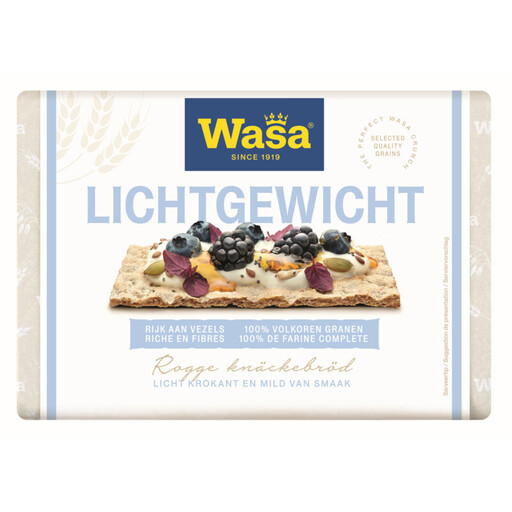 Image unavailable
Wasa Lightweight Crackers, 300 g
The 300 g pack is an option if you want to serve crackers with toppings to several guests.
Bear in mind that this product may contain rye, gluten and milk, and may contain sesame. Check the current label if fibre content or allergens are key to your choice.
Joybuy
 Image unavailable
Wasa Sourdough Rye Crackers, 235 g
These 235 g rye crackers are a good fit for a coffee break where you’re offering a selection of toppings.
If you have guests with allergies, check for rye and barley; sesame and milk may also be present. Reseal the pack after opening and store it in a dry place.
Joybuy
 Image unavailable
Bolletje Whole Grain Crispbread, 265 g
Consider this 265 g pack if you’d like to serve wholegrain crispbread with toppings.
Before serving, check the label for wheat, rye, barley and sesame; lupin may also be present. Store any leftovers in a dry place in a well-sealed pack.
Joybuy
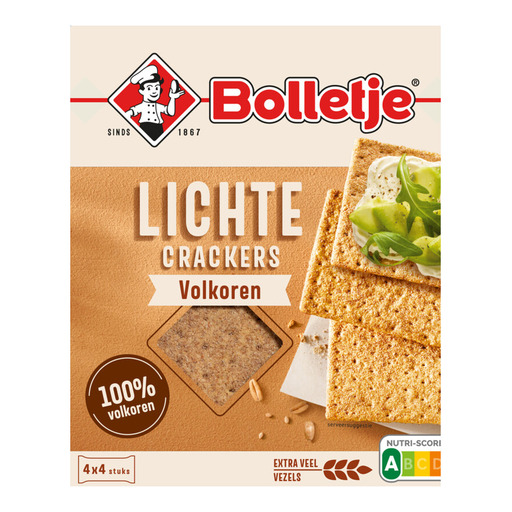 Image unavailable
Bolletje Light Whole Grain Crackers, 190 g
The 190 g pack is another size to consider if you’re serving crackers with toppings alongside coffee.
Check for wheat, sesame and barley; other cereals containing gluten may also be present. Read the current packaging and reseal it carefully after opening.
Joybuy
Frequently asked questions
How can I recognise wholegrain crispbread?
Look for ‘wholegrain’ on the pack and read the ingredients list. According to the Netherlands Nutrition Centre, the flour used in crackers with this label must be entirely wholegrain; ‘multigrain’ doesn’t automatically mean the same thing.
How much fibre is there in one piece of wholegrain crispbread?
As a general nutritional value, the Netherlands Nutrition Centre gives 1.4 g of fibre for a 10 g piece of wholegrain crispbread. The amount in a specific product or a larger portion may differ, so check the nutritional information per 100 g and per portion.
How do I keep crispbread crunchy after opening?
Seal the pack well and follow the storage instructions on the label. Albert Heijn recommends keeping its wholegrain crispbread in a closed tin after opening, so you can serve the rest at your next coffee break.
Does ‘salt’ on the label mean it contains iodine?
No. The word ‘salt’ alone doesn’t tell you whether the crispbread was made with iodised baker’s salt. Ask the manufacturer for product-specific information if that distinction matters to your choice.
Is the wholegrain crispbread mentioned here gluten-free?
No. The Wasa Wholegrain, AH, Jumbo and Bolletje Wholegrain Crispbread High in Fibre varieties discussed here contain cereals with gluten. If you’re buying for someone who eats gluten-free, choose a product explicitly labelled as gluten-free and check the allergen information for the toppings too.


