What should you look for when choosing?
If you’re choosing wholegrain crispbread for a barbecue, consider the wholegrain base, how you’ll serve it with toppings, the salt content and the allergens separately.
| What to consider |
What to check when buying |
Who it matters to |
| Wholegrain and fibre |
Check the wholegrain label and ingredients; compare the fibre per 100 g. |
I want a wholegrain base for my toppings and to be able to compare the fibre content of different products. Around 34% of consumers give this fibre choice top priority. |
| Toppings and crunch |
Compare size and thickness; keep moist toppings separate until serving. |
For a platter with a range of toppings, I’m looking for bites I can prepare in advance without the crackers going soft. Around 26% of consumers put ease of serving first. |
| Salt |
Compare the salt per 100 g, then consider the portion size. |
If I’m serving several crackers, I want to know how much salt the chosen variety contains. Salt is the main consideration for around 20% of consumers. |
| Allergens and ingredients |
Check each pack to see which allergens the product contains and which it may contain. |
I’m sharing snacks with guests for whom ingredients such as cereals containing gluten or sesame matter. Around 20% of consumers put this ingredients check first. |
Crispbread and crackers at Joybuy
Compare these crispbreads and crackers as a base for barbecue toppings. Check each pack to make sure the wholegrain label, nutritional information and allergens suit your guests and toppings.
 Image unavailable
Bolletje wholegrain crispbread – 265 g
An option if you want to serve toppings on wholegrain crispbread. Compare the fibre and salt per 100 g, and check the allergens on the pack before choosing.
View at Joybuy
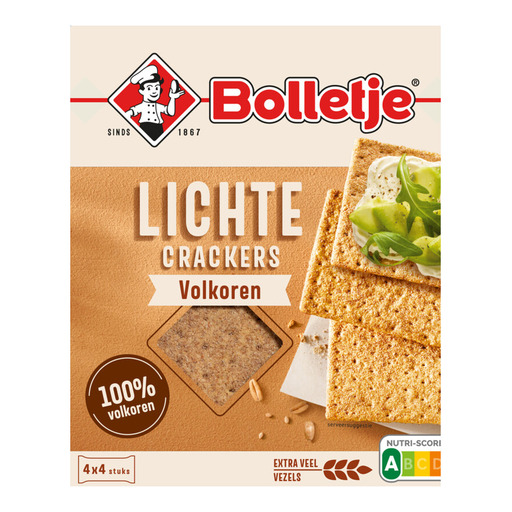 Image unavailable
Bolletje Light wholegrain crackers – 190 g
A cracker option for small bites with light toppings. If you’re serving several guests, check the size and allergens on the pack.
View at Joybuy
 Image unavailable
Wasa Lightweight crackers – 300 g
A Wasa cracker to serve with toppings. If you want to compare it with wholegrain crispbread, check the wholegrain label and nutritional information on the pack.
View at Joybuy
 Image unavailable
Wasa Wholegrain crispbread – 260 g
An option if you want to serve wholegrain rye crispbread with toppings. According to Joybuy’s product description, this variety is made with 100% wholegrain rye and three ingredients; check the current label for allergen information.
View at Joybuy
 Image unavailable
Wasa Rustic crispbread – 215 g
A rye crispbread to consider as a base for toppings. If you’re looking specifically for a fully wholegrain variety, check the ingredients and compare the fibre per 100 g on the label.
View at Joybuy
Frequently asked questions
How can I identify wholegrain crispbread?
Look for the wholegrain label and check which types of flour are listed in the ingredients. Then compare the fibre per 100 g: values can differ even between wholegrain varieties.
Should I compare salt per cracker or per 100 g?
Compare products per 100 g first, then check the weight of the crackers you’re serving. The Netherlands Nutrition Centre lists 0.1 g of salt for one 10 g piece of wholegrain crispbread; the value for a specific product may differ.
Can I add toppings to crispbread before the barbecue?
You can prepare dry toppings in advance, but it’s best to add moist toppings just before serving if you want to keep the crisp texture. Store any unused crispbread in a dry place and seal the pack well after opening.
Does crispbread in the Netherlands always contain iodine?
No, you can’t assume that. According to the Netherlands Nutrition Centre, manufacturers can use baker’s salt with iodine, but bakers aren’t required to do so. Check the ingredients or ask the manufacturer which salt was used in the product.
Is vegan crispbread also gluten-free?
No, a vegan label doesn’t tell you whether a product contains gluten. The wholegrain vegan variety from Albert Heijn reviewed here contains wheat and rye; if you have an allergy or dietary requirement, always check the allergen information on the specific pack.


