
Vandaag of morgen in huis

Kwaliteit gegarandeerd

Welkomstaanbiedingen ontgrendelen: GRATIS bezorging | Tot 80% korting | Gratis 30 dagen JoyPlus-proefperiode
Download de app
Wholegrain crackers may seem easy to compare, but the packaging doesn’t always tell the whole story. For example, a product may say wholegrain on the front while also containing sugar, syrup or relatively high levels of salt. Terms such as “multigrain”, “light” and “high in fibre” only tell you so much until you check the ingredients list and nutrition table.
For families in the Netherlands, three pitfalls are especially worth watching out for:
Ingredients are listed in descending order. If wholemeal wheat flour, wholemeal rye flour or a similar wholegrain ingredient is near the top, it makes up a significant part of the product. Rye crackers and crispbread often have a short ingredients list, including rye, water, yeast and salt.
A longer list isn’t automatically a problem, but pay particular attention to:
According to the product information, Lu Vitalu Multiseed Crackers are made up of 69.2% wholemeal wheat flour and contain sesame, linseed and pumpkin seeds, among other ingredients. The same information also lists glucose-fructose syrup, sugar and palm oil. This makes the product suitable if you’re looking for crackers with seeds, but it’s worth looking beyond the front of the packaging.
Serving sizes vary by brand, so the nutrition table per 100 grams is the most useful basis for comparison. Fibre content varies considerably across the range:
These figures are taken from the product information provided. Always check the current packaging when you buy, as recipes and labels can change.
Also check sugar and salt. Wasa Sourdough Rye Crackers list 0.3 grams of sugar and 1.2 grams of salt per 100 grams. Bolletje Light Whole Grain Crackers list 3.3 grams of sugar and 0.98 grams of salt. This difference may matter if you eat crackers every day or use a variety of toppings.
Thin, light crackers are handy for a quick breakfast or as a base for jam, cottage cheese or vegetable spread. Crispbread and rye crackers are generally sturdier and go well with savoury toppings. Crackers with seeds can add more texture, but may crumble more easily.
Also consider the packaging:
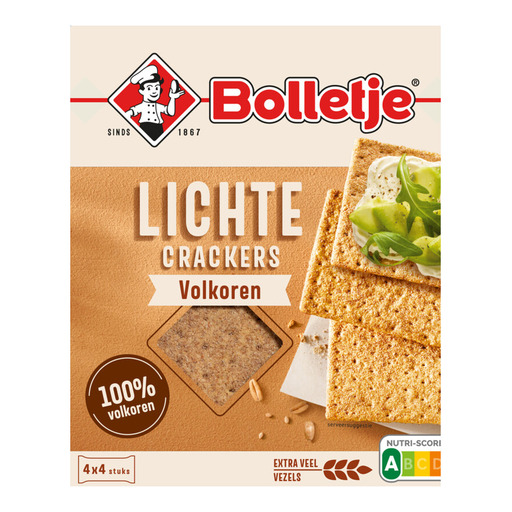
Why it suits this profile: The thin shape and packs of four make these a practical choice for a simple breakfast or snack.
The packaging states that these crackers contain 100% wholegrain cereals and 15 grams of fibre per 100 grams, so “light” doesn’t have to be your only reason for choosing them.
A thin texture, 15 grams of fibre per 100 grams and portions of four crackers.

Why it suits this profile: The ingredients list is straightforward and, according to the product information, consists mainly of wholegrain rye, with sourdough for a distinctive flavour.
The product information states that these crackers contain 100% wholegrain rye and just 0.3 grams of sugar per 100 grams. Be sure to check the current packaging.
19 grams of fibre per 100 grams, 100% wholegrain rye and a sturdy base for savoury toppings.

Why it suits this profile: This product is aimed at shoppers who give fibre content per 100 grams considerable weight when making their everyday choice.
The stated fibre content is 26 grams per 100 grams. The ingredients list includes wholegrain rye, wheat, oats and sesame.
26 grams of fibre per 100 grams, combining rye, wheat, oats and sesame.
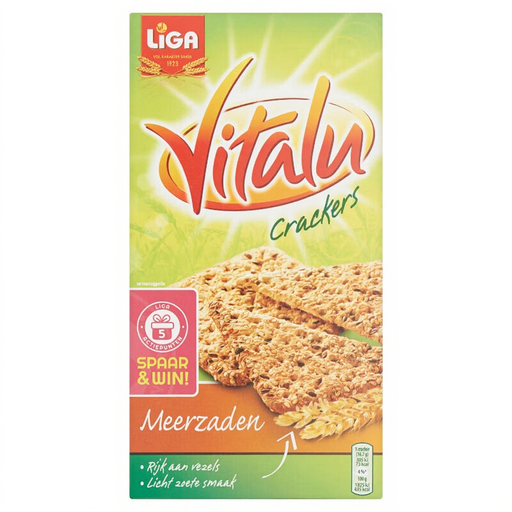
Why it suits this profile: Sesame, linseed and pumpkin seeds add variety to the flavour and texture at breakfast or lunchtime.
The product description gives the quantities of the three seeds. It also lists wheat, egg, soya, sesame and sulphites as allergens.
14 crackers in two resealable packs, with sesame, linseed and pumpkin seeds.
We’ve put together a complete, up-to-date list of products that meet these strict selection criteria and the current European safety requirements.
Not every breakfast or snack calls for the same product. Wholegrain rusks are light and easy to store, but can break more easily. High-fibre biscuits and breakfast biscuits are handy when you’re out and about, but often contain more sugar than classic crackers. So be sure to check the table per 100 grams.
According to the product information, Liga Oat Kick Forest Fruits contains 4.6 grams of fibre and 31 grams of sugar per 100 grams. That makes it more of a sweet snack than a direct alternative to rye crackers. The same goes for granola: Holie’s Granola Protein Almond Speculaas lists 14 grams of fibre and 20 grams of protein per 100 grams, but also contains nuts, peanuts, soya, barley, oats and spelt.
Choosing snacks for young children requires extra care. According to the product information, The Little Kitchen Organic Soft Cookies are suitable from 6 months and contain wheat and milk, among other ingredients. Give baby biscuits according to the instructions on the packaging and check the allergens. “Organic” or “with wholegrain” doesn’t replace age guidance or supervision while eating.
It depends on the ingredients and what you top them with. A cracker mainly provides grains and carbohydrates. Varying your toppings with options such as dairy, egg, pulses or vegetables can make breakfast more varied. Always check the packaging if you have allergies.
Crispbread is usually a thin, crisp bread product made with rye or other grains. Crackers can also be made with wheat, oats, rice or a mix of grains. So don’t rely on the name alone: check the proportion of wholegrain flour and the fibre content.
Store them in a cool, dry place away from heat and moisture. Seal opened packaging tightly. Resealable bags or individually wrapped portions are handy in a damp home. Don’t use the product if the packaging is damaged or the crackers smell or taste damp.
