
Breakfast fans keeping an eye on sugars
If you often eat chocolate breakfast cereal, compare the sugars per 100 g and check which grain forms the base, as well as how much fibre is listed.


For your weekly shop, choose chocolate breakfast cereals that explicitly list wholegrain in the ingredients, then compare sugars and fibre per 100 g. Check the allergens, serving size and pack size too, to make sure they suit your household. ‘No added sugar’ does not mean a product contains no sugars.
If you often eat chocolate breakfast cereal, compare the sugars per 100 g and check which grain forms the base, as well as how much fibre is listed.
For a pack that will cover several breakfasts, consider the wholegrain listed, serving size, allergens and how much your household will actually use.
If you’re keeping an eye on fibre, compare the amount per 100 g and check the ingredients too. A fibre claim on its own doesn’t tell you whether the grain is wholegrain.
Start with the grain in the ingredients list, then compare the nutritional information per 100 g. After that, check which serving size and pack size suit your weekly shop.
| What to check | What to look for when buying | Who it matters to |
|---|---|---|
| Sugars | Compare sugars per 100 g. Read any statement about added sugars alongside the nutrition table. | If I eat this cereal often, I want to know how much sugar the variety I choose contains. For around 37% of consumers, reducing sugar would be the top priority. |
| Wholegrain and fibre | Look for wholegrain explicitly listed in the ingredients and compare fibre per 100 g. | If I’m mainly looking for a grain base I can check on the label, I don’t want to rely on a fibre claim alone. For around 27% of consumers, wholegrain and fibre would come first. |
| Pack size | Compare the pack size with the serving size and consider whether your household will use it in time. | If I’m buying cereal for several breakfasts, I want enough in the cupboard without choosing a bag that gets left uneaten. Pack size would matter most to around 18% of consumers. |
| Allergens | Check the current packaging to see which allergens the product contains and which it may contain. | If someone in my household needs to avoid an ingredient, checking the label comes before the taste or packaging. For around 18% of consumers, this would be their first concern. |
Fibre and wholegrain are different product characteristics. Jumbo’s product listing names wheat flour as the main ingredient in Kellogg's Coco Pops Chocos; this alone doesn’t prove that it contains wholegrain wheat.
For this specific chocolate variety, look for an explicit wholegrain claim or wholegrain listed in the ingredients.
This statement doesn’t mean the total sugar content is zero. Jumbo’s product information lists 3,4 g of sugars per 100 g for Quaker Cruesli Zero Sugar Added Chocolate.
Compare sugars in the nutrition table per 100 g and check the ingredients too.
A larger pack is only practical if it suits the number of breakfasts you need it for and your household’s preferences.
Check the pack size, stated serving size and storage instructions before choosing a pack for your weekly shop.
If the bag stays open for a long time, take extra care when storing it to maintain its quality.
Chocolate breakfast cereals can contain different grains and other allergens. The Netherlands Food and Consumer Product Safety Authority says allergen information for prepacked products must be shown on the label.
Check the current packaging every time you buy the product, and distinguish between ‘contains’ and ‘may contain’ statements.
Always compare the specific variety: a brand name or the shape of the cereal doesn’t prove that every product in the range is wholegrain.
Chocolate cruesli varieties, including a standard option and one called Zero Sugar Added.
Chocolate muesli is a useful option to compare if you want to look at grain type, sugars and fibre side by side.
Crispy Minis Choco is a chocolate breakfast cereal in biscuit form.
Coco Pops Chocos shows why the ingredients in a specific chocolate variety matter more than the brand name.
A supermarket range where you can compare listings for different chocolate breakfast cereals.
This selection includes chocolate muesli, chocolate breakfast cereal loops, granola and cruesli for anyone looking to choose wholegrain ingredients as part of their weekly shop. Check the current label for each variety; a feature of one version doesn’t automatically apply to another.
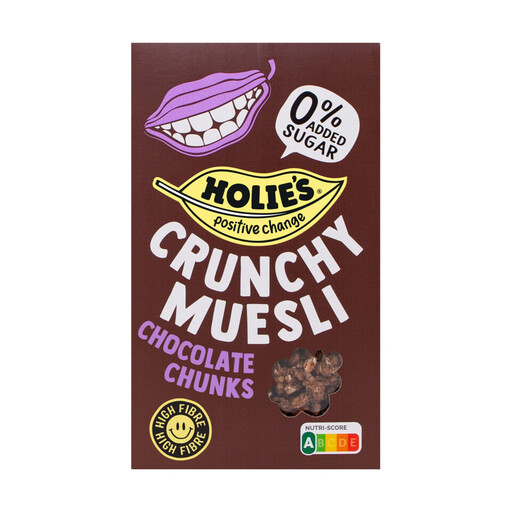 Image unavailable
A chocolate muesli to consider if you’re looking for wholegrain ingredients as part of your weekly shop. Check the nutritional information per 100 g and allergens on the current packaging.
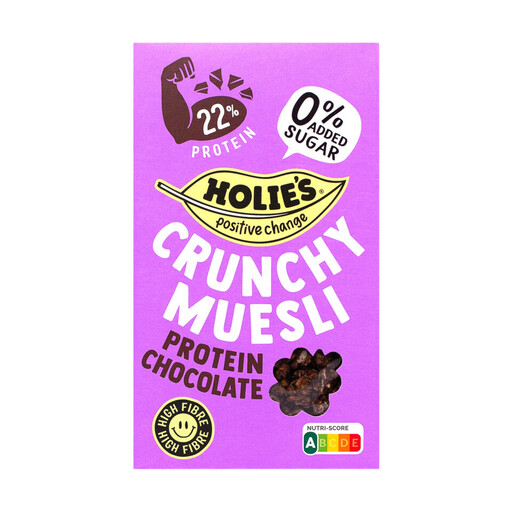 Image unavailable
A chocolate muesli for anyone wanting to compare a variety containing wholegrain. Assess the nutritional value of this Protein Chocolate version separately; the model name is no substitute for the nutrition table.
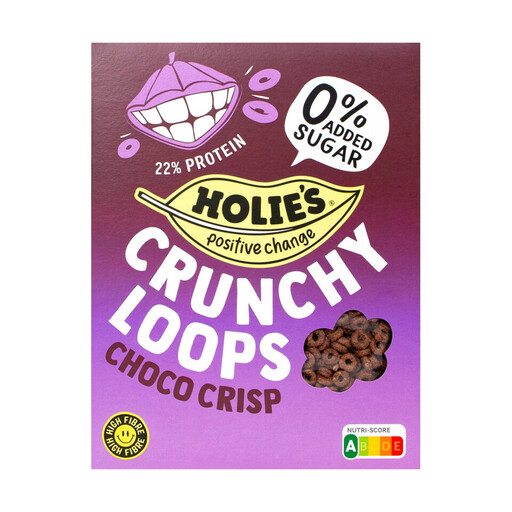 Image unavailable
A ring-shaped option if you prefer that shape to muesli or granola. Check which wholegrain ingredients and allergens are listed on the current packaging, and note the pack size of 350gr.
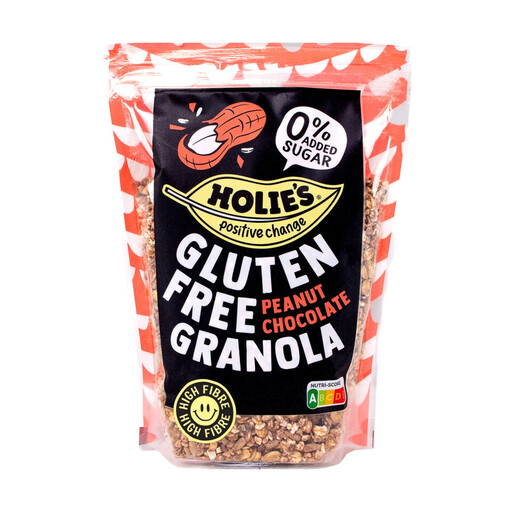 Image unavailable
A chocolate granola for anyone looking for granola rather than muesli or cruesli. Check the current allergen information carefully, especially if peanuts or other ingredients are a concern for your household. Don’t assume it’s suitable based on the model name alone.
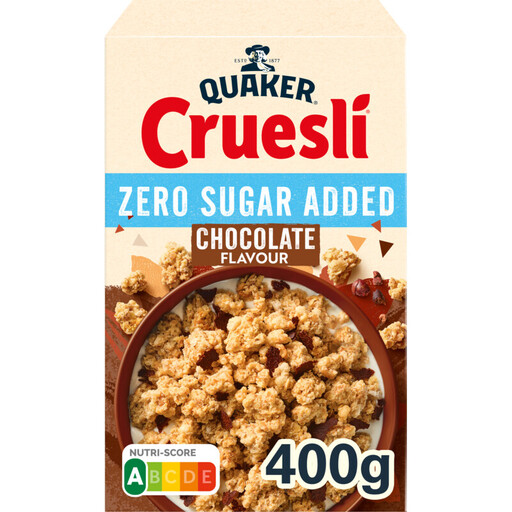 Image unavailable
A chocolate cruesli for anyone weighing up sugars and wholegrain ingredients. Check the total sugars on the current packaging, and make sure you note the unit used for the fibre value before comparing it with other products.
First compare the nutritional information per 100 g, then check how many grams you use each time. According to the Netherlands Nutrition Centre, the nutrition table shows information including energy, fat, sugars and salt. Values per 100 g make products with different suggested serving sizes easier to compare.
No. A statement about added sugars doesn’t mean the product contains no sugars. Jumbo lists 3,4 g of sugars per 100 g for Quaker Cruesli Zero Sugar Added Chocolate, so always check the total sugar value for the specific variety.
Check the allergen information on the current packaging of the product you’re buying. The Netherlands Food and Consumer Product Safety Authority says this information must be shown on the label of prepacked products. Check both which allergens the product contains and any ‘may contain’ statements.
Yes. Use the online product information to shortlist varieties, then check the packaging you receive before using the product. This is particularly important if wholegrain ingredients or specific allergens affect your choice.