
Families looking for a wholegrain staple
You want to know which grain is the main ingredient in your everyday breakfast and how much fibre the product contains per 100 g.


Start with the ingredients list: choose a breakfast product made primarily from wholegrain cereals, then compare fibre, sugars and salt per 100 g. Porridge and oatmeal make a simple base; if you prefer crunchy cereals or muesli, take a closer look at the ingredients of the specific variety. Choose a pack size that matches what your family will actually use.
You want to know which grain is the main ingredient in your everyday breakfast and how much fibre the product contains per 100 g.
You shop for several family members and want to match the pack size and number of portions to what you eat, so a larger pack doesn’t go to waste.
You’re looking for a texture and flavour your family will enjoy, while checking the ingredients and allergens in each variety.
First check the grains and the label, then compare the nutritional values, pack size and how your family eats the product.
| What to consider | What to check when buying | Who it matters to |
|---|---|---|
| Wholegrain cereals and fibre | Check which grains appear near the top of the ingredients list and compare fibre per 100 g. | I want to know whether wholegrain cereals really are the main ingredient in our everyday breakfast. This is the top priority for around 36% of consumers. |
| Pack size and consumption | Check the net weight, the stated number of portions and the storage instructions. | If several family members eat from the same pack, I want to estimate how long it will last. Around 29% of consumers prioritise this kind of planning. |
| Sugars, salt and taste | Compare sugars and salt per 100 g; for sweet or crunchy varieties, check the ingredients too. | I’m looking for something the family will enjoy, without judging it by taste or the front of the pack alone. This balance matters most to around 21% of consumers. |
| Allergens and gluten | Read the current allergen information and, for oats where necessary, check for the Crossed Grain symbol. | If a family member has a relevant allergy or coeliac disease, I need to check whether the specific variety is suitable first. This is the main concern for around 14% of consumers. |
A product may contain other grains, sugar or salt as well as wholegrain cereals. For example, Kellogg's lists rice, whole wheat, barley, sugar and salt in Special K Original.
Read the ingredients list for the exact variety and compare fibre, sugars and salt per 100 g.
The pack size alone doesn’t tell you how many portions your family will get from it or whether you’ll use it all before its best-before date.
Compare the weight with the stated serving size and how much your household uses.
A pack that isn’t eaten in time can go to waste.
According to the Netherlands Nutrition Centre, ordinary oat products can be contaminated with gluten. This makes it important to distinguish between regular oats and a suitably labelled variety if you have coeliac disease.
Check the official Crossed Grain symbol on the pack and read the current allergen information too.
The variety reviewed is a whole wheat product for making porridge, not a crunchy flake to eat dry.
The own-brand range includes wholegrain breakfast porridge and rolled oats, among other products. Check which type suits your family.
Special K Original is a crunchy mix in which whole wheat is one of the grains.
This ALDI own brand includes a range of cereal products, including wholegrain muesli and a wholegrain breakfast cereal made with seven grains.
These products show three ways to choose a wholegrain cereal base for your family: oatmeal, wheat porridge and a crunchy cereal mix. Compare the nutritional information per 100 g, and if several people will be eating it, check the pack size and allergens too.
 Image unavailable
For anyone who wants pre-portioned oatmeal: the pack contains 12 individual portions.
The product information states that it contains 100% wholegrain oats, with 9 g fibre, 1 g sugars and 0 g salt per 100 g. Check the pack for the latest information about oats and cereals containing gluten.
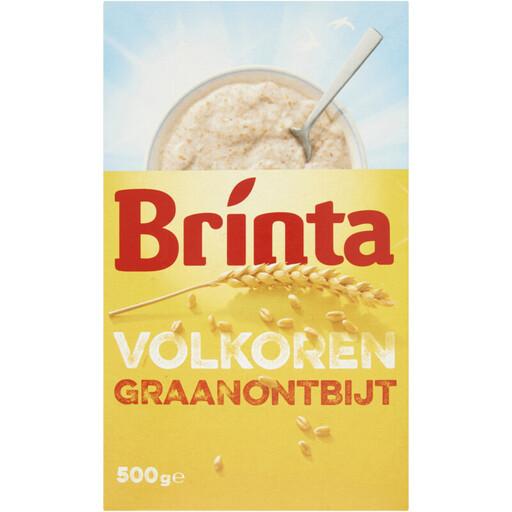 Image unavailable
A wheat-based option for anyone who prefers porridge to crunchy breakfast cereal; the pack states that it contains 14 portions.
According to the product information, this variety contains whole wheat, with 10 g fibre, 4.6 g sugars and 0.52 g salt per 100 g. The product contains wheat and gluten.
 Image unavailable
A pack of oatmeal for households that plan their breakfast supplies by portion: the description states that it contains 15 portions.
The product information states that it contains 100% wholegrain oats, with 9 g fibre and 1.1 g sugars per 100 g. Check the current salt value and allergen information on the pack before choosing.
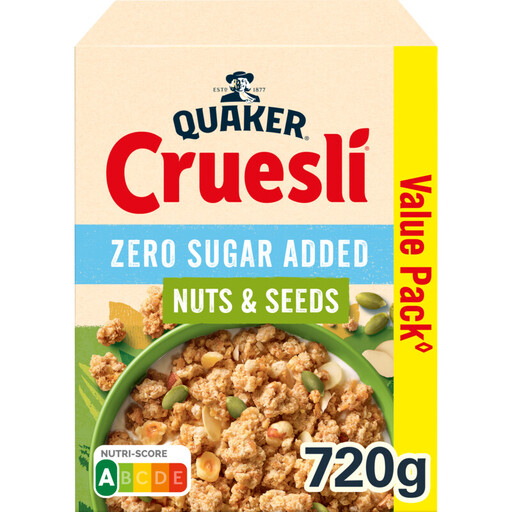 Image unavailable
A crunchy cereal mix for anyone who wants to combine wholegrain oats and wheat with nuts and seeds.
The product information states that it contains 23 g fibre, 3.8 g sugars and 0.11 g salt per 100 g. This variety contains oats, wheat, hazelnuts and almonds, among other ingredients, and may contain milk; check the pack if you have allergies.
 Image unavailable
A variety made with fine wholegrain oat flakes for anyone looking for an oatmeal base.
The product information states that it contains 11 g fibre, 1.7 g sugars and 0.02 g salt per 100 g. Check the allergen information: gluten and possible traces of milk, nuts, sesame and soya are relevant to this variety.
Choose a variety whose ingredients list shows that wholegrain cereals are the main ingredient. Then compare fibre, sugars and salt per 100 g, and use the pack size and number of portions to see whether it suits how much your household uses.
Make a simple base without adding sugar, then add something of your choice, such as fruit. If you’re adding nuts or other ingredients, check that they’re suitable for any allergens your family needs to avoid.
No. Wholegrain doesn’t mean gluten-free: wheat, barley and rye contain gluten. The Netherlands Nutrition Centre points out that ordinary oats can be contaminated with gluten; if you have coeliac disease, check for the official Crossed Grain symbol on the pack.
Read the allergen information on the specific, current pack. The Netherlands Food and Consumer Product Safety Authority says that allergen information must appear on the label of pre-packed products; don’t assume the ingredients are the same as those in another variety from the same brand.