For a toddler aged 1 to 3, plain wholegrain porridge oats with no added sugar or salt are an easy way to vary their breakfast beyond bread, in line with the advice from the Netherlands Nutrition Centre. For baby porridge labelled with an age recommendation, check the minimum age and nutritional information. With crunchy cereals, you’ll also want to consider the ingredients, allergens and whether the texture is right for your child.
Who is this choice relevant for?
Parents looking for a simple wholegrain option
You want to vary the bread you serve at your toddler’s breakfast and prefer cereals with no added sugar or salt, as recommended by the Netherlands Nutrition Centre for children aged 1 to 3. With plain porridge oats, you can check the ingredients and preparation method for yourself.
Parents looking for porridge with an age recommendation
You’re looking for a product that states a minimum age and gives preparation instructions. Also check the ingredients, sugars per serving and allergens: an age recommendation doesn’t tell you everything about what’s in the product.
Parents considering crunchy cereals
You’re looking for an alternative to soft porridge. Check that the texture suits your child’s eating skills, and read the information about salt and allergens even if the product says ‘no added sugars’.
What should you look for when choosing?
The Netherlands Nutrition Centre recommends oats, muesli and other wholegrain breakfast cereals with no added sugar or salt as alternatives to bread at breakfast for children aged 1 to 3. Then choose a preparation method and texture that suit your child and your morning routine.
Plain wholegrain porridge oats
When: when you want a simple base to make your own porridge.
Consider: you prepare the porridge yourself and adjust the temperature and consistency to suit your child.
Porridge with an age recommendation
When: when you want a product whose manufacturer states a minimum age and preparation method.
Consider: check the ingredients and sugars per serving too; an age recommendation is no substitute for comparing these details.
Crunchy muesli or cruesli
When: when your child can manage the crunchy texture and you’re looking for a change.
Consider: check separately for added sugar and salt, as well as the allergens listed.
| What to consider | What to check when buying | Who it matters to |
|---|
| Wholegrain with no added ingredients |
Read the ingredients list and check for added sugars and added salt per 100 g; the word ‘wholegrain’ alone isn’t enough. |
I want to vary the bread I serve with a simple cereal base, without unknowingly adding sugar or salt. Around 33% of consumers prioritise this composition. |
| Age and texture |
Check any stated minimum age and the preparation instructions, and whether the prepared or crunchy texture suits your child’s eating skills. |
What matters most to me is whether the porridge or cereal mix is easy for my child to eat at this stage. Age and texture are key priorities for around 27% of consumers. |
| Allergens and taking it with you |
Read the current ingredients and allergen information. If you’re sending it in with your child, ask the relevant childcare provider or school about its policy. |
If I’m sending breakfast cereal in with my child or need to watch out for allergens, I want to know which grains and other allergens are listed. Around 20% of consumers prioritise these checks. |
| Ease of preparation |
Compare the serving size and preparation method of similar products, without assuming convenience means the product has the composition you’re looking for. |
On a busy morning, I want to prepare breakfast in a way that works for us every day. This routine is the biggest consideration for around 20% of consumers. |
Common mistakes
-
Assuming ‘wholegrain’ means ‘no added sugar or salt’
The Netherlands Nutrition Centre says wholegrain breakfast cereals served as an alternative at toddler breakfast should meet both conditions. The ingredients list for Brinta Volkoren graanontbijt includes salt; Kellogg's Oaties Original Crunch includes sugar and glucose syrup, among other ingredients, according to the product information from Albert Heijn.
As well as checking the type of grain, check the ingredients and the information about added sugars and salt.
-
Assuming ‘no added sugars’ means ‘sugar-free’
A product may also contain sugars from its ingredients. The nutritional information from Albert Heijn lists 12 g of sugars per serving of Nestlé Junior Cereals Multifruit Crisps made with 25 g of product.
Read the nutrition table and only compare values on the same basis, such as per 100 g of product or per clearly defined serving.
-
Checking for allergens only the first time you buy
Ingredients and allergen information can vary between products. The Netherlands Food and Consumer Product Safety Authority states that the type of grain must be clearly identifiable on the label when it is a gluten-containing cereal.
Check the packaging again next time you buy, and if you’re sending the product in with your child, check the relevant childcare provider or school’s policy.
Brands compared
Albert Heijn
The own-brand range includes fine wholegrain oats and a wholegrain breakfast cereal; compare these products separately.
- For AH Volkoren havermout fijne vlokken, Albert Heijn lists wholegrain oats as an ingredient and 0 g of added sugars and 0 g of added salt per 100 g.
- According to Albert Heijn, AH Volkoren graanontbijt contains 0.48 g of added salt per 100 g, so it isn’t an equivalent choice in this respect.
Quaker
Quaker offers plain porridge oats and the crunchy Cruesli range; Cruesli is not a separate brand.
- The ingredients information for Quaker Havermout at Albert Heijn lists 100% wholegrain oats.
- Quaker Cruesli Zero Sugar Added Naturel is a different type of product from soft porridge; with this crunchy variety, check the salt and allergens on the packaging too.
Brinta
Brinta Volkoren graanontbijt is a wholegrain wheat product that can be made into porridge.
- The ingredients information from Albert Heijn lists wholemeal wheat flour.
- The same ingredients list includes salt. Check whether this product suits your preference for breakfast cereals with no added salt; it contains wheat.
Nestlé
Nestlé offers products including Junior Cereals Multifruit Crisps, labelled as suitable from 15 months.
- According to Nestlé Babyvoeding, this product is suitable from 15 months; check that this age recommendation is right for your child.
- Albert Heijn’s nutritional information lists 12 g of sugars per serving made with 25 g of product. Check the allergens on the packaging too.
Kellogg's
Kellogg's offers a crunchy cereal variety called Oaties Original Crunch.
- Albert Heijn’s product information lists oats, wheat and maize, among other ingredients.
- The ingredients list also includes sugar, glucose syrup and sugar syrup. This is worth noting if you’re specifically looking for a product with no added sugar.
Products for porridge and a crunchy change
These Joybuy products include porridge oats or wholegrain breakfast cereal to make into porridge, as well as crunchy cruesli as a possible alternative. Check the packaging to make sure the ingredients, allergens and texture suit your choice for your toddler’s breakfast.
 Image unavailable
Quaker Express Oatmeal, 324 g
An option if you’d like to make a warm porridge with oats. Check the ingredients and allergens on the packaging, and make sure the consistency and temperature are right for your child.
View on Joybuy
 Image unavailable
Quaker Oatmeal, 600 g
For anyone looking for plain oats as a base for porridge. Check the current packaging for salt too if you want to choose breakfast cereals with no added salt.
View on Joybuy
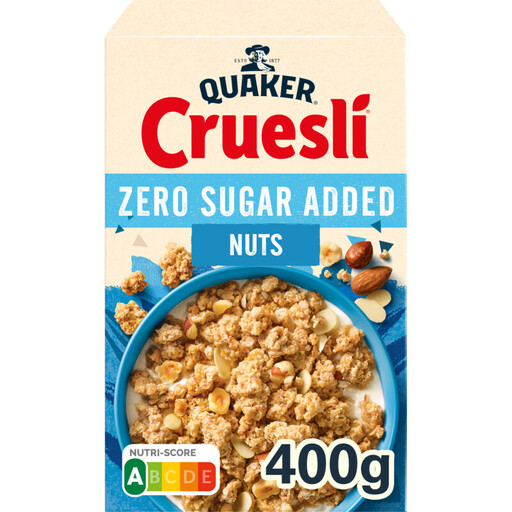 Image unavailable
Quaker Cruesli Nuts Zero Sugar, 400 g
A crunchy alternative if the texture suits your child’s eating skills. Check the information about nuts, wheat and other allergens; the product information also lists salt, so it isn’t the same choice as cereals with no added salt.
View on Joybuy
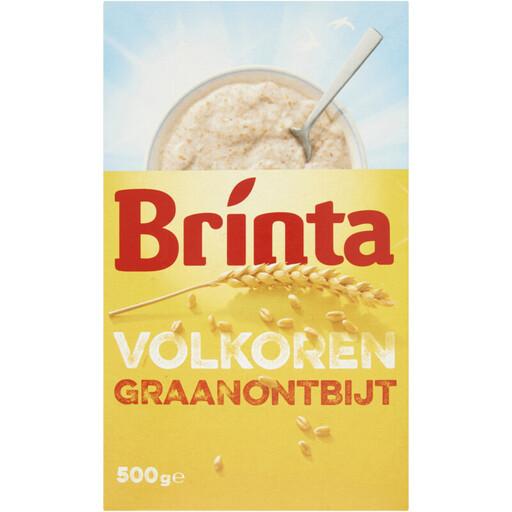 Image unavailable
Brinta Whole Wheat Cereal Breakfast, 500 g
A wholegrain wheat product for anyone who wants to make a warm cereal porridge. The ingredients information for Brinta Volkoren graanontbijt lists salt and wheat; bear this in mind if you’re looking for breakfast cereals with no added salt, and check the current packaging.
View on Joybuy
Frequently asked questions
Can I vary the bread I serve at my toddler’s breakfast with breakfast cereals?
Yes. For children aged 1 to 3, the Netherlands Nutrition Centre recommends oats, muesli and other wholegrain breakfast cereals with no added sugar or salt as alternatives to bread at breakfast. When buying, check for both additions, not just the word ‘wholegrain’.
Does ‘no added sugars’ mean toddler porridge contains no sugars?
No. It may still contain sugars from its ingredients. Albert Heijn’s nutritional information lists 12 g of sugars per serving of Nestlé Junior Cereals Multifruit Crisps made with 25 g of product; when comparing products, always check the serving size and preparation method used in the table.
How do I check for gluten and other allergens in breakfast cereals?
Read the ingredients and allergen information on the current packaging. The Netherlands Food and Consumer Product Safety Authority says the relevant grain must be clearly identified when it is a gluten-containing cereal. If you’re sending breakfast cereal in with your child, ask the childcare provider or school about its policy.
How should I store dry breakfast cereal after opening?
Follow the storage advice on the packaging of the product you choose. Albert Heijn’s product information recommends storing Quaker Havermout in a cool, dry place, and AH Volkoren havermout fijne vlokken in a cool, dark, dry place in a tightly closed pack.


