What should you look for when choosing?
First decide whether you’d like to serve warm porridge, muesli or something crunchy. Then compare similar breakfast cereals per 100 g. If you’re hosting several guests, pay particular attention to the allergen information.
| What to consider |
What to check when buying |
Who is this most important for? |
| Wholegrains and fibre |
Check which grains and wholegrain ingredients are listed, and compare the fibre per 100 g. |
If I mainly want to serve something with a clear wholegrain base, the ingredients and fibre content are the deciding factors for me; around 42% of consumers put this need first. |
| Sugars and nutritional value |
Compare ‘of which sugars’, fat and fibre per 100 g; consider any claim about added sugars alongside the ingredients list. |
I want to know how much sugar the product contains, even when no sugars have been added. For around 33% of consumers, this nutritional profile matters most. |
| Texture and serving |
Check whether the product needs to be prepared, and whether porridge, muesli or a crunchy topping suits your brunch plans. |
For a self-service buffet, I’m looking for something different from a warm bowl at the table; around 17% of consumers give serving style and texture top priority. |
| Allergens |
Read the allergen information and any ‘may contain’ warnings on the current packaging. |
If a guest needs to avoid certain ingredients, I want to know what I can serve separately. Allergens are the main consideration for around 8% of consumers. |
Breakfast cereals for Easter brunch on Joybuy
These products mainly offer porridge oats and other wholegrain options for a bowl at the table, alongside crunchy Cruesli to serve with yoghurt or quark. Choose the style that suits your brunch and compare the individual packs for nutritional information and allergens.
 Image unavailable
Quaker Express Oatmeal 324 g
A porridge option if you’d like to serve a warm bowl at brunch. The pack contains 324 g; check the preparation instructions and allergen information on the label.
View on Joybuy
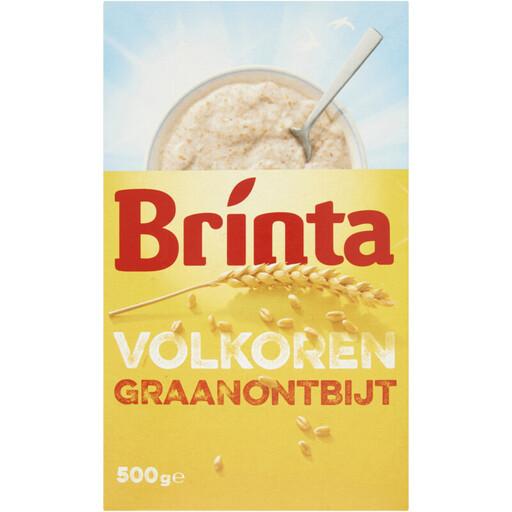 Image unavailable
Brinta Wholegrain Breakfast Cereal 500 g
For a warm brunch bowl made with wholegrain wheat. Albert Heijn describes this Brinta variety as 100% wholegrain wheat, with 10 g of fibre and 4.6 g of sugars per 100 g; the product contains wheat and gluten.
View on Joybuy
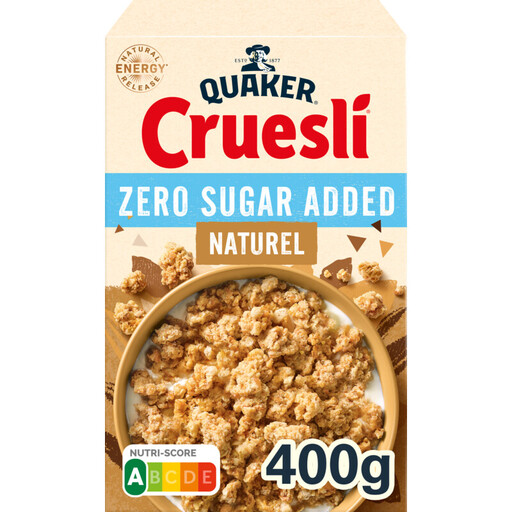 Image unavailable
Quaker Zs Cruesli Natural 400 g
A crunchy option for a yoghurt or quark bar, in a 400 g pack. Compare this variety’s nutritional information per 100 g and, if you have allergies, check the warnings on the current packaging.
View on Joybuy
 Image unavailable
Zonnatura Organic Whole Wheat Oatmeal 500 g
An oat option to consider if you’d like to serve a bowl of grains alongside crunchy breakfast cereals. The pack contains 500 g; check the label for preparation instructions and allergen information.
View on Joybuy
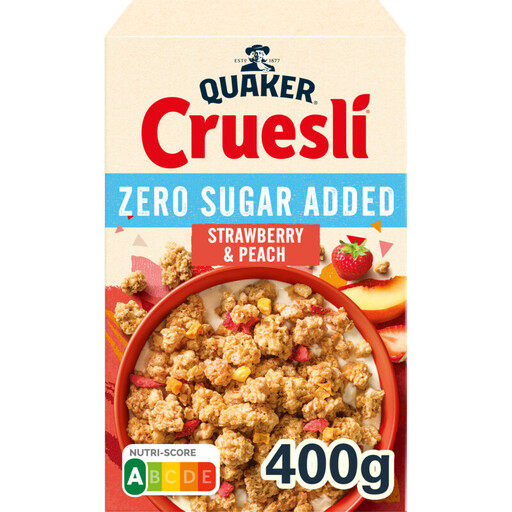 Image unavailable
Quaker Cruesli Zero Sugar Added Strawberry & Peach 400 g
A crunchy Cruesli variety with strawberry and peach for anyone looking to serve fruit at brunch. The pack contains 400 g; as well as the claim about added sugars, read the total sugar content and allergen information on the label.
View on Joybuy
Frequently asked questions
How do I compare breakfast cereals with different serving sizes?
Compare similar breakfast cereals per 100 g. This lets you compare the stated sugars and fibre side by side, as recommended by the Netherlands Nutrition Centre, without different serving sizes skewing the comparison. Also check the fat content and ingredients.
Does ‘no added sugars’ mean muesli is sugar-free?
No, it may still contain sugars from its ingredients. Albert Heijn states that AH Biologisch Wholegrain Muesli Fruit & Nuts contains no added sugar, but does contain 13 g of total sugars per 100 g.
What should I look out for if guests have allergies?
For each breakfast cereal, check the allergen information and any warnings about possible traces on the current packaging. The Netherlands Food and Consumer Product Safety Authority explains how allergens are listed on labels; when serving, keep bowls and serving spoons separate too.
Which milk or topping goes well with breakfast cereals?
Choose something that suits the preparation method and your guests: Brinta, for example, is prepared with warm milk or water, while muesli can be served with yoghurt or quark. If you have allergies, check the labels on both the breakfast cereal and the drink or topping.
How should I store breakfast cereals after Easter brunch?
Store leftovers in a tightly sealed container in a cool, dark and dry place, as recommended by the Netherlands Nutrition Centre for breakfast cereals. Also follow the best-before date and any storage instructions on the packaging.


