
Hotels looking for a wholegrain base
For purchasing teams comparing breakfast cereals by wholegrain ingredients, fibre, sugars and salt. The Netherlands Nutrition Centre advises looking beyond the wholegrain label when choosing breakfast cereals.


For a hotel breakfast buffet, choose a simple wholegrain cereal base alongside crunchy muesli or flakes, so guests can pick from a range of textures and preparations. Compare the ingredients, fibre, sugars, salt and allergens for each exact variant. In the Netherlands, allergen information for unpackaged breakfast cereals must be available before guests make their choice.
For purchasing teams comparing breakfast cereals by wholegrain ingredients, fibre, sugars and salt. The Netherlands Nutrition Centre advises looking beyond the wholegrain label when choosing breakfast cereals.
For buffet managers using bowls or dispensers, who need to give guests clear information about allergens before they make their choice. The Netherlands Food and Consumer Product Safety Authority sets out the rules for unpackaged foods.
For buffets looking to pair a simple cereal base with crunchy muesli or flakes. The preparation and serving method will determine what facilities you need at the buffet.
Start by considering how you want to serve the cereals and how you’ll manage allergen information. Then compare the nutritional information for the exact variants you plan to offer together.
| What to look for | What to check when buying | Who is this most relevant for? |
|---|---|---|
| Wholegrain and fibre | Check which grains are wholegrain and compare the fibre per 100 g and per portion. | If I’m looking for a simple buffet staple, I want to be able to compare ingredients and fibre without relying solely on the front of the pack. For around 33% of consumers, this wholegrain and fibre foundation is a priority. |
| Allergen management | Check the current allergen declaration and how information will be made available before guests choose from open bowls or dispensers. | For self-service, I want to be able to tell guests which cereals containing gluten or nuts are in a product. Around 27% of consumers give allergen management their highest priority. |
| Texture and preparation | Compare the serving method and portion size, and check what facilities a hot option requires. | When guests need to choose between a soft cereal dish and something crunchy, it’s also important to consider how much preparation the buffet can manage. This combination is the main consideration for around 20% of consumers. |
| Added sugar | Compare the ingredients and total sugars per 100 g; consider any claim about added sugars alongside the rest of the nutritional information. | I want to be able to offer a crunchy option while distinguishing between added and naturally occurring sugars. Limiting added sugar is a priority for around 20% of consumers. |
Wholegrain ingredients don’t tell you how much sugar, salt or fat a breakfast cereal contains. For example, Albert Heijn lists 9 g of added sugars per 100 g for AH Biologisch Krokante muesli naturel.
Use wholegrain as one selection criterion, then compare the ingredients list and nutritional information for each exact variant.
According to Quaker’s product information, Zero Sugar Added Strawberry & Peach contains no added sugars, but it does contain naturally occurring sugars. The claim also says nothing about whether it’s suitable for someone with an allergy.
Alongside the claim, check the total sugars and allergen declaration on the packaging.
According to the Netherlands Food and Consumer Product Safety Authority, guests must be able to get information about the allergens present in unpackaged foods before making their choice. The specific types of cereals containing gluten and nuts must be made clear.
Match each bowl or dispenser with current product information, and arrange written information or a verbal procedure that meets the relevant requirements.
A hot cereal base and crunchy muesli need different serving methods. A hot option also requires suitable facilities for preparation during breakfast service.
Consider offering both textures if your buffet space, preparation facilities and allergen information are set up to accommodate them.
A simple wholegrain cereal base for those who also want to offer a soft, prepared option.
A brand to consider for crunchy muesli, including a variant reviewed that contains no added sugars.
A supermarket own-brand option to consider when looking for crunchy wholegrain muesli.
A flake option to serve alongside a simple cereal base or muesli.
A range to explore if you’re looking for different types of crunchy breakfast cereal.
These products include both a cereal base that needs to be prepared and crunchy Cruesli variants. Choose a combination to suit your preferred serving method, and check the packaging for each chosen variant for buffet and allergen information.
 No image available
An option to consider for a cereal dish that needs to be prepared, served alongside crunchy breakfast cereals. Check the preparation instructions and allergen information on the packaging before adding it to your buffet.
 No image available
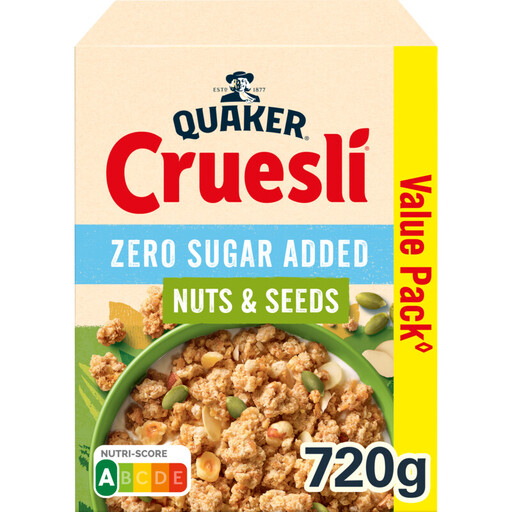
A crunchy variant to compare with a soft cereal base. For the exact Nuts & Seeds variant, check the ingredients, total sugars and specifically listed cereals and nuts; don’t infer a nutritional claim from the shortened name Zs.
 No image available
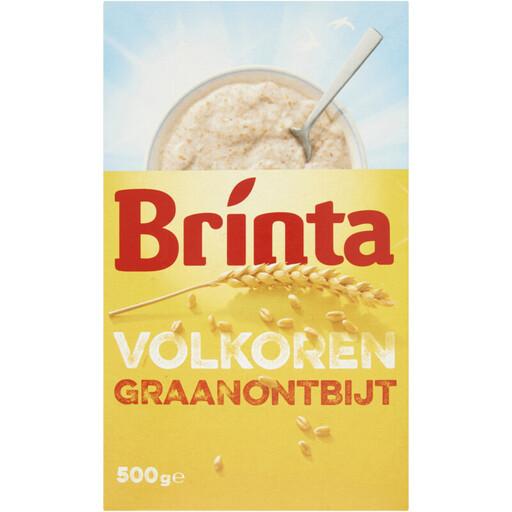
A whole wheat option for a soft cereal dish, if your buffet can accommodate preparation and serving. Albert Heijn lists 10 g of fibre per 100 g for Brinta Volkoren graanontbijt; the product contains wheat and gluten.
 No image available
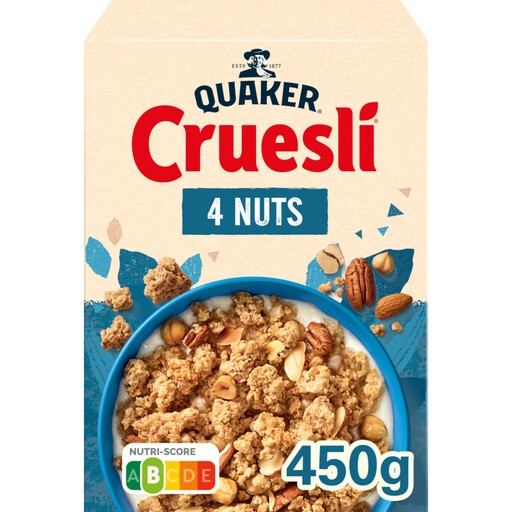
A crunchy self-service option to serve alongside breakfast cereals that need to be prepared. For this 4 Nuts variant, check which nuts and cereals are listed on the current packaging, and compare the sugars with other buffet options.
Yes. According to the Netherlands Food and Consumer Product Safety Authority, guests must be able to get information about the allergens present in unpackaged foods before making their choice. Written information must be available with the product, unless the requirements for providing information verbally are met.
The specific types of cereals containing gluten and nuts must be made clear, according to the Netherlands Food and Consumer Product Safety Authority. Use the current information for the product actually being served.
No. According to Quaker’s product information, Zero Sugar Added Strawberry & Peach contains no added sugars, but it does contain naturally occurring sugars. So be sure to compare the total sugars in the exact variant too.
Match the labels and allergen information to the packaging of the product you’re currently serving. Check the information again whenever the packaging, variant or delivered product changes.