
Holidaymakers looking for wholegrains and fibre
You want to stock up on breakfast cereal for several mornings and are particularly interested in a clear wholegrain statement and the fibre content per 100 g.


If wholegrain is your priority for breakfast on holiday, choose a cereal that clearly lists wholegrain as an ingredient; ordinary cornflakes are not automatically wholegrain. Then compare fibre, sugars, salt and ingredients per 100 g. If a guest needs a gluten-free product, choose a separate product explicitly labelled gluten-free rather than cereal containing wheat or barley.
You want to stock up on breakfast cereal for several mornings and are particularly interested in a clear wholegrain statement and the fibre content per 100 g.
You’re looking for cereal to share at breakfast, but want to compare the sugars, salt and any sweeteners before buying.
You’re buying for several people and want to avoid mistaking cereal containing wheat or barley for a gluten-free option.
First decide whether wholegrains, the ingredients or a gluten-free option is the priority for your group. Then compare the packaging of products that meet your needs.
| What to look for | What to check | Who it matters to |
|---|---|---|
| Wholegrains and fibre | Check the product name and ingredients list for wholegrains; compare fibre per 100 g. | If I’m buying cereal for several mornings, I want to see which grain is wholegrain and how much fibre the cereal contains. This is the top priority for around 42% of consumers. |
| Sugars and sweeteners | Compare sugars per 100 g and check whether the ingredients list includes sugar or sweeteners. | For a shared breakfast table, I don’t want to judge by taste alone; I also want to know how the cereal is sweetened. Around 33% of consumers give this the highest priority. |
| Gluten and allergens | Read the current allergen information; if gluten-free is essential, look for an explicit gluten-free label. | If a guest needs to avoid gluten, I want to be able to offer them a separate, suitable product. This is the main concern for around 25% of consumers. |
The name cornflakes doesn’t, by itself, mean the grain is wholegrain. Kellogg’s describes its regular Corn Flakes as toasted flakes of maize, while Special K Original lists wholegrain wheat as an ingredient.
Check the product name and ingredients list if you’re specifically looking for wholegrains; use the fibre content per 100 g as an additional point of comparison.
Jumbo Special Flakes contains maltitols and lists 1.3 g of sugars per 100 g. Kellogg’s Special K Original lists 15 g of sugars per 100 g, so the difference in total sugars alone doesn’t tell you how a product is sweetened.
Read both the nutritional information and ingredients list, especially if someone in your group wants to avoid sweeteners.
The wholegrain cereal discussed here contains wheat or barley, so it isn’t gluten-free. For a shared breakfast, you’ll also need to take care when using the packaging and serving utensils.
Choose a separate product with an explicit gluten-free label, check the current packaging and, if you’re concerned about cross-contamination, keep the packaging and spoon separate.
Kellogg’s All-Bran Fruit'n Fibre lists 8.8 g of fibre per 100 g, but also 23 g of sugars per 100 g and hazelnuts. This may make it less suitable for other breakfast preferences in the same group.
Compare fibre, sugars and allergens before choosing one variety for the whole group.
Jumbo Special Flakes is a variety made with wholegrain wheat and rice.
Special K Original and All-Bran Fruit'n Fibre are different cereals made with wholegrain wheat; regular Corn Flakes shouldn’t be treated as the same thing.
AH Gluten-free High-fibre bran flakes are a separate option if a guest needs gluten-free breakfast cereal.
These products suit a wholegrain breakfast in different ways: Special K Original is a breakfast cereal, while Brinta is a wheat-based cereal that you prepare hot. This difference matters if you want to serve something straight from the box at your holiday home.
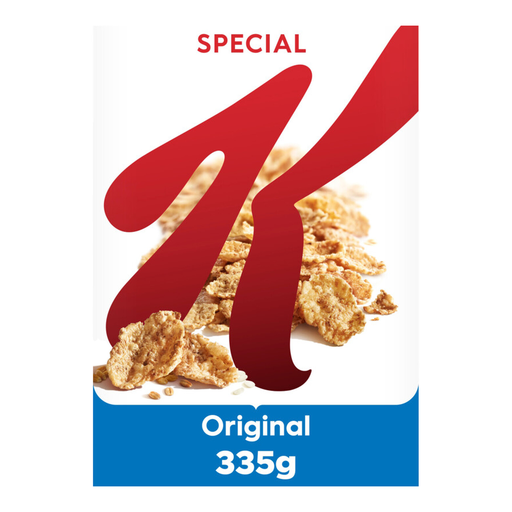 No image available
An option if you’re looking for breakfast cereal made with wholegrain wheat and want to compare ingredients for a shared breakfast.
Jumbo’s product information lists this variety as containing 37% wholegrain wheat, 6.0 g of fibre and 15 g of sugars per 100 g. The cereal also contains rice and barley; because it contains wheat and barley, it isn’t a gluten-free option.
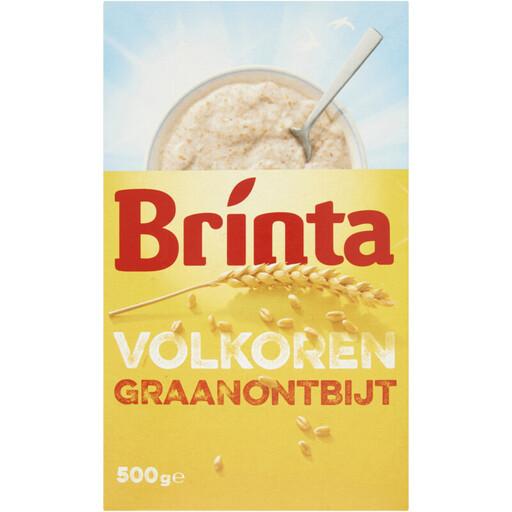 No image available
An option if you can prepare a hot wheat breakfast at your holiday home, rather than serving cold cereal straight from the box.
This product contains wheat, so it isn’t a gluten-free option. Check the preparation instructions and current allergen information on the packaging.
No, the name cornflakes doesn’t guarantee that they’re made with wholegrains. Kellogg’s describes its regular Corn Flakes as toasted flakes of maize; for a wholegrain option, check the product name and ingredients list on the specific pack.
Follow the storage instructions on the packaging and check the best-before date before you leave. Special K Original and All-Bran Fruit'n Fibre are listed as needing dry storage; seal an opened pack tightly.
Wholegrain cereal containing wheat or barley isn’t gluten-free. If gluten-free is essential, look for a product with an explicit gluten-free label and check the current allergen information on the packaging.
Pay particular attention to the ingredients and allergens, and compare the nutritional information if guests have different preferences. The Netherlands Food and Consumer Product Safety Authority emphasises that information on prepacked food labels must be legible and clearly explain what the product contains, as well as how it should be used and stored.