
Vandaag of morgen in huis

Kwaliteit gegarandeerd

Welkomstaanbiedingen ontgrendelen: GRATIS bezorging | Tot 80% korting | Gratis 30 dagen JoyPlus-proefperiode
Download de app
Would you like to reduce discolouration caused by coffee, tea, red wine or smoking without booking a professional whitening treatment straight away? Whitening toothpaste can be a practical choice for your daily oral care routine. There is a wide range to choose from, from a single tube to a 12-pack of whitening toothpaste.
However, not all toothpaste for discolouration works in the same way. Some products mainly target surface stains, while others provide extra care for gums, enamel or sensitive teeth. Below, you can read what to look out for and which popular options suit different usage needs.
Most toothpaste for surface stains works by loosening or removing build-up from the surface of the teeth. This is different from changing the natural colour of the teeth. Toothpaste for whiter teeth can therefore help with visible discolouration, but it is not a substitute for professional whitening treatment.
Pay attention to the difference between removing surface stains and claims about a deeper whitening effect. Brands must be able to substantiate their claims; if in doubt, check the product packaging and instructions for use.
Whitening formulas often contain cleaning ingredients such as hydrated silica, pyrophosphates or cleaning crystals. Their exact effect and suitability depend on the formula and your brushing technique. Brushing too hard can place unnecessary strain on your teeth and gums, especially if you already experience sensitivity.
If you have sensitive teeth, choose a variant specifically developed for this purpose, such as a product containing arginine. Stop using it if irritation occurs and ask a dentist for advice if sensitivity persists.
A multipack may seem like good value, but always check the total quantity. For example, twelve 75 ml tubes contain 900 ml. A pack of three tubes contains 225 ml. So compare the price per 100 ml and also check the expiry information on the packaging. This helps prevent you from buying more than you can use within a reasonable period.
For daily oral care, fluoride content is an important point to check. Many adult variants in this range contain 1450 ppm fluoride, for example in the form of sodium fluoride or sodium monofluorophosphate. According to the product information, fluoride toothpaste helps protect against cavities.
Do not swallow toothpaste. For children under six, the usual guidance is to use a pea-sized amount and ensure adult supervision. Always follow the instructions on the packaging, particularly when fluoride is being used from multiple sources.
A single 75 or 100 ml tube is useful if you want to try a formula first. A 3-pack suits households that regularly use the same toothpaste. A 5-pack or 12-pack is particularly practical if you already know the product and want to stock up.
As well as the number of tubes, check the quantity per tube, the flavour and any warnings for children. A fresh mint variant is not comfortable for everyone, especially if you are sensitive to strong flavours.
Check whether the product description focuses on:
Claims such as “up to 80%” or “up to 100%” come from the brand’s own communications. According to Oral-B’s own research, a particular 3D White formula can remove up to 100% of surface stains. This result will not automatically be the same for every user and depends, among other things, on the type and amount of build-up.
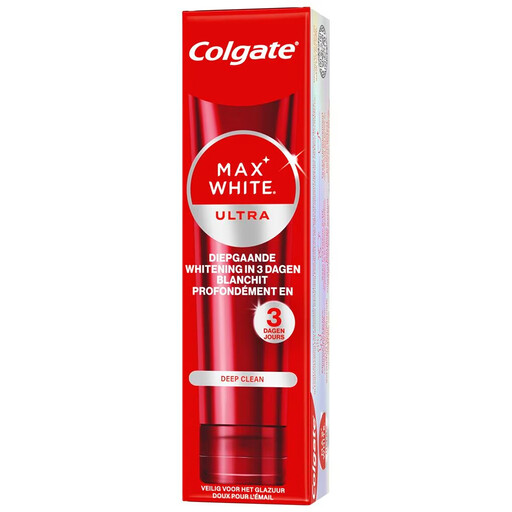
Why it suits this profile: A single tube is ideal if you want to try whitening toothpaste first without buying a multipack straight away. The product description mentions daily use and 1450 ppm fluoride.
You do not have to pay for several tubes straight away, so you can assess the flavour and brushing experience before buying a larger supply.
Fluoride formula with 1450 ppm F- according to the product information; designed to remove stains caused by food and drink.
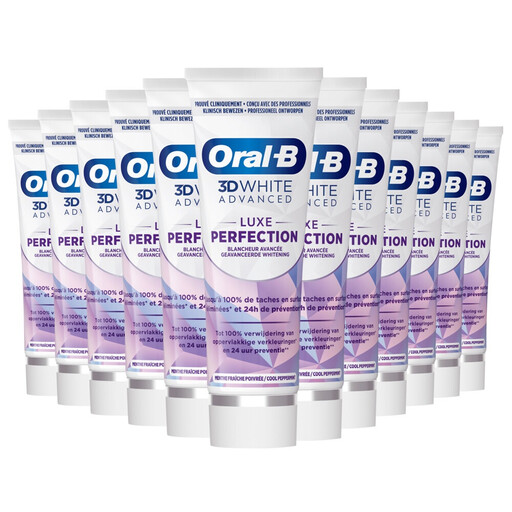
Why it suits this profile: This multipack of whitening toothpaste is designed for households that use the same formula every day and want to buy a larger supply.
The total quantity is clearly stated: 12 tubes of 75 ml. This makes it easy to compare the price per 100 ml with your expected usage.
According to Oral-B, the formula is designed to remove surface stains; the product information also states that it contains sodium fluoride with 1450 ppm fluoride.

Why it suits this profile: This toothpaste for sensitive teeth is intended for users who want to combine whitening with a formula containing arginine.
This variant is clearly focused on sensitivity, so you do not have to choose based solely on a prominent whitening claim.
According to the product information, it contains 8% arginine and 1450 ppm fluoride; designed for daily use with sensitive teeth.
Brush twice a day for around two minutes and use a soft toothbrush. Using more toothpaste will not automatically make it work better. Spit out the toothpaste and follow the instructions on the packaging.
Do you have fillings, crowns, veneers or stubborn discolouration? Whitening toothpaste does not change the colour of restorations. If you experience persistent sensitivity, bleeding gums or are unsure about the cause of discolouration, it is advisable to consult a dentist.
We have put together a complete, up-to-date list of products that fully meet these strict selection criteria and the applicable European safety regulations.
No. Most formulas are primarily designed for surface stains caused by food, drink or tobacco. Discolouration within the tooth tissue, or differences in colour between fillings and crowns, may not be reduced by these products.
This depends on the product instructions and your oral sensitivity. Many variants are designed for daily use, but brush without applying excessive pressure. Stop if irritation or increasing sensitivity occurs and ask a dentist for advice if necessary.
A multipack may offer a lower price per tube, but this is not guaranteed. Compare the total price with the total number of millilitres and check that you will use the quantity before its expiry date. This is what makes an Oral-B whitening toothpaste or Colgate whitening toothpaste multipack genuinely worthwhile.
