
Vandaag of morgen in huis

Kwaliteit gegarandeerd

Welkomstaanbiedingen ontgrendelen: GRATIS bezorging | Tot 80% korting | Gratis 30 dagen JoyPlus-proefperiode
Download de app
A whiter smile does not always start with an expensive treatment. A good whitening toothpaste can help remove surface stains caused by coffee, tea, red wine or tobacco. However, not all products are the same. Some focus mainly on stains, while others combine whitening with fluoride, plaque or tartar care.
The biggest mistake is buying toothpaste based solely on the words “extra white”. You should also look at the ingredients, fluoride content, recommended frequency of use and your own sensitivity.
Toothpaste for whiter teeth usually works on stains on the tooth surface. Ingredients such as hydrated silica or cleaning crystals can help loosen build-up. This does not automatically change your natural tooth colour.
You should therefore assess products making prominent claims about fast results carefully. According to the relevant brand’s own research, certain formulas can produce visible results after just a few brushing sessions, but the outcome varies from person to person and depends on the type of staining.
Applying more pressure does not make stains disappear faster. Brushing too hard can be uncomfortable, particularly if you already have sensitive teeth. Choose a soft toothbrush, brush for around two minutes and follow the instructions on the packaging.
Also look out for terms such as “gentle”, “soft mint” or “low abrasion”. These descriptions indicate how the product is positioned, but you should always check the full product information.
A whitening product is still part of your daily dental care routine. Check whether the toothpaste contains fluoride and how much. Several products in this range list approximately 1,400 to 1,450 ppm fluoride. According to the product information, fluoride helps protect against cavities and supports the condition of tooth enamel.
Do not use whitening toothpaste more often than stated on the label. If irritation or persistent sensitivity occurs, it is advisable to stop using it. If problems keep coming back, you can consult a dentist.
Look for a clear description of the type of whitening. “Removes surface stains” is more specific than simply “brilliantly white teeth”. Products containing silica, pyrophosphates or cleaning crystals are often designed to remove build-up from the tooth surface.
Discolouration that lies deeper within the tooth tissue may respond less well to ordinary toothpaste. In this case, toothpaste for discolouration is mainly suitable for maintenance, not as a substitute for professional advice.
A fluoride toothpaste is a practical choice for everyday brushing for many adults. Check:
For families, the age limit is particularly important. A product for adults is not automatically suitable for young children.
Fresh breath is a decisive factor for many users. Whitening toothpastes are available in flavours including gentle mint, arctic mint, spicy mint and extra-fresh varieties. A strong flavour does not necessarily indicate better cleaning.
Also consider the size. A single 75 ml tube is useful for trying a product first. Multipacks containing three, five or twelve tubes can be more practical when several family members use the same formula. For larger packs, check the expiry information on the packaging.
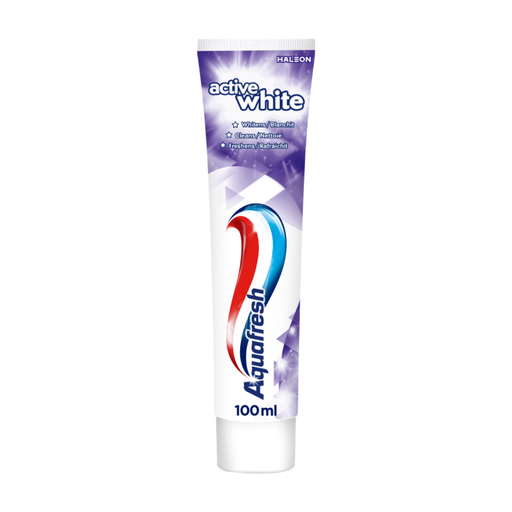
Why it suits this profile: The 100 ml tube combines surface cleaning, fluoride and a fresh flavour in one product for everyday use.
The product information specifically mentions fluoride and the removal of plaque and surface stains, rather than making only a general whitening promise.
100 ml contents; contains sodium fluoride; according to the product description, suitable for everyday use by adults and children aged six and over.
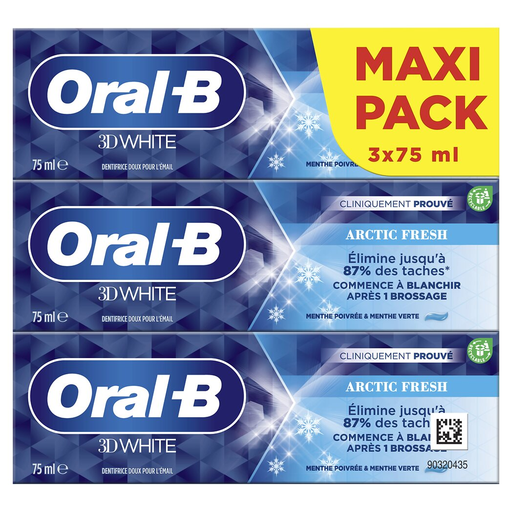
Why it suits this profile: The three-tube pack is ideal for anyone who wants to maintain a consistent routine and values fluoride protection and a cool mint flavour.
The product description states that it is intended for surface stains and gives a fluoride content of 1,450 ppm; according to Oral-B’s own research, it removes up to 87% of surface stains.
3 x 75 ml; sodium fluoride 1,450 ppm; designed for brushing twice a day and described as gentle on tooth enamel.
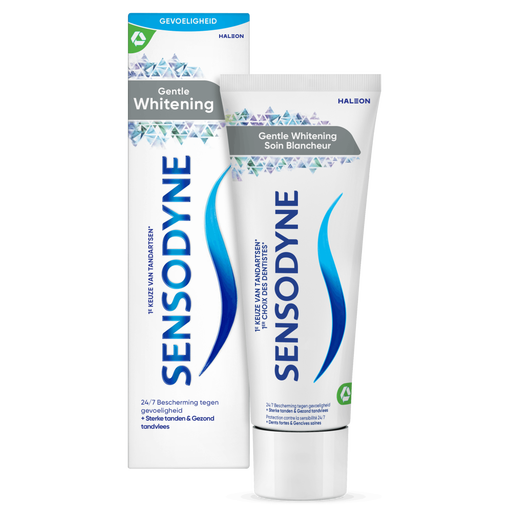
Why it suits this profile: This variant is designed for users who want to tackle surface stains while also taking sensitive teeth into account.
The product description mentions a low-abrasion formula and advises contacting a dentist if sensitivity persists.
75 ml; contains 1,400 ppm fluoride according to the product information; mint flavour and a formula for gently removing surface stains.
We have put together a complete, up-to-date list of products that fully meet these strict selection criteria and the applicable European safety regulations.
Brush generally twice a day for at least two minutes. Use a small amount and let the brush do the work. For consistent everyday care:
Whitening toothpaste can be complemented with other products, such as floss, interdental brushes or mouthwash. A whitening pen, such as the Lumineux Bright Pen, is designed for targeted use when you are out and about. According to Lumineux’s own research, the pen can help with visible stains without causing sensitivity; this is a brand claim and not a guarantee for every individual.
This type of toothpaste is often intended for surface discolouration, including build-up caused by food and drink. The result depends on the age and depth of the stains, your brushing routine and the product’s formulation.
You can if the packaging states that it is suitable for everyday use and you follow the instructions. If you have sensitive teeth, choose a milder formula and do not brush harder. Follow the maximum brushing frequency stated on the label.
A 75 ml tube can last one user for several weeks, depending on the amount used per brushing session. A 100 ml pack or a multipack is more convenient for families. Always check the expiry information on the packaging.
