
Vandaag of morgen in huis

Kwaliteit gegarandeerd

Welkomstaanbiedingen ontgrendelen: GRATIS bezorging | Tot 80% korting | Gratis 30 dagen JoyPlus-proefperiode
Download de app
A whiter smile doesn’t always start with an expensive treatment. Whitening toothpaste can help remove surface stains caused by coffee, tea, red wine or smoking. However, not all formulas work in the same way. If you focus only on claims such as “extra white” or “deep whitening”, you could end up buying a product that isn’t right for sensitive teeth, gums or everyday use.
Choosing the right toothpaste is about more than the promised shade of white. Look at the fluoride content, cleaning ingredients, suitability for sensitive teeth, pack size and recommended frequency of use too.
Toothpaste for whiter teeth usually removes surface stains. It doesn’t automatically change the natural colour of the tooth tissue. A formula with polishing or cleaning ingredients may reduce stains, but that’s different from professional bleaching.
Product claims such as “up to 80%” or “up to 100% of surface stains” come from the product descriptions in question. Results can vary from person to person and depend on factors such as the type of staining and your brushing routine.
An intensely fresh flavour says little about how well a toothpaste works against plaque. Instead, check whether it contains fluoride and whether the packaging gives clear instructions for use. In this selection, daily fluoride toothpaste for adults often contains around 1450 ppm fluoride. Always check the current packaging, as formulas can change.
If you have sensitive teeth, it’s best not to brush harder or for longer to get faster results. Choose whitening toothpaste for sensitive teeth and look for specialist ingredients such as potassium nitrate or arginine. If sensitivity persists or gets worse, it’s a good idea to speak to a dentist. Toothpaste for sensitive teeth is no substitute for a dental check-up.
According to manufacturers’ product information, fluoride helps strengthen enamel and protect against tooth decay. In this product selection, a formula with around 1450 ppm fluoride is common for adults. Check the age guidance too: some varieties aren’t recommended for young children.
As a general rule, brush twice a day with a pea-sized amount. Spit out the toothpaste and swallow as little as possible. Follow the instructions on the packaging, especially if you use more than one fluoride product.
Whitening toothpastes may contain silica, calcium carbonate, pyrophosphates or other cleaning agents. These help remove surface stains or limit new ones from forming. A stronger formula isn’t automatically right for everyone.
Look for terms such as “mild”, “gentle” or “sensitive” if you’re prone to irritation. Oral-B’s product information states that some varieties remove surface stains without damaging enamel. This is a brand claim, not a guarantee for every user.
If you’re mainly looking for toothpaste for healthy gums or toothpaste to fight plaque, consider more than just whitening. Some formulas are designed to care for gums or contain zinc and fluoride complexes. For example, Parodontax states that its whitening variety helps reduce plaque bacteria and supports gum health. This is based on the brand’s product information.
Flavour matters in practice, too. A very strong menthol flavour may feel refreshing to some, but uncomfortable to others. A mild mint variety may therefore be better suited to everyday brushing.
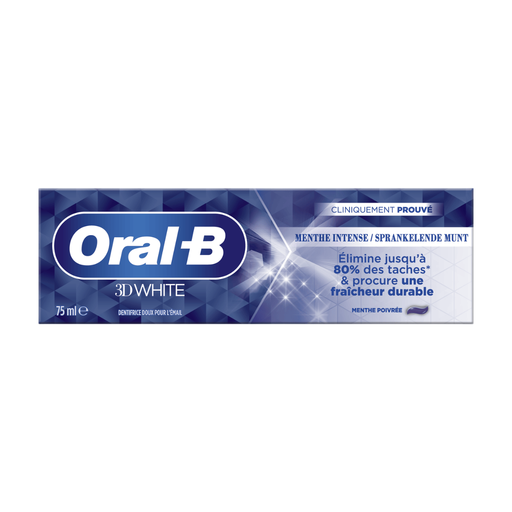
Why it suits this profile: This variety combines everyday fluoride care with a mild mint flavour. It’s a straightforward way to start using toothpaste for stains.
The product description says it removes surface stains and contains 1450 ppm fluoride, so your choice doesn’t have to rely on the whitening claim alone.
75 ml, fluoride formula and a light mint flavour. According to Oral-B, the formula removes up to 80% of surface stains.
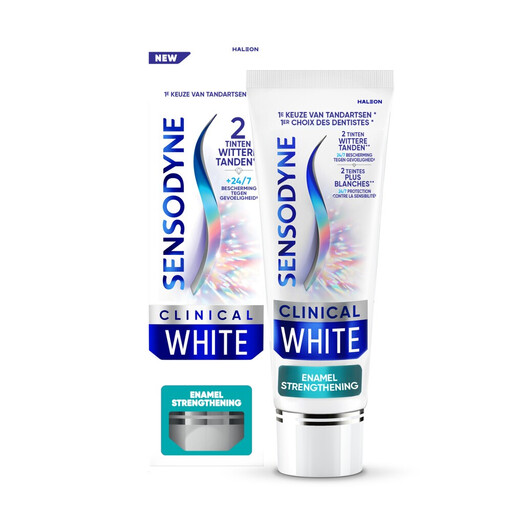
Why it suits this profile: A sensible choice for adults who want whiter teeth and a formula designed for sensitive teeth.
The formula isn’t just focused on whitening: according to the packaging, it contains potassium nitrate and 1450 ppm fluoride. Sensodyne recommends consulting a dentist if sensitivity persists.
Everyday fluoride toothpaste for sensitive teeth; the manufacturer describes it as whitening and protective against sensitivity.
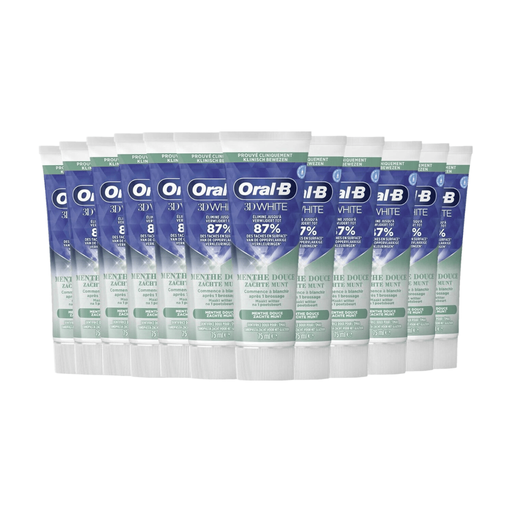
Why it suits this profile: The pack of 12 tubes is a good fit for households that use the same toothpaste every day and want to order new supplies less often.
You’re not paying for a whitening claim alone: the product details list 1450 ppm fluoride, a soft mint flavour and 12 tubes of 75 ml.
900 ml in total, soft mint flavour and fluoride. According to Oral-B, the formula removes up to 80% of surface stains.
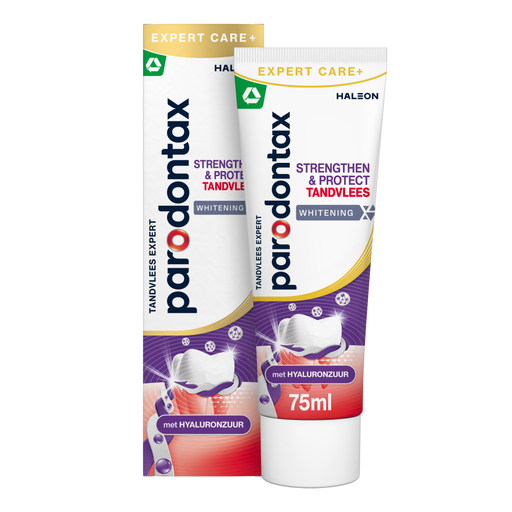
Why it suits this profile: A good option for shoppers who want toothpaste for healthy gums that also removes surface stains.
As well as whitening, the product description highlights plaque bacteria, fluoride and gum care. These claims come from the manufacturer.
75 ml, 1450 ppm fluoride and sodium hyaluronate according to the ingredients list; developed for everyday gum care.
We’ve put together a complete, up-to-date list of products that meet these strict selection criteria and the applicable European safety regulations.
No. Most formulas target surface stains from things such as coffee, tea and tobacco. Deeper or internal discolouration may not respond to ordinary toothpaste. A dentist can help you decide which approach is right for you.
That depends on the product instructions and how sensitive your teeth are. Many varieties are designed for everyday use, but don’t brush harder to try to get faster results. Stop if you experience irritation and seek advice if sensitivity persists.
Not necessarily. The price mainly depends on the brand, pack size, multipack and any offers available. So compare the price per 75 ml or per tube. A whitening toothpaste offer with multiple tubes may be good value for a household, but only if the formula and flavour suit your everyday needs.
