
Vandaag of morgen in huis

Kwaliteit gegarandeerd

Welkomstaanbiedingen ontgrendelen: GRATIS bezorging | Tot 80% korting | Gratis 30 dagen JoyPlus-proefperiode
Download de app
A radiant white smile often starts with a simple choice on the shelf: whitening toothpaste. Yet not every toothpaste for whiter teeth is the same. Some formulas focus mainly on surface stains from coffee, tea or red wine, while other products give extra attention to gums, sensitive teeth or fluoride protection.
What’s more, the product descriptions from brands contain claims that you need to interpret carefully. A whitening toothpaste doesn’t always lighten your natural tooth colour. Usually, the formula mainly helps to polish away plaque and surface discolouration.
Whitening toothpaste generally works on the outside of your teeth. Ingredients such as hydrated silica, polishing particles or pyrophosphates can help remove surface stains. This action is different from professional bleaching.
Discolouration caused by ageing, medication, trauma or changes beneath the enamel therefore won’t automatically disappear with a stain-removing toothpaste. If you notice a sudden colour change or persistent problems, it’s wise to consult your dentist.
Packaging sometimes shows percentages for stain removal. According to the product description, Oral-B 3D White Arctic Fresh claims to remove up to 87% of surface stains. Other Oral-B 3D White variants mention up to 80%. Such figures depend on the conditions of use and the brand’s own research. So treat them as a product claim, not a guaranteed personal result.
Also pay attention to the full formula, the fluoride concentration, the recommended frequency of use and the amount of toothpaste per pack.
A value pack of toothpaste can be cost-effective, but check the expiry information on the packaging. A 75 ml tube is suitable for daily use, while a multipack of three, five or twelve tubes is mainly worthwhile for households that plan to use the same formula over a longer period.
For adults, a fluoride toothpaste is often a sensible foundation for daily oral care. Several products in this range mention approximately 1,450 ppm fluoride, including Oral-B Arctic Fresh, Oral-B Soft Mint and several Colgate Max White variants. Sensodyne Gentle Whitening states 1,400 ppm fluoride.
Fluoride helps protect tooth enamel and supports protection against cavities. Always check the current ingredients list and usage instructions on the packaging. Do not swallow toothpaste and keep it out of reach of young children.
If you’re mainly looking for toothpaste for surface stains, look for descriptions such as “surface stains”, “surface discolourations” or “micro-cleaners”. Colgate Advance White, for example, mentions micro-cleaners that, according to the product description, help with surface deposits.
If you often suffer from sensitivity, don’t automatically choose the most intensive whitening formula. Sensodyne Gentle Whitening is described in the product description as a low-abrasive formula for sensitive teeth. Use a soft toothbrush and brush without pressing hard.
A fresh taste makes daily brushing easier, but “extra fresh” says nothing about whitening action. Oral-B Arctic Fresh has a cool mint flavour, while Oral-B Soft Mint offers a milder mint variant. Colgate Max White Ultra Freshness Pearls contains, according to the product description, pearls that break apart during brushing for a fresh sensation.
Brush usually twice a day for about two minutes, unless the packaging or your dentist advises otherwise. Stop if irritation occurs and follow the product’s safety instructions.
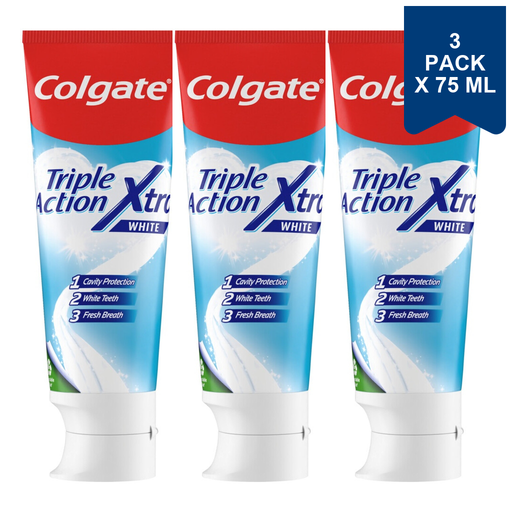
Why this fits the profile: The three tubes provide a practical supply for daily brushing, without committing to a large twelve-pack straight away.
The packaging clearly shows the total contents: three tubes of 75 ml. This makes it easy to estimate your stock and expiry date.
Three tubes of 75 ml, intended for twice-daily brushing and suitable for adults and children over six years according to the product information.
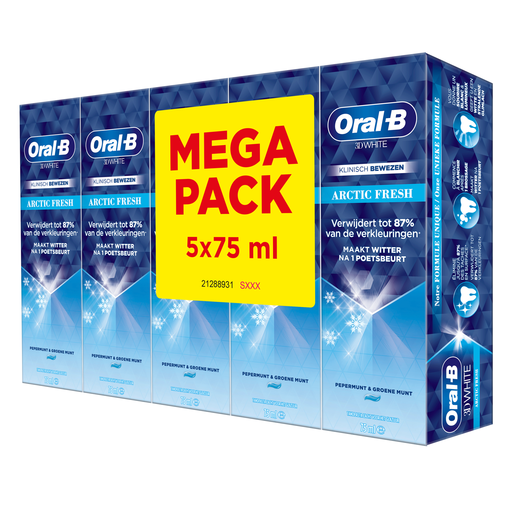
Why this fits the profile: Ideal for those who want whitening, fluoride and a distinctly fresh taste all in one daily toothpaste.
The product information states 1,450 ppm fluoride and a formula that Oral-B says is gentle on enamel. Check these details on the packaging when you receive it.
Five tubes of 75 ml, fluoride protection and, according to the product description, removal of up to 87% of surface stains.
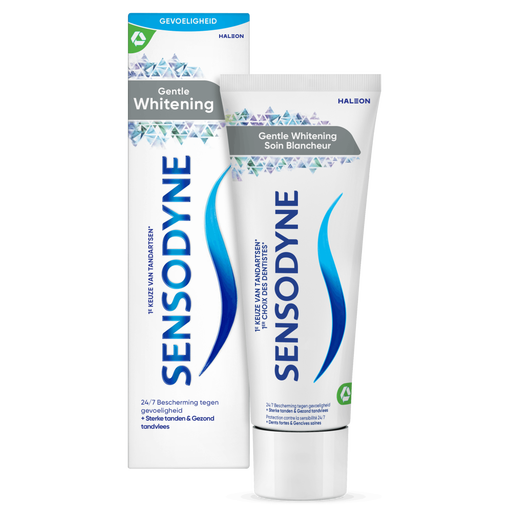
Why this fits the profile: A targeted choice for adults who want a toothpaste for whiter teeth while also taking sensitivity into account.
The product description mentions a low-abrasive formula. Still brush gently and stop if irritation or persistent sensitivity occurs.
75 ml, mint flavour, 1,400 ppm fluoride and, according to the product information, focused on removing surface stains.
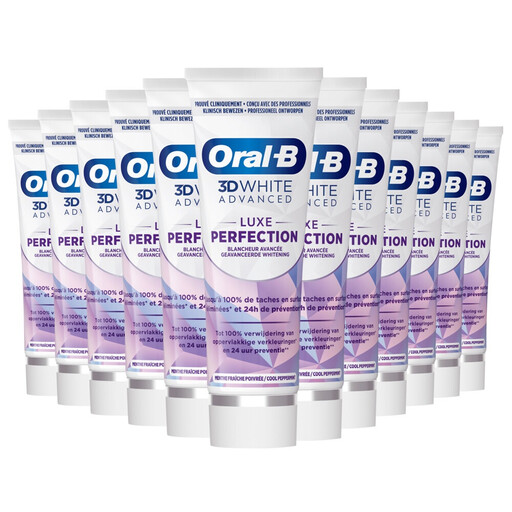
Why this fits the profile: The large supply suits households where several people use the same whitening toothpaste every day.
The contents are clearly specified as twelve tubes of 75 ml. Only buy this pack if your usage matches it.
Twelve tubes, 1,450 ppm fluoride according to the product information and a peppermint flavour for daily use.
We’ve put together a full, up-to-date list of products that fully meet these strict selection criteria and comply with current European safety regulations.
Whitening toothpaste can help with surface stains and deposits on the tooth surface. The result varies from person to person and product to product. Deeper discolouration is not always affected by brushing.
Follow the usage instructions on the packaging. Many products are intended for twice-daily brushing. Use a soft toothbrush, apply little pressure and stop if irritation or increased sensitivity occurs.
That depends on the price per 75 ml and your actual usage. Divide the total price by the total number of millilitres. A three- or five-pack can be practical for regular use; a pack of twelve tubes is mainly suitable for high and predictable consumption.
