
Vandaag of morgen in huis

Kwaliteit gegarandeerd

Welkomstaanbiedingen ontgrendelen: GRATIS bezorging | Tot 80% korting | Gratis 30 dagen JoyPlus-proefperiode
Download de app
Coffee, tea, red wine and smoking can cause visible staining over time. Whitening toothpaste can help reduce surface stains as you brush, but the results are not the same as professional teeth whitening. If you focus only on words such as “white”, “clinical” or “extra whitening”, you also risk choosing a product that isn’t right for sensitive teeth, your fluoride needs or everyday use.
The main pitfalls:
For many adults, fluoride toothpaste is a practical starting point for everyday oral care. Some of the products available contain 1450 ppm fluoride, including Colgate Max White Purple Reveal, Oral-B 3D White variants and several Sensodyne products. Elmex Sensitive Professional Whitening also lists 1450 ppm fluoride, in the form of sodium monofluorophosphate.
Fluoride isn’t a whitening ingredient. It has a different role in oral care. So consider both: do you mainly want to remove surface stains while using fluoride toothpaste every day? Follow the directions on the packaging and don’t swallow toothpaste.
If you experience pain when eating or drinking something cold, hot or sweet, don’t automatically choose an intensive whitening product. Look specifically for toothpaste for sensitive teeth or whitening toothpaste for sensitive teeth. Sensodyne Gentle Whitening lists potassium nitrate and a low-abrasivity formula in its product description. Sensodyne Clinical White lists potassium nitrate and hydrated silica, among other ingredients.
Not every manufacturer lists an RDA value, which measures the relative abrasiveness of tooth-cleaning products. If this information isn’t available, you can’t reliably compare abrasivity. Brush with a soft toothbrush and don’t press hard. According to product warnings, persistent or worsening sensitivity may point to an underlying problem. If this happens, contact a dentist.
Don’t compare only the price of a tube; check the amount it contains and how many tubes you get, too. Oral-B 3D White Luxe Glamorous White comes in a 2 x 75 ml pack, while the Advanced variant is available as 12 x 75 ml. A multipack can be handy for everyday use, but check the expiry date and storage instructions, and make sure you already know and like the flavour and formula.
Also look out for ingredients such as hydrated silica, pyrophosphates, potassium nitrate, arginine or NovaMin. Their presence alone doesn’t tell you what results you’ll experience. If you’ve reacted to an ingredient or fragrance before, always check the full ingredients list on the packaging. For example, Colgate Max White Purple Reveal lists limonene and eugenol as fragrance allergens.
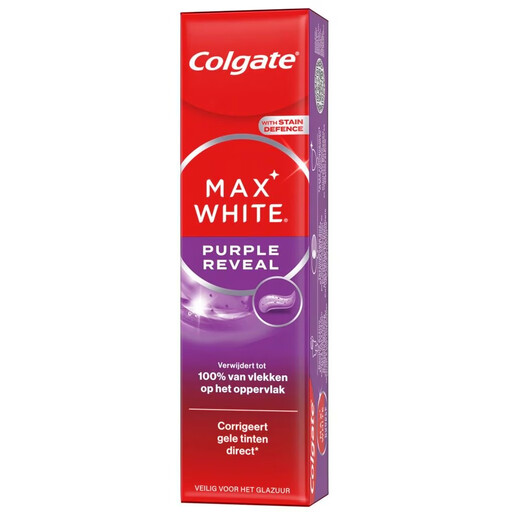
Why it suits this profile: A straightforward option if you’re looking for fluoride whitening toothpaste for your usual brushing routine. The tube contains 75 ml and lists 1450 ppm fluoride.
The product information clearly lists the fluoride content and ingredients. Do check the packaging for fragrance allergens and warnings for children.
75 ml per tube; sodium fluoride with 1450 ppm fluoride; designed for brushing twice a day, according to the product instructions.
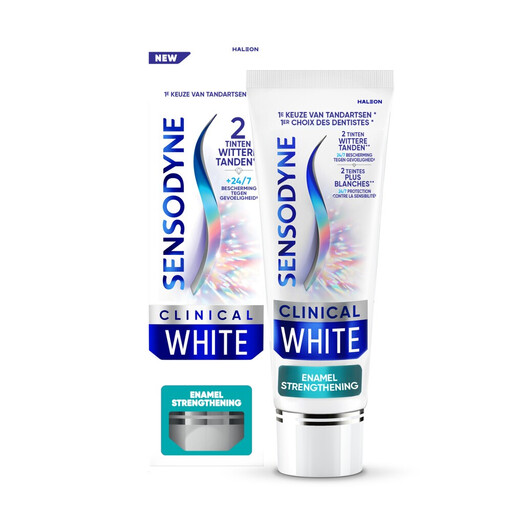
Why it suits this profile: Aimed at adults who want to combine whitening with care for sensitive teeth, fluoride protection and enamel care.
The product description says it can be used for sensitive teeth and gives a timeframe for its whitening claim. Treat this as information from the brand, not a personal guarantee.
Contains potassium nitrate and sodium fluoride with 1450 ppm fluoride; the manufacturer lists a formula for sensitive teeth.
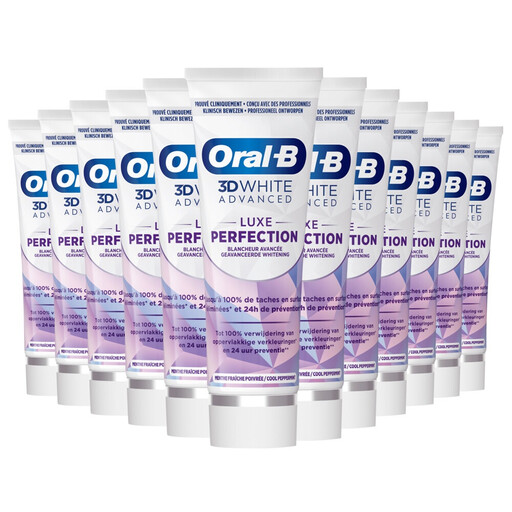
Why it suits this profile: A bulk pack for households or anyone who wants to use the same toothpaste every day and likes to keep a supply on hand.
The packaging lists the amount in each tube and the fluoride content. You’re not paying only for a whitening claim, and you can compare the price per 75 ml.
12 tubes of 75 ml; contains sodium fluoride with 1450 ppm fluoride; designed for everyday brushing according to the instructions.
We’ve put together a complete, up-to-date list of products that meet these strict selection criteria and the applicable European safety regulations.
Use whitening toothpaste as directed on the packaging and, in most cases, brush twice a day for around two minutes. Brushing more often or harder won’t speed up the results and may irritate your gums. An electric toothbrush can help you brush evenly, but it doesn’t replace good technique.
Toothpaste for stains mainly works on build-up from coffee, tea and wine. Discoloured fillings, crowns and veneers won’t change colour along with your teeth. If you’re expecting a noticeable change in colour or have a dark spot on one tooth, discuss it with a dentist.
It depends on the formula and the person. Products such as Sensodyne Clinical White, Sensodyne Gentle Whitening and Elmex Sensitive Professional Whitening are described by their manufacturers as suitable for sensitive teeth. Stop using the product if irritation occurs, and ask a dentist for advice if symptoms persist.
That depends on how much you use each time you brush and how many people are using it. A 75 ml tube will generally last one person longer than a household with several users. So compare the price per 75 ml and check the expiry information on the packaging.
A whitening pen, such as the Lumineux Bright Pen, is a different type of product from toothpaste. According to its product description, it’s designed to be applied directly to the teeth. Use it only as directed on the packaging, and don’t treat the brand’s whitening claims as a guaranteed result.
