
Vandaag of morgen in huis

Kwaliteit gegarandeerd

Welkomstaanbiedingen ontgrendelen: GRATIS bezorging | Tot 80% korting | Gratis 30 dagen JoyPlus-proefperiode
Download de app
Coffee, tea, red wine and heavily spiced food can cause surface staining over time. Whitening toothpaste can help reduce this staining as you brush. However, not all products work in the same way or offer the same experience.
Packaging may feature claims such as “whiter instantly”, “deep cleaning” or “extra whitening”. It’s important to read these claims in context. Whitening toothpaste usually doesn’t change the natural colour of your teeth; it mainly targets surface stains. Knowing the difference helps you choose more carefully and avoid unnecessary expense.
Some formulas use colourants or light-reflecting ingredients to make teeth look temporarily whiter. This is different from removing stains. According to the product description for Colgate Max White Instant, optical brighteners and polishing ingredients give teeth a brighter appearance straight after brushing. This doesn’t automatically mean that the natural colour of your teeth will change permanently.
Brands may claim that their formula also reduces deeper-set discolouration. According to Colgate’s own research on Max White Ultra Deep Clean, its active oxygen formula helps reduce discolouration caused by food and drink. Treat this as a product claim made by the brand, not a result that’s guaranteed for every user.
If you have stubborn discolouration, tartar or a change in tooth colour, a dentist can assess what’s causing it. Whitening toothpaste is no substitute for professional dental care.
Toothpaste focused mainly on whitening still needs to suit your daily oral care routine. So check whether it contains fluoride, and how much. Many products in this range contain 1450 ppm fluoride, but always check the current packaging.
Do you often have sensitive teeth? A highly abrasive formula or brushing too hard may feel uncomfortable. If so, choose toothpaste for sensitive teeth and brush gently. If sensitivity persists or gets worse, it’s wise to seek advice from a dentist.
A fluoride formula is a practical choice for everyday use. The range includes products containing sodium fluoride, sodium monofluorophosphate or stannous fluoride. Their ingredients and effects vary, so don’t just look for the words “whitening toothpaste”. Check:
Whitening toothpaste with fluoride can therefore be suitable for everyday use, as long as you follow the instructions on the packaging.
Many formulas contain hydrated silica, calcium phosphates or other cleansing and polishing ingredients. According to product descriptions, these help remove staining. The individual RDA value – a measure of relative abrasiveness – isn’t listed for every product. So you can’t rely on marketing language alone.
Brush for two minutes with a soft-bristled brush and avoid scrubbing hard. Applying more pressure won’t automatically make toothpaste more effective, and may make brushing less comfortable.
A 75 ml tube is a common size for whitening toothpaste; some products contain 100 ml, while others are sold in multipacks. Compare the price per 100 ml or per tube rather than looking only at the promotional price.
A multipack, such as Oral-B 3D White Luxe Advanced with 12 tubes of 75 ml, can be handy for households with several users. Check the expiry information on the packaging, and don’t buy more than you can use within a reasonable time.
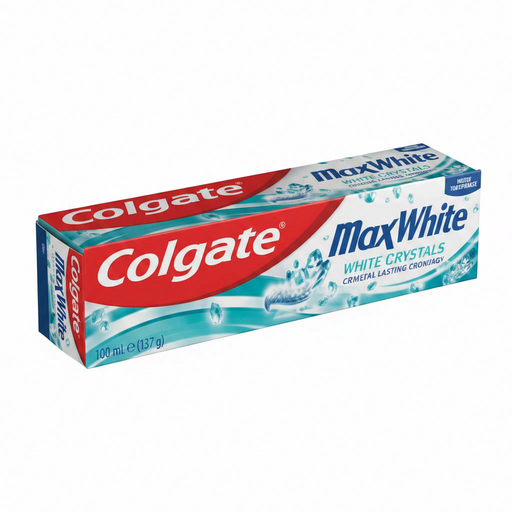
Why it suits this profile: A familiar Colgate Max White variant with a 100 ml tube, gel texture and whitening crystals, for anyone looking for a straightforward toothpaste for everyday use.
The product information clearly states that it contains 1450 ppm sodium fluoride and comes in a 100 ml tube. Its whitening claim focuses on cleaning and surface stains, rather than guaranteeing a change to the natural colour of your teeth.
100 ml tube; 1450 ppm fluoride; fresh mint flavour; suitable for daily use according to the instructions.
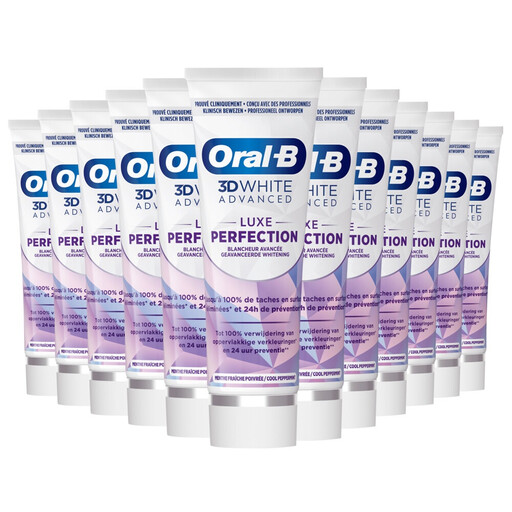
Why it suits this profile: This multipack is handy for regular daily users or households that need several tubes at once.
The packaging states that the multipack contains 12 individual 75 ml tubes and 1450 ppm sodium fluoride. This makes the quantity clear upfront, without relying solely on a temporary whitening claim.
12 x 75 ml; manufacturer’s whitening formula; fluoride for daily oral care; handy stock-up size.
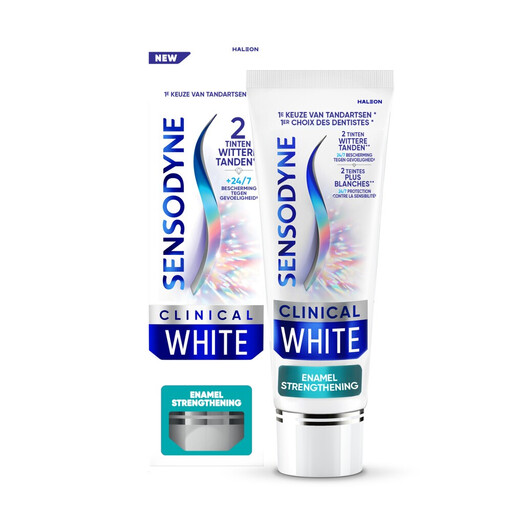
Why it suits this profile: Designed for adults looking for toothpaste for sensitive teeth that also helps tackle surface stains.
The product description lists sodium fluoride at 1450 ppm, hydrated silica and a formula for sensitive teeth. Claims about protection and whitening come from Sensodyne and apply when the product is used according to the packaging.
75 ml; fluoride formula; developed for sensitive teeth; mint flavours and ingredients are clearly listed.
We’ve put together a complete, up-to-date list of products that meet these strict selection criteria and current European safety requirements.
For surface stains, toothpaste designed to tackle staining can help reduce discolouration as you brush. The results depend on the type of stain, your brushing routine and the product’s ingredients. Toothpaste won’t always remove stubborn discolouration or tartar.
Many varieties are designed for daily use and contain fluoride, but follow the instructions on the packaging. Brush gently with a soft-bristled brush. If you have sensitive teeth, choose a product designed for them, such as Sensodyne whitening toothpaste, and stop using it if irritation occurs.
It depends on the tube size, how much you use each time and how often you brush. A 75 ml tube will generally last several weeks with daily use. Check the expiry information and compare multipacks by price per tube, not just by the total promotional price.
