
Vandaag of morgen in huis

Kwaliteit gegarandeerd

Welkomstaanbiedingen ontgrendelen: GRATIS bezorging | Tot 80% korting | Gratis 30 dagen JoyPlus-proefperiode
Download de app
Want to reduce coffee, tea or wine stains without booking a professional treatment straight away? Whitening toothpaste can be a practical choice for your daily routine. Its effect is usually limited to removing surface stains and maintaining your teeth’s natural colour. Unlike a whitening treatment, toothpaste won’t change the underlying colour of your teeth.
The right choice depends on what matters most to you: a low price, fluoride protection, fresh breath or a formula for sensitive teeth. The product name alone doesn’t tell you enough. Pay particular attention to the ingredients, directions for use and whether it’s suitable for your oral health needs.
Terms such as “white”, “radiant” and “bright” sound convincing, but they don’t always describe the same effect. A toothpaste for stains may help remove discolouration from the tooth surface, while leaving your natural tooth colour unchanged. Claims about percentages or short treatment times are made by the brand. Check the full product information to see whether the toothpaste is intended for daily use or as a temporary treatment.
Whitening formulas often contain cleansing agents such as hydrated silica, calcium carbonate or other polishing ingredients. These can help with visible build-up, but combining them with vigorous brushing and heavy pressure isn’t a good idea. Use a soft toothbrush and brush no more often than the directions on the packaging recommend.
If you focus only on whitening, you might forget to check whether a product contains fluoride. Many everyday toothpastes in this guide list 1450 ppm fluoride. This is useful information for your daily oral care, but always follow the label and your dentist’s personal advice.
Do you have sensitive teeth and want to use whitening products? Don’t automatically choose the strongest cleansing formula. Sensitivity can have various causes. If it persists or gets worse, have your teeth checked.
Fluoride content is an important thing to check when choosing a daily fluoride toothpaste. Product information for brands including Oral-B, Sensodyne, Colgate and Prodent lists fluoride. Also check the age guidance. According to the packaging, some Sensodyne products aren’t intended for children under 12 without advice from a dentist. Other products give separate instructions for children under 6 or 7.
Look out for the difference between:
If you want to whiten your teeth at home, first check whether you’re looking for an everyday toothpaste or a separate whitening product. Whitening toothpaste is best suited to being part of your normal brushing routine. For alternatives, you can also browse the range of teeth whitening gels.
For toothpaste for sensitive teeth, ingredients such as potassium nitrate, arginine or calcium sodium phosphosilicate may be relevant. For example, Sensodyne Clinical White lists potassium nitrate and 1450 ppm fluoride. Elmex Sensitive Professional Whitening lists 8% arginine and 1450 ppm fluoride. This information comes from the product details; the effects should always be considered alongside the directions for use and your own circumstances.
Also look out for flavourings such as limonene. If you’ve experienced irritation or an allergic reaction before, it’s a good idea to check the ingredients list in advance.
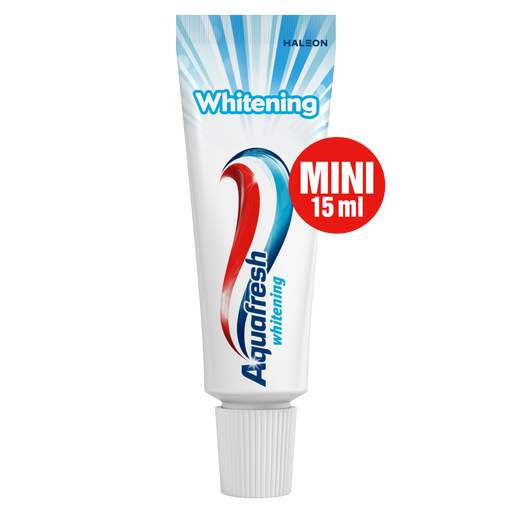
Why it suits this profile: The compact 15 ml tube is handy for a wash bag, workplace or short trip. The ingredients list includes hydrated silica, potassium nitrate and sodium fluoride.
The small pack makes it easier to try a whitening routine first, without buying several tubes straight away.
Compact size; contains fluoride according to the product information; lists potassium nitrate in the ingredients.
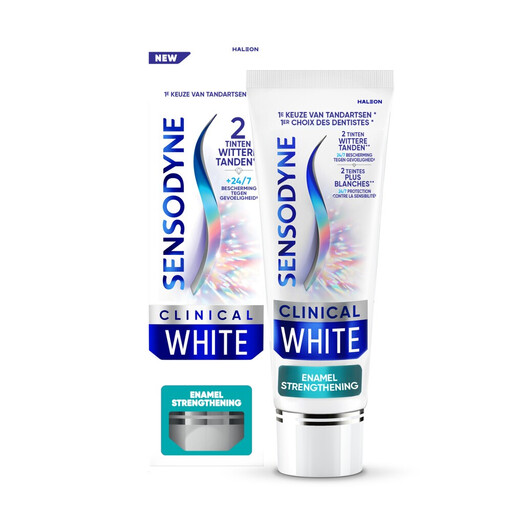
Why it suits this profile: According to Sensodyne, this option combines whitening and sensitivity care in an everyday fluoride formula, with a fresh mint flavour.
You don’t have to focus solely on an intensive whitening formula; the product information also mentions sensitivity and fluoride use.
1450 ppm fluoride according to the label; contains potassium nitrate; intended for adults and not for children under 12 without advice from a dentist.
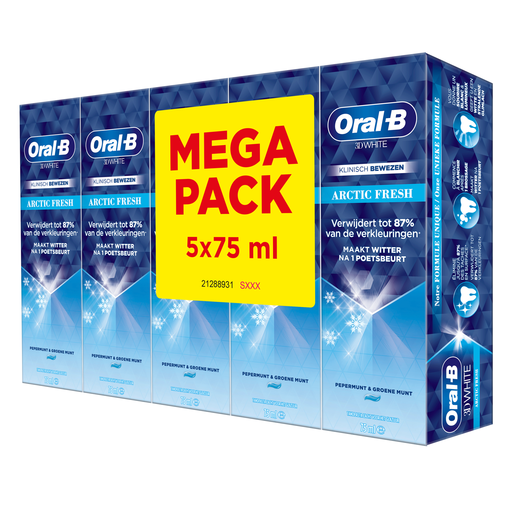
Why it suits this profile: The pack of five tubes is a good fit for households that brush daily and like to stock up. The product information mentions surface stains, fluoride and a fresh flavour.
The packaging gives clear usage guidance: brush twice a day, up to three times a day at most. This helps prevent overbrushing.
5 x 75 ml; sodium fluoride with 1450 ppm fluoride according to the product information; targets surface stains and is intended for daily use.
We’ve put together a complete, up-to-date list of products that meet these strict selection criteria and current European safety regulations.
Fresh breath is a welcome side effect of many whitening products, but it won’t mask an underlying problem. If your gums bleed regularly or you have pain, toothpaste for healthy gums is no substitute for a professional check-up.
According to product descriptions from various brands, certain formulas are designed to help remove surface stains caused by food and drink. Results vary from person to person. Whitening toothpaste generally won’t make your natural tooth colour fundamentally lighter.
Follow the directions on the packaging. Many products are intended for brushing twice a day, but brushing more often or harder won’t automatically give you better results. If you experience sensitivity, you can stop using the product and ask a dentist for advice.
That depends on how much you use each time you brush, how many people use it and the recommended frequency. A 75 ml tube often lasts for several weeks when used twice a day, but check the instructions and your own usage. Bulk packs can be handy when several family members use the same product.
