
Vandaag of morgen in huis

Kwaliteit gegarandeerd

Welkomstaanbiedingen ontgrendelen: GRATIS bezorging | Tot 80% korting | Gratis 30 dagen JoyPlus-proefperiode
Download de app
A brighter smile without a complicated routine – that's why so many people in the UK search for whitening toothpaste. Yet not every product delivers the same kind of result. Some toothpastes focus mainly on surface stains, while others place more emphasis on fluoride, plaque, tartar or a fresh flavour.
If you only look out for words like "white", "crystals" or "deep clean", you could easily end up paying more for features that don't really suit your needs. With this practical guide, you can focus on verifiable product information, age recommendations and pack sizes.
Most whitening toothpastes are designed to remove surface discolouration – think stains from coffee, tea, fizzy drinks or smoking. They don't automatically change the natural colour of your tooth tissue and are not a substitute for professional treatment.
So look out for the difference between:
Claims about the percentage of stains removed come from the brand's product information. According to Oral-B, the 3D White Arctic Fresh variant, for example, removes up to 87% of surface stains. Treat this as a product specification under the conditions described by the brand, not as a guaranteed personal result.
A fresh, sharp mint flavour can be pleasant, but it doesn't in itself say anything about how well the toothpaste works. Some variants come in spicy mint, Arctic Fresh, peppermint or Soft Mint flavours. If you're sensitive to strong tastes, you'd be better off choosing a milder whitening toothpaste.
It's also wise not to brush too hard. Whitening toothpaste is designed to be used with a soft toothbrush and gentle movements. If you experience irritation or sensitivity, stop using it and consult a dentist if necessary.
A whitening toothpaste deal with 3, 5 or 12 tubes might look like good value, but first check:
A multi-pack is especially practical when several family members use the same variant, or when you don't want to keep ordering a new tube.
For daily use, the fluoride content is an important thing to check. Several products mentioned contain 1450 ppm fluoride, including Oral-B 3D White Arctic Fresh, Oral-B 3D White Luxe Advanced, Colgate Max White Purple Reveal and Colgate Max White Whitening Crystals.
According to the product information, fluoride toothpaste helps protect against cavities and maintain strong enamel. Always follow the instructions on the packaging. For young children, a small, pea-sized amount and supervision during brushing are usually recommended. Some variants are aimed at adults or children aged 12 and over; other product descriptions mention use from age 6. So check this on each tube.
If you're looking for toothpaste for discolouration, you can look out for ingredients such as:
The presence of an ingredient doesn't prove that every user will get the same result. So look at both the ingredients list and the specific usage advice.
A 75 ml tube is standard. Variants of 100 ml, such as Aquafresh Active White and Colgate Max White Whitening Crystals, can be appealing if you want to reorder less often. For a household, packs with 3, 5 or 12 tubes are often more convenient.
Most products recommend brushing at least twice a day, usually for about two minutes. Don't brush more often than stated on the label. Fresh breath, by the way, doesn't depend only on your toothpaste: your tongue, interdental spaces and toothbrush all play a part too.
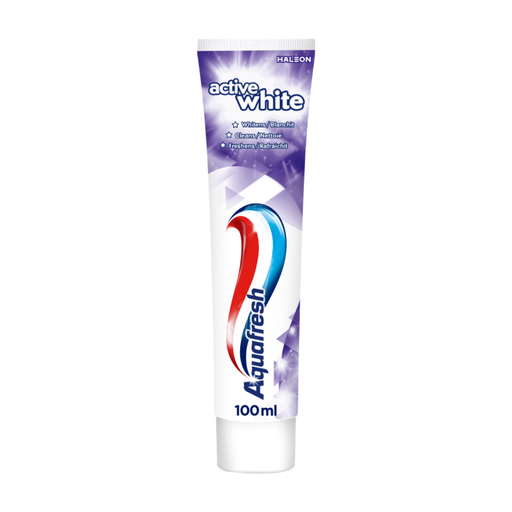
Why this fits the profile: A straightforward choice for adults and children aged 6 and over who want to combine daily oral care with stain removal.
The product information states fluoride, daily use and a 100 ml size, so you're not relying solely on a whitening name.
100 ml, fluoride formula, fresh breath and suitable for daily use according to the product description.
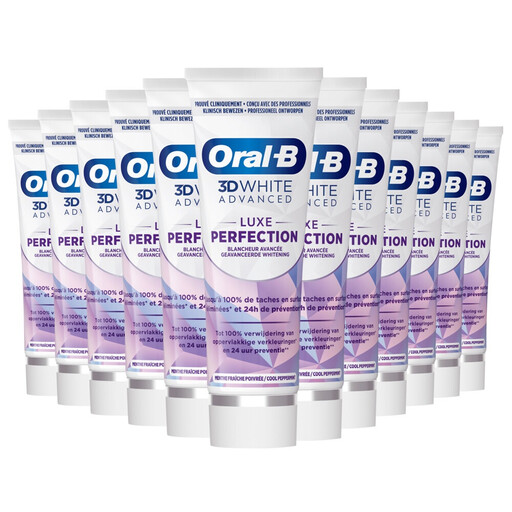
Why this fits the profile: The large pack suits households that want to stock up on a regular daily toothpaste.
The size is clearly specified as 12 tubes of 75 ml. According to Oral-B, the formula targets surface stains and contains fluoride.
12 x 75 ml, peppermint flavour and fluoride according to the product description.
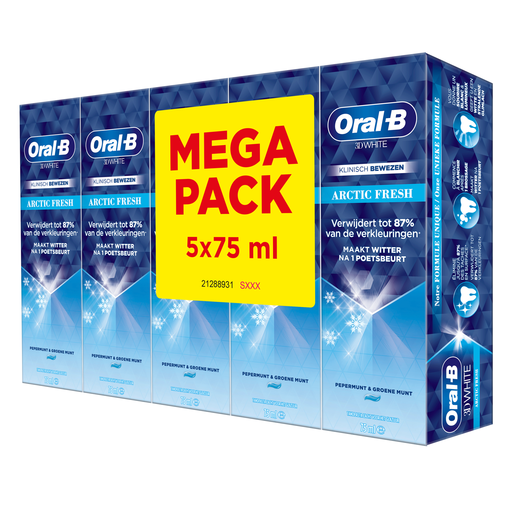
Why this fits the profile: Handy if you regularly drink coffee or tea and want a stock of the same fresh flavour.
The product description specifically mentions twice-daily use, 1450 ppm fluoride and a target group from age 6 with supervision for young children.
5 x 75 ml, Arctic Fresh flavour and, according to Oral-B, up to 87% removal of surface stains.

Why this fits the profile: A targeted option for adults who want to combine whitening with a formula for sensitive teeth.
The product information states arginine, 1450 ppm fluoride and a whitening purpose. This makes the choice more specific than a general toothpaste for whiter teeth.
Arginine 8%, 1450 ppm fluoride and a formula that, according to the product description, targets sensitive teeth.
We've put together a full, up-to-date list of products that fully meet these strict selection criteria and comply with current European safety regulations.
Use a soft toothbrush and a small amount of toothpaste. Brush gently for about two minutes, paying attention to all tooth surfaces. Spit out the toothpaste and follow the rinsing advice on the packaging. Don't use a whitening toothpaste as a reason to brush harder or more often.
If you have persistent sensitivity, irritation, bleeding gums or stubborn stains, stop using the product and seek advice from a dentist. Always check the age recommendation for children and keep the tube out of reach.
No. Whitening toothpaste is usually aimed at surface stains. These can be caused by coffee, tea, wine or tobacco. Deeper or internal discolouration doesn't automatically fall within the scope of what's described on a product's packaging.
That depends on the specific variant. Many products mention twice-daily use, but always read the label. If you have sensitivity, choose a mild whitening toothpaste and brush without pressure. If you experience any problems, it's wise to consult a dentist.
A multi-pack can lower the price per tube, but only if you use the tubes in good time and you like the flavour. Compare the total volume, the number of tubes, the fluoride information and the shelf life before you order.
