
Vandaag of morgen in huis

Kwaliteit gegarandeerd

Welkomstaanbiedingen ontgrendelen: GRATIS bezorging | Tot 80% korting | Gratis 30 dagen JoyPlus-proefperiode
Download de app
A brighter smile often starts with a good daily routine. However, whitening toothpaste isn’t right for everyone. Some formulas focus mainly on surface stains caused by coffee and tea, while others pay more attention to sensitive teeth, gums or fluoride protection.
Marketing can sometimes make it difficult to compare products fairly. So focus on the ingredients, fluoride content, directions for use and intended users. Read on to find out what to look for and which popular options suit different needs.
Toothpaste for whiter teeth usually works on surface stains, such as those caused by coffee, tea, red wine or tobacco. The formula may help remove this build-up or polish the tooth surface. However, it won’t automatically change the natural colour of your tooth tissue.
Claims such as “visibly whiter after one brush” should therefore be treated as claims made by the manufacturer. Results depend on factors including existing stains, brushing technique and how long you use the product.
A whitening formula isn’t necessarily suitable for sensitive teeth or gums. Some products contain abrasive cleaning particles, such as hydrated silica, calcium carbonate or other polishing ingredients. These may help with surface stains, but brushing vigorously with heavy pressure is not a good combination.
If your teeth are easily irritated, look for whitening toothpaste for sensitive teeth and follow the directions on the packaging. If sensitivity persists or gets worse, speak to a dentist.
A multipack can be good value, but only if the flavour and formula suit you. Check first:
For adults, fluoride toothpaste is usually a practical choice for daily cleaning. The product information often lists the fluoride content in ppm. Several products in this overview contain around 1450 ppm fluoride, including Oral-B 3D White Arctic Fresh, Sensodyne Clinical White and parodontax Strengthen & Protect Whitening.
Fluoride isn’t a whitening ingredient. However, according to the product information, it supports daily dental protection. Don’t use more toothpaste than recommended, and don’t swallow it.
Toothpaste for surface stains often contains cleaning or polishing ingredients. These can help with build-up, but brushing harder won’t necessarily make the whitening effect stronger. Brush for around two minutes using a soft-bristled brush and gentle pressure.
Pay attention to claims about enamel, too. If a brand says that a product offers extra protection against enamel wear, present this as a claim made by the manufacturer. For example, the product description for Oral-B Professional Whitening states that, according to its own product information, the formula offers up to three times more protection against wear than regular toothpaste. This isn’t a universal guarantee for every user.
If you’re mainly looking for support with sensitivity, check for ingredients such as potassium nitrate or calcium sodium phosphosilicate, also known as Novamin. Sensodyne products in this overview contain these ingredients and are described by the manufacturer as having been developed for sensitive teeth.
If your main concern is your gums, parodontax whitening may be worth considering. According to the product description, the formula is designed to help reduce the build-up of plaque bacteria along the gumline. These brand claims are not a substitute for a dental assessment if your gums are bleeding, swollen or painful.
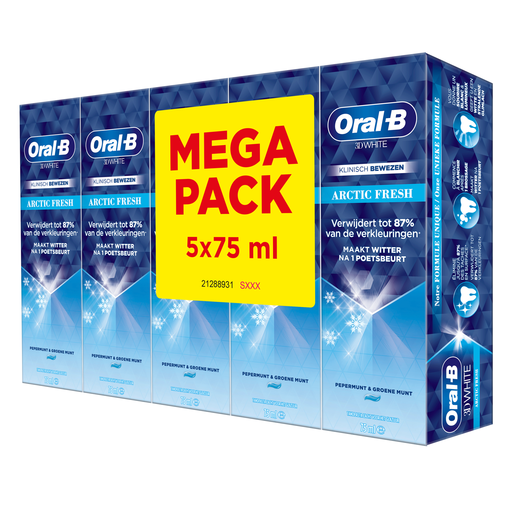
Why it suits this profile: The pack of five tubes is handy for households that want to stock up on a toothpaste for everyday use.
The product information states that the formula targets surface stains and is suitable for daily use. Be sure to check the current packaging and directions for use.
1450 ppm fluoride according to the product information, a fresh Arctic Fresh flavour and five 75 ml tubes.
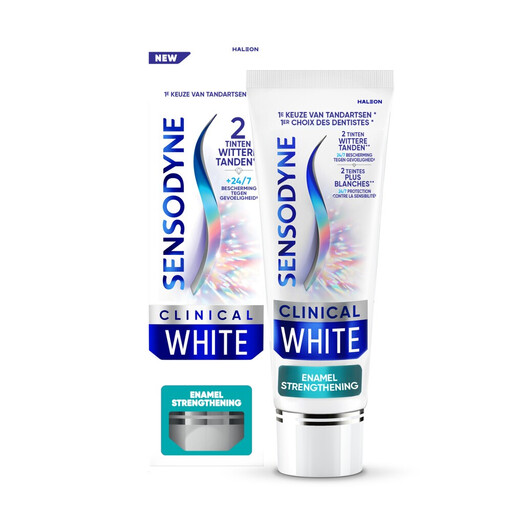
Why it suits this profile: Designed for adults who want to combine whitening with a formula for sensitive teeth.
The product description says the formula is suitable for sensitive teeth and designed to remove stains. Brush without applying excessive pressure.
Contains potassium nitrate, according to the product information, 1450 ppm fluoride and a fresh mint flavour.
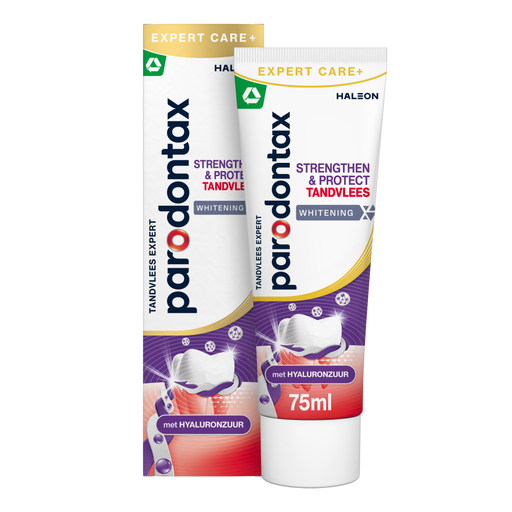
Why it suits this profile: A good fit for people looking for toothpaste to help tackle plaque and tartar, with extra attention to the gumline.
The formula combines a whitening purpose with a focus on plaque along the gumline, rather than simply promising a whiter appearance.
Contains 1450 ppm fluoride and sodium hyaluronate according to the product information; the manufacturer also states that the formula is suitable for daily use.

Why it suits this profile: An option for anyone who wants to combine whitening with a formula specifically marketed for sensitive teeth.
The product information lists an arginine content of 8% and 1450 ppm fluoride. Use as directed on the label and stop if irritation occurs.
Developed for sensitive teeth, with fluoride and a 75 ml whitening variant.
We’ve put together a complete, up-to-date list of products that meet these strict selection criteria and the applicable European safety regulations.
Whitening toothpaste usually targets surface stains. Deeper discolouration or changes in colour caused by the tooth tissue itself won’t simply disappear through daily brushing. If the discolouration doesn’t go away, discuss professional options with a dentist.
That depends on the product information. Many variants are intended as toothpaste for everyday use and recommend brushing twice a day. Don’t use it more often than stated on the packaging, and avoid scrubbing hard. If you experience sensitivity, you could temporarily switch to a formula for sensitive teeth or ask a dentist for advice.
A 75 ml tube will often last one person several weeks, depending on how much they use each time they brush. A pea-sized amount, or the quantity stated on the packaging, is usually enough. Multipacks are especially handy if you already know you like the flavour and formula.
