
Vandaag of morgen in huis

Kwaliteit gegarandeerd

Welkomstaanbiedingen ontgrendelen: GRATIS bezorging | Tot 80% korting | Gratis 30 dagen JoyPlus-proefperiode
Download de app
Many people want a fresh smile, but not every whitening toothpaste is suitable for everyday use. Products differ in fluoride content, cleansing ingredients, flavour, packaging and suitability for sensitive teeth. If you focus only on words such as “extra white” or “professional”, you can quickly end up paying for a promise that does not match your actual goal.
In this buying guide, you’ll learn how to compare toothpaste for whiter teeth objectively and which popular options suit different usage situations.
Whitening toothpaste usually targets discolouration on the tooth surface, for example from coffee, tea, red wine or tobacco. This is different from the natural colour of the tooth tissue. Toothpaste for surface stains therefore does not automatically make teeth several shades lighter.
Pay attention to the precise claim. Does it say that the product removes “surface stains” or “surface discolourations”? If so, it is referring to visible build-up on the outside of the teeth. According to brands’ own research, percentages such as 80%, 87% or 100% may relate to specific testing conditions. Treat these figures as product information, not as a guaranteed result for every user.
Whitening formulas often contain cleansing ingredients such as hydrated silica or other polishing agents. These may help with surface discolouration, but a strong mint flavour or brushing too vigorously can be uncomfortable if you have sensitive teeth or gums.
If you have sensitivity, choose a product explicitly described as toothpaste for sensitive teeth. Also use a soft toothbrush and light pressure. Persistent sensitivity or irritation is a reason to consult a dentist.
A pack containing 5 or 12 tubes may seem good value, but only if you like the flavour and formula. Also check the shelf-life information on the packaging. An opened tube can dry out more quickly if the cap is not closed properly.
A multipack is particularly practical for households with several users or when you already know that the variant suits you.
For many adults, fluoride toothpaste is a sensible basis for daily oral care. The product details for various options in this range state approximately 1,400 to 1,450 ppm fluoride, often in the form of sodium fluoride or sodium monofluorophosphate.
Always check the label on the specific pack. Do not use more toothpaste than indicated and do not swallow it. For children up to and including the age of 6, the recommended amount is generally pea-sized, with supervision while brushing. Follow the instructions on the packaging and ask a dentist or doctor for advice if you use additional sources of fluoride.
Ingredients such as hydrated silica, calcium carbonate, pyrophosphates and sodium bicarbonate are found in whitening products. They have different functions, such as cleaning the tooth surface or helping to limit the build-up of stains.
The ingredients list tells you more than just how a product whitens; it can also help you identify potential preferences. If you are quickly bothered by a strong flavour, choose a mild mint variant. If you are sensitive to certain fragrances, it is worth checking ingredients such as limonene, eugenol or menthol.
The most common size is 75 ml, while some Colgate variants contain 100 ml. A 75 ml tube is useful for trying a product first; a pack with several tubes reduces the number of times you need to reorder.
For everyday use, many product packs recommend brushing twice a day, usually for around two minutes. Do not brush aggressively to achieve results more quickly. Consistency, a suitable toothbrush and toothpaste for plaque are more important than a striking marketing claim.
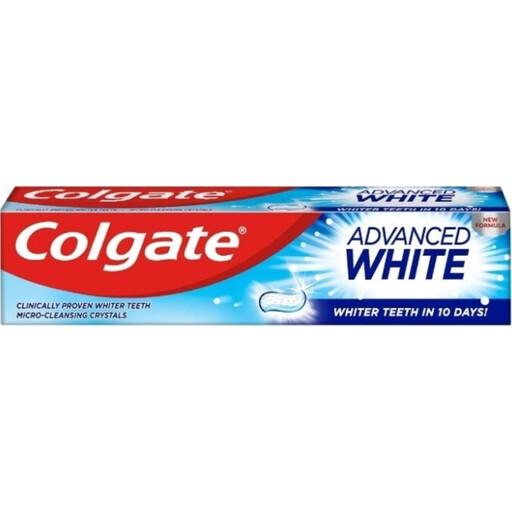
Why it suits this profile: The 100 ml size provides a practical basis for daily brushing, and the product description mentions fluoride, help with surface stains and protection against plaque.
The specifications specifically mention removing surface stains rather than guaranteeing a change to the teeth’s natural colour.
100 ml size; sodium fluoride with a total fluoride content of 1450 ppm according to the product information.
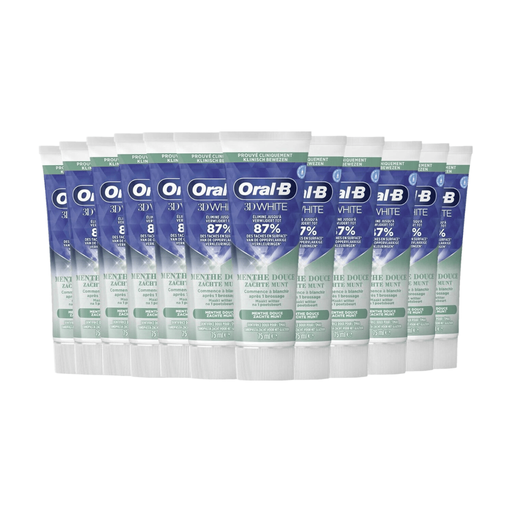
Why it suits this profile: The multipack of 12 tubes is suitable for a household that wants to use the same whitening toothpaste every day, with a milder soft mint flavour.
The product description links whitening to the gentle removal of surface discolouration and states a fluoride content of 1450 ppm.
12 x 75 ml; soft mint; fluoride formula; according to Oral-B’s own research, the toothpaste removes up to 80% of surface discolouration.
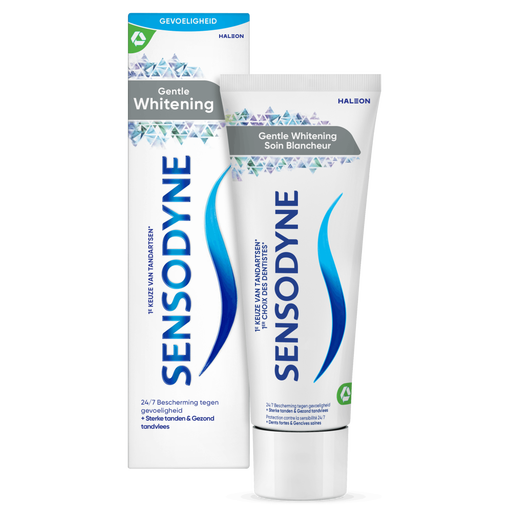
Why it suits this profile: This variant is aimed at users who want to combine whitening with a formula that, according to the product description, is intended for sensitive teeth and everyday use.
The choice is not based solely on a whitening claim: the ingredients list includes potassium nitrate and fluoride, while the product information describes gentle cleaning.
75 ml; whitening for surface stains; fluoride content of 1400 ppm according to the product description; fresh mint flavour.
We have put together a complete, up-to-date list of products that fully meet these strict selection criteria and the applicable European safety regulations.
That depends on the specific formula and the instructions on the packaging. Many commonly available variants are intended for brushing twice a day. Do not use an extra-large amount or brush harder to achieve results more quickly. If you experience irritation or persistent sensitivity, stop using it and ask a dentist for advice.
Check the expiry date or other shelf-life information on the packaging. Close the cap after each use and store the tube in a cool, dry place away from direct heat. A multipack is only useful if you use the tubes within the stated period.
Whitening toothpaste is mainly designed to target surface discolouration. The natural colour of the teeth or deeper discolouration does not automatically change through daily brushing. If you notice pronounced or new discolouration, it is advisable to have it checked by a dentist.
