
Student who eats bread often
If you can use a whole loaf or freeze it in portions straight away, a larger loaf may suit your daily routine. Also think about how many slices you actually use.


Choose a whole white loaf if you eat it regularly or can freeze it in portions straight away. If your mealtimes are irregular during or after your move and you have limited freezer space, a half loaf or smaller pack may better suit how much you use. Also check the label if ingredients, allergens or fibre are important to your choice.
If you can use a whole loaf or freeze it in portions straight away, a larger loaf may suit your daily routine. Also think about how many slices you actually use.
It can be hard to predict when you’ll be eating at home while moving. A half loaf may be a better fit for how much you use; if you have freezer space, you can also divide a whole loaf into portions.
If you’re choosing based on ingredients, allergens or nutritional value, the current label is important. The Netherlands Nutrition Centre recommends replacing white bread with brown or wholemeal bread as much as possible when choosing bread for your daily sandwiches.
Start by considering how much bread you usually eat and whether you have space to store portions. Then choose a type of loaf that suits your mealtimes, and check the label if needed.
| What to consider | What to check | Who is this important to? |
|---|---|---|
| Size for everyday use | Check whether you can use a whole loaf within your usual mealtimes and how many slices it contains. | If I eat sandwiches almost every day, I want to choose a size I can use up. An estimated 36% of consumers give this need the highest priority. |
| Storage to avoid waste | Consider a half loaf, or divide a whole loaf into portions for the freezer after buying it; follow the storage instructions on the label. | When my mealtimes vary, I want to avoid having bread left over that I have to throw away. This is the main concern for around 29% of consumers. |
| Bread for quick meals | See whether a standard sliced loaf, a casino loaf or toast bread suits what you want to make. | When I have little time to prepare food, I want slices that work for sandwiches or toasties. An estimated 21% of consumers consider this the most important factor. |
| Ingredients and nutritional information | Check the allergens on the packaging and, if you want to compare them, the fibre and salt values per 100 g. | If certain ingredients aren’t suitable for me, or I want to take nutritional values into account, the label determines my choice. Around 14% of consumers put this first. |
A large loaf may not suit irregular mealtimes if you don’t expect to use it all. The Netherlands Nutrition Centre lists bread as a product that is often wasted.
If you won’t eat the bread soon, divide it into portions for the freezer as soon as you get home, or choose a smaller size.
Ingredients and allergens vary by product. Albert Heijn lists soya and gluten-containing cereals among the ingredients in AH Wit heel; PLUS also lists milk and lactose in PLUS Boeren wit heel.
If you have an allergy or intolerance, always check the current label on the loaf you’re buying.
According to the Netherlands Nutrition Centre, wholemeal bread is a particularly good source of fibre, vitamins and minerals. It recommends replacing white bread with brown or wholemeal bread as much as possible.
If you eat bread regularly and want to take fibre into account, compare the nutritional information.
Albert Heijn lists AH Wit heel, a whole white wheat loaf with around 22 slices.
Jumbo lists whole white bread, as well as half loaves of Casino wit and tostibrood wit.
Lidl lists an 800 g white loaf and uses a fibre guide for packaged bread.
ALDI describes its fresh daily white bread as a whole tin loaf with a soft crumb.
PLUS lists Boeren wit heel, an 800 g loaf with details of its ingredients, allergens and nutritional information.
Dirk lists Bakker van der Akker Casino wit in half and whole loaves.
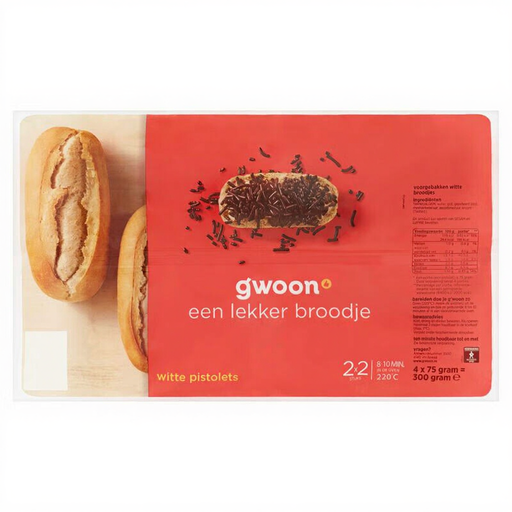
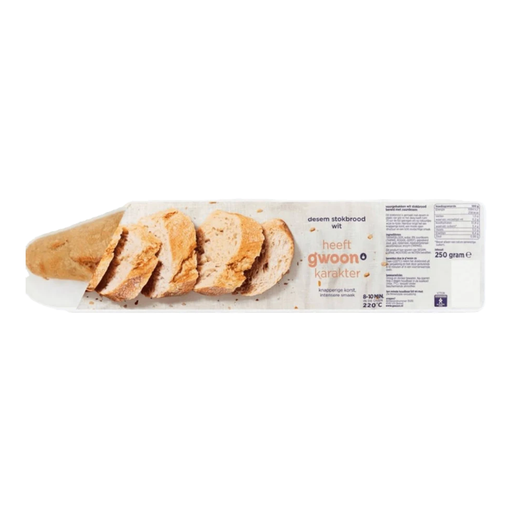
These products are white rolls and a white baguette for individual meals, not whole sliced loaves. Check the quantity on the packaging to see whether they suit how much you use.
 No image available
A pack of four white rolls for meals when you’d prefer individual rolls.
Check the packaging for the best-before date, allergens and the basis for the nutritional values if these matter to your choice.
 No image available
A white baguette for a meal or sandwich, if that type of bread suits your mealtime.
The pack contains 250 g. Check the label for the best-before date, allergens and the basis for the nutritional values.
A half loaf may be a better choice if you don’t eat much bread and probably won’t use a whole loaf. If you have freezer space, you can also divide a whole loaf into portions after buying it.
Freeze bread in portions as soon as you buy it if you won’t eat it soon. Also follow the storage instructions on the product label; the Netherlands Nutrition Centre recommends freezing bread in portions to help reduce food waste.
No, white and wholemeal bread don’t have the same nutritional composition. The Netherlands Nutrition Centre recommends replacing white bread with brown or wholemeal bread as much as possible; check the nutritional information for each product if you want to compare fibre.