
Vandaag of morgen in huis

Kwaliteit gegarandeerd

Welkomstaanbiedingen ontgrendelen: GRATIS bezorging | Tot 80% korting | Gratis 30 dagen JoyPlus-proefperiode
Download de app
A white wireless gaming mouse is a great fit for a bright, clutter-free gaming setup. But a white casing says little about performance. For FPS games, esports and everyday PC use, its weight, connectivity, sensor and battery life determine whether a mouse is right for you.
Manufacturers also tend to use broad marketing claims in their product information. That’s why we focus below on verifiable specifications and practical differences.
A high-DPI gaming mouse might sound impressive, but many players use much lower sensitivity in games. A 26,000 or 44,000 DPI sensor mainly gives you more settings to choose from. Also check whether you can adjust the DPI and quickly change the sensitivity using a button.
According to its product specifications, an 8K polling rate mouse reports to your computer up to 8,000 times per second. This can make response processing more precise, but the difference is mainly of interest to competitive players with a powerful PC and a high-refresh-rate screen. Also check whether 8K mode works with the included receiver or requires an extra accessory.
Battery life claims are usually measured under specific conditions. A mouse that lasts for hundreds of hours at 1,000 Hz may run for less time at a higher polling rate, with lighting switched on or during intensive use. So check the stated battery life, as well as whether you can keep playing while it charges.
Maintenance is also worth considering with a white gaming mouse. Dirt and fingerprints show up more easily on a light-coloured casing. A smooth, easy-to-clean finish is more practical than a colour accent that simply stands out.
Many FPS players choose an ultralight gaming mouse for quick aiming movements. Models weighing around 53 to 64 grams are easier to lift and move than mice weighing 90 grams or more. But a lighter mouse won’t suit everyone. If you use a full palm grip, you may prefer more support and a larger ergonomic model.
Check:
An optical sensor is common in modern gaming mice. The stated DPI rating indicates sensitivity, not the overall quality of your gaming experience. For most users, stable tracking, a comfortable shape and a reliable connection matter more than an extremely high maximum DPI.
A 1,000 Hz polling rate is enough for many PC gamers. 4K or 8K can be useful for competitive gaming, but typically uses more power and places greater demands on your system and software.
A 2.4GHz USB receiver is usually designed for low latency. Bluetooth is handy for laptops or multiple devices, but not every gaming mouse offers it. A wired backup mode is useful when the battery runs out.
Also check:
A gaming mouse with programmable buttons can be useful for MMO games, productivity and macros. For FPS games, a simpler layout may be easier to use. Check that the software works with your operating system and that features such as macros are allowed under your game’s rules.
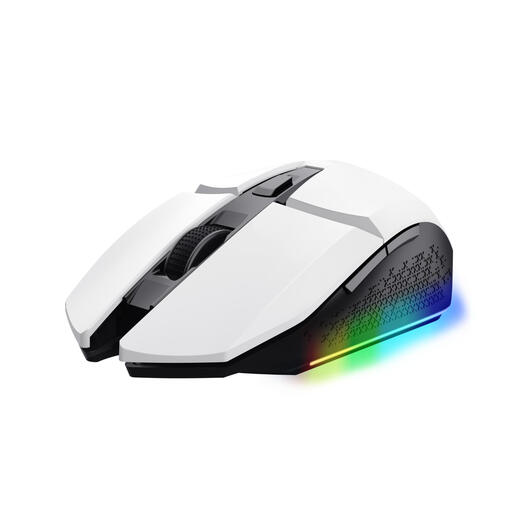
Why it suits this profile: This wireless gaming mouse offers a straightforward starting point, with 2.4GHz connectivity, six buttons and adjustable DPI from 800 to 4,800.
The specifications are clearly defined: 4,800 DPI, six buttons and up to 80 hours of battery life according to the product information. Don’t expect 8K features or extensive macro software.
Adjustable DPI, RGB lighting and the ability to play while charging, according to the product specifications.
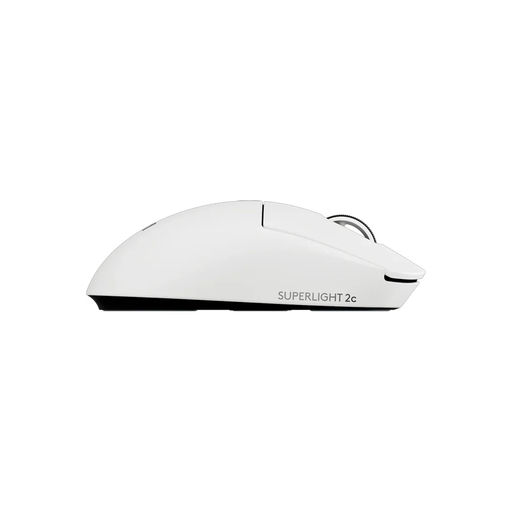
Why it suits this profile: Its compact shape and 53-gram weight make it a good match for FPS players looking for a lightweight mouse with programmable buttons.
The product information explicitly lists 8K polling, up to 44,000 DPI and a maximum battery life of 95 hours. These high figures are no substitute for practical details about size and weight.
53 grams, HERO 2 sensor, 8K polling rate and programmable side buttons, according to the product details.
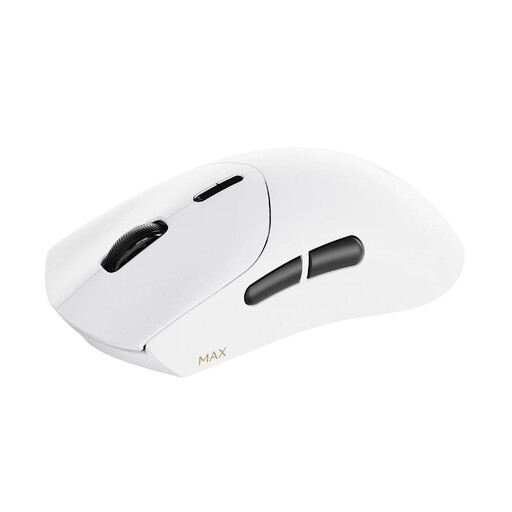
Why it suits this profile: It is for players who value an ultralight mouse, plenty of programmable features and an exceptionally long stated battery life.
The product specifications state the conditions behind the battery life claim: up to 750 hours at 1,000 Hz. Actual battery life may differ when using 8K.
53 grams, native wireless 8K, 30,000 DPI, ten programmable buttons and an optical switch rated for 120 million clicks.
The Razer Viper V3 Pro Wireless Gaming Mouse - White is designed for right-handed FPS players and combines a weight of 54 grams, 35,000 DPI, 8K polling and up to 95 hours of battery life, according to the product information. If you’re looking for an ergonomic gaming mouse with more buttons, consider the Razer Basilisk V3 Pro White. This model has 11 buttons, Bluetooth, 2.4GHz connectivity and weighs 112 grams.
The HyperX Pulsefire Haste 2 Wireless is another option if you want both 2.4GHz and Bluetooth connectivity. According to the specifications, this white mouse weighs around 60 grams, has a sensor of up to 26,000 DPI, six programmable buttons and a stated battery life of up to 100 hours.
We’ve put together a complete, up-to-date list of products that meet these strict selection criteria and the applicable European safety regulations.
Yes, as long as it has a reliable 2.4GHz connection, a suitable shape and an accurate sensor. For competitive gaming, a USB receiver is usually a better choice than Bluetooth alone. Also consider the polling rate, weight and whether you can carry on playing with a cable.
It varies by model and settings. In this range, stated battery life varies from around 80 hours to 750 hours in specific modes. RGB lighting and a higher polling rate can affect battery life. So treat “up to” as a product specification based on certain conditions, not a guarantee of how long it will last every day.
Most models with a USB receiver work with a free USB port and a supported operating system. Before buying, check whether your PC uses USB-A or USB-C, whether software is required and whether features such as programmable buttons are available on your system.
