
Lunch shoppers with different bread preferences
You’re looking for something for a fussy eater, while also wanting a roll that’s clearly labelled wholemeal. The product name is a more useful starting point than the colour.


Choose a roll explicitly labelled wholemeal if fibre is the priority. If someone would rather have a familiar white roll, treat that as a separate preference instead of assuming you can find a compromise based on colour. If preferences differ, consider buying two types of bread. Dark bread, multigrain, seeds and sourdough are not, by themselves, proof that bread is wholemeal: check the product description and, for packaged bread, the current ingredients and allergen information.
You’re looking for something for a fussy eater, while also wanting a roll that’s clearly labelled wholemeal. The product name is a more useful starting point than the colour.
You’re shopping shortly before lunch and need a roll that’s available at your chosen branch. Check the current range if you have a particular type of bread in mind.
You want to get the quantities right for different preferences, perhaps choosing a wholemeal option alongside a white roll. Check the bread type and packaging for each product.
First, decide which preference matters most for this lunch. Then compare the type of bread and how much preparation it needs, so one dark-looking roll doesn’t end up being treated as a match for two different preferences.
| What to look for | What to check when buying | Who it matters to |
|---|---|---|
| Clearly labelled wholemeal | Look for the word ‘wholemeal’ in the product name, on the shelf label or on the packaging; don’t rely on colour or grains alone. | If fibre is my priority, I want to be able to tell whether my lunch roll is actually sold as wholemeal. This is the top priority for around 33% of consumers. |
| A preference for white bread | Check that the bread is labelled white. Consider the texture you want separately: the type of bread alone won’t tell you how soft a particular roll is. | For a fussy eater, I’m mainly looking for a roll they’ll enjoy, without assuming from its colour that it has a soft crumb. This preference is the deciding factor for around 27% of consumers. |
| Lunch at short notice | Check the range at your chosen branch and find out whether the roll needs defrosting or baking. | If I’m picking up bread just before lunch, the roll I choose needs to be ready in time. Being ready to eat straight away is the top priority for around 27% of consumers. |
| Quantity for the group | Compare whole loaves, smaller packs and individual rolls with the number of people eating and their preferences. | When preferences differ, I don’t want to be left with a large loaf that only one person wants. Getting the quantity right matters most to around 13% of consumers. |
These words and appearances don’t tell you whether a loaf is labelled wholemeal. According to the Dutch Bakery Centre, bread is labelled white, brown or wholemeal.
If you specifically want wholemeal, look for ‘wholemeal’ on the individual product and check the product information for packaged bread too.
A listed type of bread may not be available at your chosen shop when you’re buying lunch. Lidl says its fresh range can vary by branch; ALDI links its freshly baked bread to shops with a bakery section.
Check your chosen branch if you need a particular roll, or keep another suitable type of bread in mind as a backup.
A wholemeal roll and a familiar white roll suit different preferences. A mixed appearance doesn’t tell you whether both people will want to eat the bread.
Ask each person what matters to them. If their preferences differ, two clearly labelled types of bread are easier to assess than one unclear compromise.
These shops offer different ways to look for bread for lunch; their general range pages don’t tell you which rolls are available at your branch at a particular time.
A useful place to look if you want to browse bread online and factor delivery into your plans.
Worth considering if you’re looking at in-store bread or sourdough for lunch.
A good option if you want to look for a roll explicitly labelled wholemeal among the fresh bread.
A useful option for comparing fresh white, wholemeal and multigrain bread.
A way to search online for white bread, wholemeal bread or wholemeal rolls separately.
A useful option for looking at different types of bread within one range.
These options include bread described as wholemeal, as well as white rolls and baguettes. Compare the pack size and any preparation needed with your lunch plans; a white label doesn’t confirm how soft the bread is.
 No image available
An option described as wholemeal for a lunch you can prepare in advance. This whole loaf is sold in a pack of 2 × 550 g; allow time for defrosting, baking and cooling before serving.
 No image available
A whole loaf described as wholemeal if you’re looking for a 550 g loaf for lunch. This version also needs to be defrosted, baked and cooled, so it’s not ready to eat straight after purchase.
 No image available
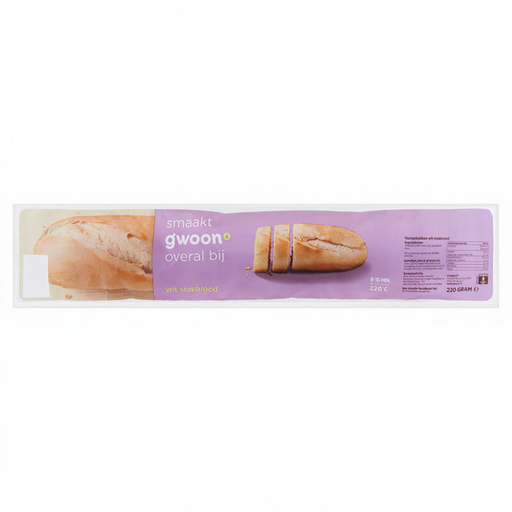
A 220 g white baguette for anyone who prefers white bread at lunchtime. The product description says it needs baking; check the current packaging for preparation instructions before use. The white label alone says nothing about how soft it is.
 No image available
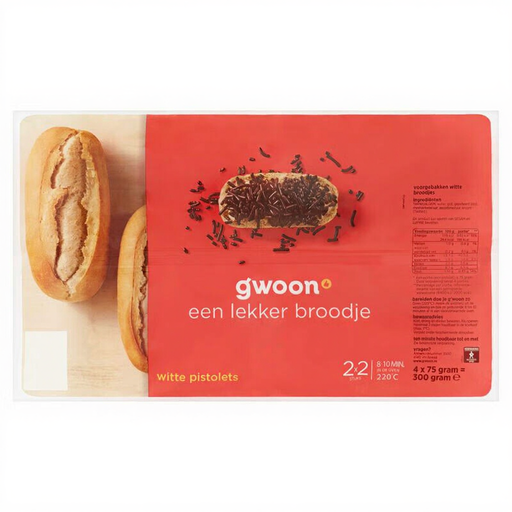
An option in roll form for a lunch where white bread is preferred. The pack contains 4 rolls weighing 300 g in total; check the current packaging for the texture you want and any preparation instructions.
Check whether the bread is explicitly labelled ‘wholemeal’; its dark colour, seeds or ‘multigrain’ name aren’t enough. The Dutch Bakery Centre describes white, brown and wholemeal as distinct bread types. For packaged products, check the current product information too.
No. If that person prefers a white roll, you can make it a deliberate choice for lunch and pick a separate wholemeal option for someone else. According to the Netherlands Nutrition Centre, wholemeal bread contains plenty of fibre, vitamins and minerals, so don’t describe a white roll as wholemeal based on its colour or other grains.
You can’t assume this is true of every individual loaf. To find out whether a particular bread contains iodised baker’s salt, check the ingredients on the current packaging or ask the retailer.
For unwrapped bread in store, ask for the allergen information for that specific product. For packaged bread, read the current packaging: PLUS points out that ingredients and allergen information can change.