
Families with fussy eaters
A familiar white or soft option can sit alongside wholemeal bread, so everyone at the table can choose the flavour and texture they prefer.


For an Easter lunch with a range of tastes to cater for, serve a white or soft bread option alongside bread clearly labelled as wholemeal. That way, fussy eaters don’t have to choose a coarse loaf, while guests looking for more fibre have a suitable option too. Adjust the quantities to suit your group, and check the latest ingredients and allergen information on packaged bread.
A familiar white or soft option can sit alongside wholemeal bread, so everyone at the table can choose the flavour and texture they prefer.
You want wholemeal bread to have a clear place on the table, even if some guests prefer white bread. According to the Netherlands Nutrition Centre, wholemeal bread in particular is rich in fibre, vitamins and minerals.
Half loaves or individual rolls let you serve a variety without buying a whole loaf of each type. Check in advance how to store any leftovers.
Start by considering the flavours and textures your guests enjoy. Then choose a clearly labelled wholemeal option and adjust the number of loaves or rolls to suit the size of your group.
| What to consider | What to check when buying | Who it matters to |
|---|---|---|
| Flavour and texture | As well as wholemeal, choose a white or soft bread if your guests aren’t keen on a coarse texture. | When I’m catering for fussy eaters, I want them to be able to choose bread with a familiar flavour and bite. Around 42% of consumers would make this accessibility their top priority. |
| Wholemeal bread and fibre | Check that it is labelled wholemeal and, for packaged bread, compare the fibre content per 100 g. According to the Netherlands Nutrition Centre, wholemeal bread in particular is rich in fibre. | I want to offer a clearly labelled wholemeal option rather than judging by the bread’s dark colour. For around 33% of consumers, wholemeal bread would be their top priority. |
| Portions and freshness | Choose half loaves or rolls to suit the number of people, and read the storage and freezing instructions for the product you select. | For a small gathering, I want to offer variety without ending up with several whole loaves. Getting the quantity right would be the top priority for around 25% of consumers. |
A dark colour or several types of grain does not, in itself, mean that a loaf is wholemeal. According to the Netherlands Nutrition Centre, multigrain means that a bread contains at least three types of grain.
Look for the word ‘wholemeal’ on the packaging and, if necessary, compare the ingredients and fibre content per 100 g.
A bread basket containing only white bread or only coarse bread leaves little room for different preferences around the table.
Pair a white or soft option with at least one clearly labelled wholemeal loaf or roll. Consider half sizes for a smaller gathering.
Buying several whole loaves can leave you with more leftover bread than you can use.
A loaf you looked at before may have different ingredients or allergen information on the packaging when you buy it.
Read the current label on every loaf you choose, especially if a guest needs to avoid certain allergens.
The name, colour or supermarket a loaf comes from won’t tell you whether that specific product was made with baker’s salt.
If the type of salt used matters to your choice, check the product information or ask the manufacturer which salt was used.
These ranges give you a starting point for putting together a bread basket with a variety of options. Check the label and packaging information for each loaf.
Worth considering if you want to look at different types of wholemeal bread, including half loaves.
A range where you can compare white, brown, wholemeal and multigrain bread for the same lunch.
Worth considering if you’re looking at fibre content in packaged bread or want a finer-textured wholemeal loaf.
A range where you can look at both white and wholemeal freshly baked bread.
Worth considering if you want to pair wholemeal bread with wholemeal rolls or baguettes.
A range where you can compare white, wholemeal and multigrain loaves with rolls.
For a bread basket with options to suit different preferences, the selection below includes two wholemeal options, white rolls and multigrain baguettes. The multigrain baguettes are not a substitute for bread explicitly labelled as wholemeal.
 Image unavailable
A round wholemeal option to serve alongside white bread.
This loaf weighs 550 g. It needs to be defrosted and baked; follow the preparation instructions on the packaging.
 Image unavailable
A wholemeal option in individual portions for guests who prefer flatbread with lunch.
The pack contains six flatbreads. Check that this style goes with the fillings you plan to serve, and read the latest label if anyone has allergies.
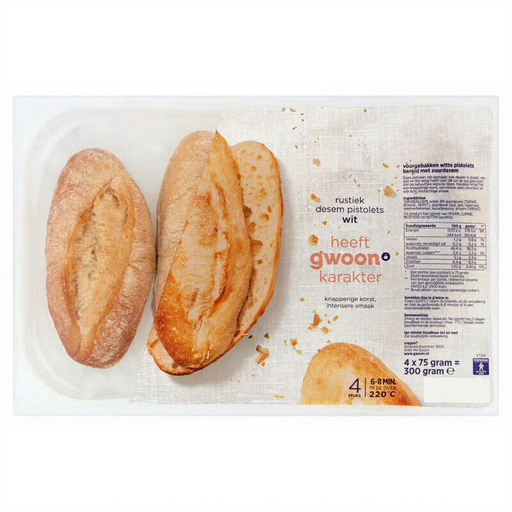 Image unavailable
A white bread option for guests who would prefer it to the wholemeal bread on the table.
The pack contains four rolls. Pair them with a separate wholemeal option if you want to cater for both preferences.
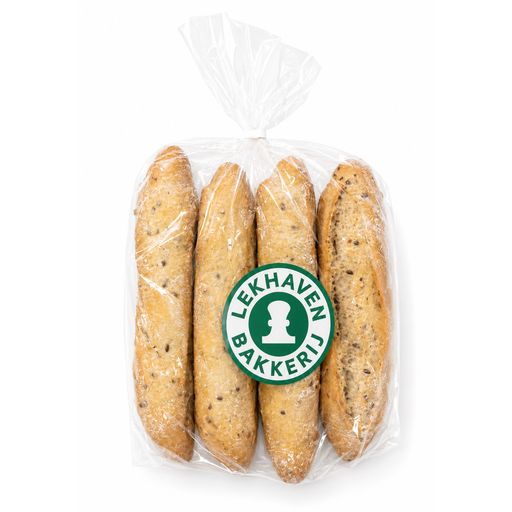 Image unavailable
An extra bread option for a lunch where guests can choose smaller pieces.
The pack contains four 135 g baguettes. Multigrain doesn’t automatically mean wholemeal; check the product label if wholemeal bread is important for your basket. Follow the packaging instructions for defrosting and baking.
No, white bread can be served alongside wholemeal if your guests have different preferences. Include a clearly labelled wholemeal option too if fibre and nutritional value are important; the Netherlands Nutrition Centre advises replacing white bread with wholemeal or brown bread as much as possible.
No. According to the Netherlands Nutrition Centre, multigrain refers to bread made with at least three types of grain; it doesn’t automatically mean that wholemeal flour has been used. Check the product description and ingredients if you specifically want to buy wholemeal bread.
Choose quantities to suit the number of guests, for example by serving half loaves or rolls. Follow the storage instructions for the product you’ve bought; PLUS advises freezing its referenced farmhouse wholemeal bread on the day of purchase and using it within one month, but that guidance doesn’t necessarily apply to other bread.
Check the latest ingredients and allergen information on the packaging for every loaf. Don’t rely on the type of bread or the information for another product, even if both are labelled wholemeal.
No, you can’t assume that this is the case for every loaf. If the type of salt used matters to your choice, check the product information or ask the manufacturer; the name or colour of the bread won’t tell you.