If fibre is your priority when choosing bread, wholemeal bread is a more obvious choice than white bread: according to the Netherlands Nutrition Centre, bread labelled ‘wholemeal’ is made from 100% wholemeal flour. White bread may be more appealing if you prefer a lighter taste and softer texture. For your holiday, choose a suitable quantity too, and freeze any bread you won’t use soon in portions as soon as you get it home.
Who is this choice relevant to?
Households keeping an eye on fibre
Whether you’re choosing bread for breakfast, lunch or a snack on the go, consider the fibre information. As the Netherlands Nutrition Centre explains, the label ‘wholemeal’ tells you more about the grain used than a brown colour or grains shown on the packaging.
Families with different taste preferences
If not everyone enjoys wholemeal bread, it’s worth considering which bread will actually get eaten during your holiday. A finer-textured option may be worth a look if you still want to choose wholemeal; just check that ‘wholemeal’ appears on the packaging.
Holidaymakers buying bread for several days
Whether you’re staying in a holiday cottage, camping or heading out for the day, a whole loaf may go uneaten. The quantity, whether you can freeze portions and the storage instructions all help determine what’s practical. The Netherlands Nutrition Centre advises freezing bread in portions as soon as you buy it if you plan to use it later.
What should you look for when choosing?
Wholemeal bread
A good fit if: you want bread made from the whole grain and value fibre more than the lighter taste of white bread.
The trade-off: if the taste or texture isn’t popular at home, you could try a finer-textured loaf, as long as it is labelled wholemeal.
White bread
A good fit if: the familiar, lighter taste is the deciding factor for your holiday group.
The trade-off: white bread is made from refined flour and doesn’t offer the same wholemeal base. Compare the fibre content of specific products on a like-for-like basis, for example per 100 g.
| What to consider |
What to check when buying |
Who it matters to |
| Wholemeal and fibre |
Look for the label ‘wholemeal’ and compare the fibre per 100 g in the loaves you’re considering. |
I want to keep an eye on fibre during the holiday and not choose based on the colour of the bread. This is the top priority for around 50% of consumers. |
| Taste and texture |
Decide whether you’d prefer a light, soft slice; if you choose a finer-textured loaf, check the product label all the same. |
If bread tends to be left uneaten at home, I prefer a taste everyone enjoys. Taste is the deciding factor for around 30% of consumers. |
| Quantity and storage |
Choose a suitable number of loaves or rolls and read the storage instructions; freeze any unused portions straight away. |
For a holiday lasting several days, I want to be able to portion out the bread without bringing more than I need. This practical consideration comes first for around 20% of consumers. |
Common mistakes
-
Mistaking brown or multigrain bread for wholemeal
The colour and visible grains don’t prove that bread is made from 100% wholemeal flour.
For wholemeal bread, look for the label ‘wholemeal’ and then compare the nutritional information for the options. The Netherlands Nutrition Centre distinguishes between the type of bread and its appearance alone.
-
Buying a whole loaf without a storage plan
If there’s bread left over when you head out or go on an excursion, it may become less fresh before you get round to eating it.
Choose an amount that suits your plans. The Netherlands Nutrition Centre advises freezing bread in portions as soon as you buy it if you plan to use it later.
Portioning and freezing does take a little space and preparation.
-
Treating an online product description as the definitive label
Ingredients and allergen information can change between bread varieties or recipes, so a description you viewed earlier may not match the packaging of the product you buy.
Check the current packaging for ingredients, allergens, nutritional values and storage instructions, especially if you switch to a different variety.
-
Assuming every loaf contains iodised baker’s salt
The fact that an ingredient appears on one bread label doesn’t mean every loaf contains it. For example, Albert Heijn lists iodised salt for AH Rond volkoren heel; this information applies to that variety.
If iodine is relevant to your choice, check the ingredients of the specific loaf rather than relying on the type of bread or the shop.
Brands compared
Albert Heijn
A useful reference if you want to check the information for a specific wholemeal loaf.
- For AH Rond volkoren heel, Albert Heijn lists ingredients including wholemeal wheat flour and iodised salt.
- This information applies to this variety. Check the current packaging, especially for ingredients and allergens.
Jumbo
A useful reference for comparing different shapes and sizes of wholemeal bread within one range.
- Jumbo’s range includes fine, coarse, round and half-size wholemeal loaves.
- A range page is no substitute for checking the nutritional information of the variety you choose.
Lidl
A useful reference if you want to distinguish between bread types and compare their stated fibre content.
- Lidl’s bread range includes fibre information per 100 g.
- Lidl’s description of one kids’ loaf made with finely milled wholemeal flour doesn’t automatically apply to other fine or brown loaves.
ALDI
A useful reference if you want to compare white and wholemeal bread in the daily-fresh range.
- ALDI lists both types of bread and describes its wholemeal loaves as made with 100% wholemeal flour.
- Claims about extra fibre or less salt for a specific variety don’t apply to every ALDI loaf; check the packaging of the one you choose.
PLUS
A useful reference if you want to check the information for a fine-textured wholemeal loaf.
- For Rond fijn volkoren heel, PLUS lists a Nutri-Score of A and advises storing the bread in a cool, dry, dark place.
- Nutri-Score alone doesn’t tell you whether a loaf suits your taste or holiday plans. Check the current product information.
Dirk
A useful reference for comparing white and wholemeal bread in the bread range.
- Dirk lists both types of bread in its bread category.
- Don’t use the category as a substitute for checking the ingredients and nutritional information for an individual loaf.
Bread options on Joybuy
These options include products described as whole wheat and white breads. An English-language product name doesn’t automatically confirm the Dutch label ‘volkoren’: check the packaging for that. If you’re buying for a holiday, also consider the portion size and the storage or baking instructions for the product you choose.
 Image unavailable
Souq Lebanese Bread Whole Wheat, 6 loaves
The pack of six is a handy option if you want to portion out bread for each meal. Check the packaging for the wholemeal label, allergens and storage instructions after opening.
View on Joybuy
 Image unavailable
Lekhaven Bakkerij Whole Wheat Country Round Bread, 2 × 550 g
Two loaves could suit plans for several bread-based meals, as long as you have the space and means to store and bake them according to the packaging. Check the wholemeal label and follow the baking instructions on the pack.
View on Joybuy
 Image unavailable
Lekhaven Bakkerij Whole Wheat Country Round Bread, 550 g
One loaf is an option if you want less to store than with the pack of two. Check the wholemeal label and follow the baking instructions on the packaging.
View on Joybuy
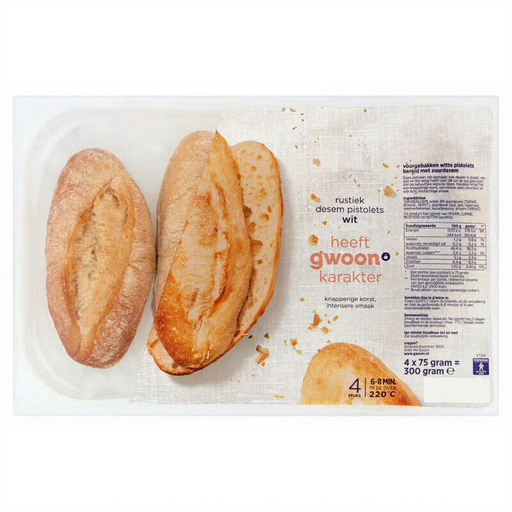 Image unavailable
g'woon White Rustic Pistolet, 4 rolls
Four white rolls are a good option if you want individual portions for meals where white bread is preferred. Check the packaging for allergens, shelf life and nutritional information.
View on Joybuy
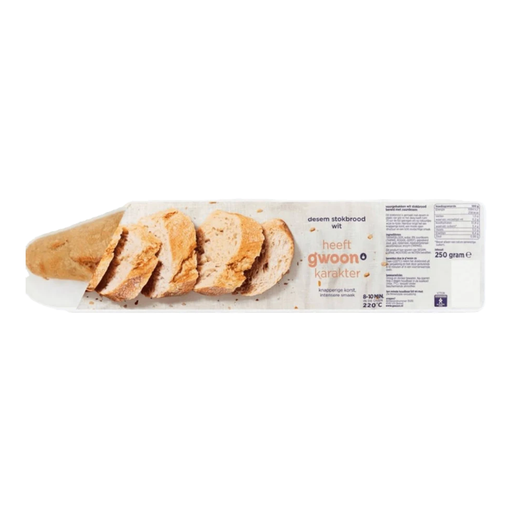 Image unavailable
G'woon White Rustic Baguette, 250 g
This white baguette is a good choice for a meal where you’re not looking for wholemeal bread. Check the current packaging for ingredients, allergens, shelf life and the basis on which the nutritional values are given.
View on Joybuy
Frequently asked questions
How can I tell if bread is wholemeal?
Check whether the bread is labelled ‘wholemeal’. According to the Netherlands Nutrition Centre, bread with this label is made from 100% wholemeal flour; a brown colour or the term ‘multigrain’ isn’t enough on its own.
How should I store bread if I won’t use it all straight away during my holiday?
The Netherlands Nutrition Centre advises freezing bread in portions as soon as you buy it, then taking out what you need. For an unopened pack and the variety you’ve chosen, also check the use-by date and storage instructions.
Can I assume that every loaf contains iodised baker’s salt?
No, don’t assume this without checking. An ingredient listed for a specific product, such as ‘iodised salt’ for AH Rond volkoren heel, tells you nothing about the ingredients in another loaf. Check the packaging if this matters to your choice.
Where should I check allergen information if I buy a different loaf while on holiday?
Check the allergen information on the current packaging of the bread you’re buying. The Netherlands Nutrition Centre says that common allergens must be clearly listed on the label; don’t rely solely on information from a variety you looked at earlier.


