
Vandaag of morgen in huis

Kwaliteit gegarandeerd

Welkomstaanbiedingen ontgrendelen: GRATIS bezorging | Tot 80% korting | Gratis 30 dagen JoyPlus-proefperiode
Download de app
A white storage cabinet suits many UK homes, but not every model works equally well in practice. A cabinet may look spacious in photos, while the compartments are too small for folders, shoes or baskets. Terms such as “sturdy”, “durable” and “large capacity” are not always backed up by clear specifications either.
Pay particular attention to these three common pitfalls:
Making a targeted choice helps you avoid having to buy an additional white shelving unit, white shoe cabinet or compact storage unit later on.
Measure not only the floor space, but also skirting boards, doors, sockets and clearance for walking. With a tall cabinet, ceiling height is also important. When mounting it to the wall, allow enough room for drill holes and fixings.
A cabinet measuring 100.5 × 32 × 100.5 cm, such as the 5five compartment cabinet, takes up relatively little depth and offers nine open compartments. A model measuring 129.5 × 29 × 129.5 cm has more visual presence and can also be used as a room divider. Check in advance that the wall and floor are suitable for the weight.
Many white storage units are made from chipboard, MDF or engineered wood. That is not automatically a problem, but the difference lies in the construction, finish and stated load capacity.
Look out for:
The 5five cabinet states a maximum load of 65 kg. The JOYFURNOS open bookcase specifies 10 kg per compartment. Place heavier items towards the bottom wherever possible and follow the assembly instructions. An FSC statement provides information about the origin of the wood, but does not mean that the furniture is indestructible.
A CE marking or statutory guarantee is not a quality ranking either. The CE marking is only meaningful within the product regulations to which it applies. For furniture, correct assembly and safe use remain important.
Choose the layout based on what you want to store:
An open bookcase works well in the living room or home office, while a bedroom storage unit will often benefit more from drawers or closed compartments.
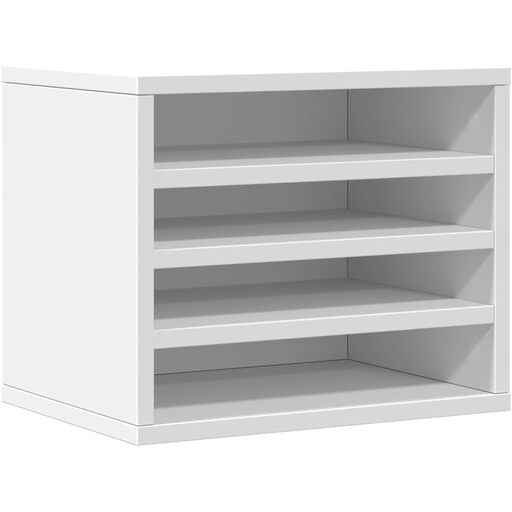
Why it suits this profile: This compact organiser is suitable for a desk, shelf or small workspace where documents, pens and accessories need to be kept together.
The dimensions and material are clearly stated. This allows you to check in advance whether the organiser will fit on your desk and whether its layout suits your belongings.
White finish, compact dimensions and a surface that, according to the product information, can be cleaned with a damp cloth. Assembly is required.
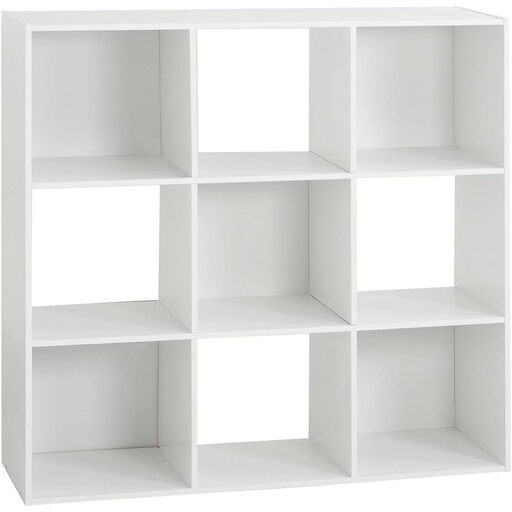
Why it suits this profile: A family can use the nine compartments for books, toys, baskets or decorative items in the living room, bedroom or children’s room.
The cabinet has a back panel, stated dimensions and a maximum load of 65 kg. Place heavier items at the bottom and do not use the cabinet as a seat or climbing unit.
Nine compartments, floor or wall placement and an FSC statement in the product information. According to the description, assembly takes approximately 30 minutes with two people.

Why it suits this profile: This model is designed for households that want to keep shoes out of sight in the hallway, bedroom or wardrobe.
The product description states five tiers, doors, an open lower shelf and space for approximately 22 to 25 pairs of shoes. However, check your shoe sizes and the available width.
Enclosed storage to protect against dust, an open shelf at the bottom and a surface for decorative items. Assembly by two people using the supplied instructions is required.
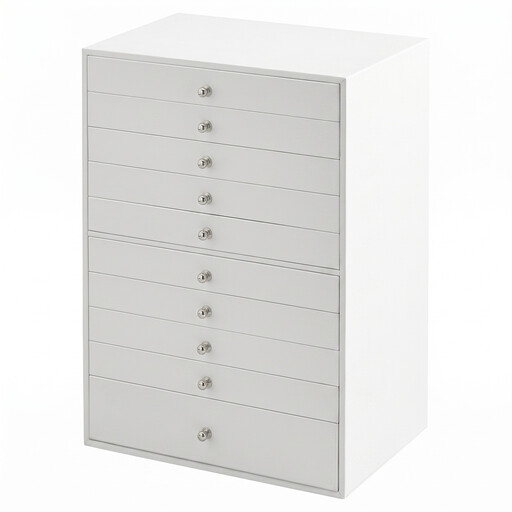
Why it suits this profile: This jewellery organiser is intended for a dressing table or bedroom and offers separate compartments for rings, earrings, necklaces, bracelets and watches.
The organiser has several drawers and a padded interior. According to the product description, it also includes soft compartments for watches. Keep the unit dry and stable.
MDF with a PU outer layer, velvet lining, several drawers and no assembly required. The dimensions are 20 × 39 × 40 cm.
We have put together a complete, up-to-date list of products that fully meet these strict selection criteria and the applicable European safety regulations.
For the living room, open compartments are suitable when you want to combine books, baskets and decorative items. A white open bookcase can keep the room feeling light, but it will look calmer if you fill some of the compartments with matching boxes.
In the hallway, a white shoe cabinet with doors is practical. Consider ventilation and the height of your shoes. Tall boots will not fit in every compartment.
For a home office, a desk organiser and drawer organiser are useful for documents, pens and small accessories. Check whether folders can stand upright and consider the total load capacity.
On a dressing table, a white jewellery box or jewellery organiser makes more sense than a large cabinet. A model with a mirror can save space, but place it on a level surface and keep small parts out of the reach of young children.
Follow the assembly instructions and use the supplied anti-tip fittings where specified. A tall or deep cabinet will generally need to be secured to the wall. Check that your wall is suitable and use wall plugs designed for the type of wall. Place heavier items at the bottom and do not allow children to hang from shelves or drawers.
Lifespan depends on the material, assembly, load and use. MDF, chipboard and engineered wood can be suitable for everyday indoor use, provided moisture and overloading are avoided. Do not look only at the colour or finish; also consider the construction, back panel, hinges and stated maximum load.
A cabinet without electrical components generally has no separate electricity consumption. The main costs are the purchase price, any storage boxes, fixings and delivery. A modular cabinet may seem affordable, but check whether additional compartments or doors need to be bought separately. This helps prevent the final price from being higher than expected.
