
If you want to share bread at the table
You’re looking for a white loaf to serve alongside the roast, gravy and vegetables. Consider the size and crust if the bread will be a centrepiece of the meal.


Choose a white sourdough loaf or tear-and-share bread if you’d like to share bread with your Sunday roast; choose a part-baked loaf if you want to decide when to serve it. Check the preparation instructions and ingredients for each loaf, as the word sourdough tells you nothing about gluten or whether it contains baker’s salt. If you also eat the bread regularly outside this meal, compare white, brown and wholemeal options for their nutritional value.
You’re looking for a white loaf to serve alongside the roast, gravy and vegetables. Consider the size and crust if the bread will be a centrepiece of the meal.
You want to know whether the bread can go straight on the table or needs to be put in the oven first. With a part-baked loaf, you’ll need to fit the baking time around the rest of the meal.
You’re comparing bread types and ingredients because gluten-containing grains, baker’s salt or nutritional value are important to your choice.
First, decide how you want to serve the bread. Then check the preparation instructions and the label for the specific product.
| What to consider | What to look for | Who is this most important to? |
|---|---|---|
| Flavour and presentation | Check whether sourdough is listed in the ingredients and choose a shape that’s easy to share at the table. | If the bread will be a centrepiece of the meal, flavour, crust and serving style are my main considerations. Around 31% of consumers put these qualities first. |
| When to serve it | Check whether the bread is ready to eat, part-baked or needs baking, and allow for the oven time. | If the oven is already being used for the roast, I want to know when the bread can go in. For around 31% of consumers, planning when to serve it is the main concern. |
| Ingredients and allergens | Read the ingredients and allergen information on the packaging; check for baker’s salt if it matters to your choice. | If someone at the table needs to avoid certain ingredients, the label matters more than flavour or appearance. For around 23% of consumers, this check is the top priority. |
| Nutritional value | If you eat it regularly, check whether the bread is white, brown or wholemeal and look at the nutritional information. | I might choose white sourdough for one meal, but for everyday sandwiches I want to consider its nutritional value. Around 15% of consumers prioritise this. |
Sourdough can contain gluten-containing grains. Jumbo’s Desem Breekbrood Wit lists wheat and spelt; PLUS Korenlanders Desem Wit lists wheat.
Check the ingredients and allergen information on the packaging. If you need gluten-free bread, don’t rely on the word sourdough.
Sourdough describes how bread is made, not whether it’s made with wholemeal flour. According to the Voedingscentrum, white bread contains fewer nutrients than brown or wholemeal bread.
If you eat bread regularly, check the type of bread and its nutritional information too, separately from the flavour you want with your Sunday roast.
According to the Voedingscentrum, bakers aren’t required to use baker’s salt. The type of bread alone won’t tell you whether a specific product contains it.
Check the ingredients list or ask your baker if baker’s salt is important to your choice.
Jumbo says its rustic, shop-baked sourdough loaves aren’t available to order online. This means you’ll need to plan your shopping differently than you would for a packaged part-baked loaf.
Check whether you need to buy the bread in store, and bake a packaged loaf according to the instructions on the packaging.
These brands offer a starting point for comparing bread types, preparation methods and ingredients. Check the label of the specific loaf you’re considering.
Useful if you want to understand what the term sourdough means when it comes to bread.
Worth considering if you want to compare shop-baked sourdough with packaged white sourdough tear-and-share bread.
An option for checking how white sourdough is prepared for home.
Worth considering if you want to look at white bread in store to serve with your meal.
A starting point for comparing white bread, sourdough and part-baked bread as different options.
A rustic white baguette to consider as a side for your Sunday roast. Check the packaging to make sure the ingredients and preparation method suit what you want to serve.
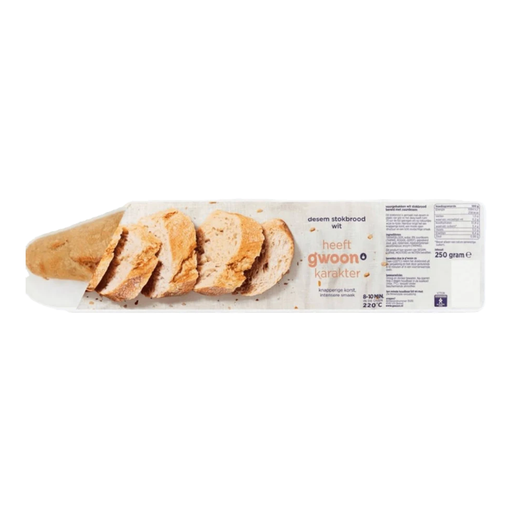 Image unavailable
A rustic white baguette that could make a good side for your meal.
Before serving, check the preparation instructions on the packaging and read the ingredients if sourdough, gluten-containing grains or iodised salt matter to your choice.
No, the word sourdough tells you nothing about the type of flour used. Check the packaging to see whether the bread is white, brown or wholemeal; according to the Voedingscentrum, white bread contains fewer nutrients than brown or wholemeal bread.
Look for baker’s salt in the ingredients list for the specific loaf, or ask your baker. Jumbo Desem Breekbrood Wit and PLUS Korenlanders Desem Wit list baker’s salt, but according to the Voedingscentrum, not all bakers use it.
Not simply because it’s called sourdough. The Jumbo loaf mentioned contains wheat and spelt, while PLUS Korenlanders Desem Wit contains wheat. Check the ingredients and allergen information on the packaging for each product.
Follow the cooking time and temperature on the packaging, and plan when to bake the bread around the time you’ll be serving the meal. PLUS lists baking instructions for Korenlanders Desem Wit; don’t assume another loaf has the same instructions.