
Sharing bread with antipasti
If you’re serving bread with olives, cheese, tomatoes or dips, the shape makes a difference: you can slice a baguette, while guests can pull pieces from tear-and-share bread themselves.


A white sourdough baguette is a good choice if you want to serve slices alongside antipasti or pasta. Choose tear-and-share bread if you’d rather let guests help themselves. If you don’t want to bake it at home, look for rustic sourdough that’s already been baked in store. Whichever option you choose, check the ingredients and allergens, and look separately for iodised salt if that matters to you.
If you’re serving bread with olives, cheese, tomatoes or dips, the shape makes a difference: you can slice a baguette, while guests can pull pieces from tear-and-share bread themselves.
If you want to bake the bread just before serving, make sure you have room in the oven or air fryer. PLUS provides instructions for both appliances for its white sourdough baguette.
If you have an allergy, you’ll want to know which grains and potential traces are listed on the label. You’ll also need to check whether the bread contains iodised salt: according to the Netherlands Nutrition Centre, using baker’s salt isn’t compulsory.
First decide how you want to serve the bread and whether you have time to bake it at home. Then check that the specific product is described as sourdough and read its ingredients.
| What to consider | What to check when buying | Who it matters to |
|---|---|---|
| Shape and sharing | Choose between baguette slices, pieces of tear-and-share bread or individual rolls. | When I’m serving antipasti, I want to be able to pass the bread round easily; for around 36% of consumers, how easy it is to share matters most. |
| Time to bake at home | Check whether the bread is part-baked and follow the instructions for your oven or air fryer. | If I want to bake the bread just before dinner, I need to have the appliance available; around 29% of consumers prioritise this choice of preparation method. |
| Sourdough in the bread | Read the product description and ingredients list; don’t assume it’s sourdough just because it has a rustic name. | A rustic appearance isn’t enough if I’m specifically looking for sourdough. Around 21% of consumers prioritise being able to confirm that it’s sourdough. |
| Ingredients and salt | Check the grains, potential allergens and, if relevant, whether it contains baker’s salt or iodised salt. | When the ingredients determine my choice, I read the information for the specific bread; around 14% of consumers prioritise these checks. |
A rustic shape or crust doesn’t, by itself, tell you whether the bread contains sourdough. ALDI, for example, sells a rustic white loaf, but its name doesn’t confirm that it’s made with sourdough.
Look for a clear mention of sourdough on the packaging, shelf label or product page, and check the ingredients list.
Part-baked bread needs to go in the oven before serving. PLUS recommends baking its white sourdough baguette for 8–10 minutes at 220 °C in the oven, or for 4 minutes at 200 °C in a preheated air fryer.
Choose bread that’s already been baked in store if you don’t want to bake it at home, or set aside time and an appliance for the part-baked option.
The white sourdough products mentioned from Jumbo and PLUS contain wheat; some products also list other grains or potential allergens.
Don’t rely on the word sourdough. If you have an allergy, check the current packaging or ask for allergen information when buying unpackaged bread.
According to the Netherlands Nutrition Centre, bread doesn’t have to be made with baker’s salt. The word sourdough doesn’t tell you which salt has been used either.
Check the label for ‘baker’s salt’ or ‘iodised salt’, or ask the baker.
Among its white bread options, Albert Heijn lists AH Liefde & Passie Biologisch OerDesem blond and OerDesem San Francisco.
Jumbo offers white sourdough in several shapes, including rolls, tear-and-share bread and a baguette.
Lidl describes its Rustiek wit desembrood as a white wheat sourdough loaf.
ALDI lists fresh white bread and Bakkersgoud rustiek wit.
PLUS lists a white sourdough baguette that you can bake at home.
Dirk lists white bread and sourdough among the types in its bread range.
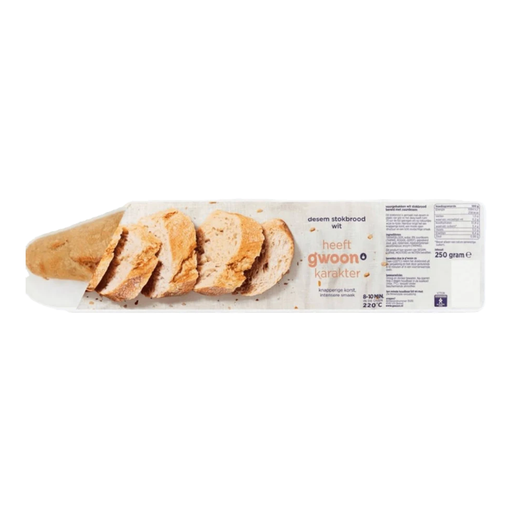
This baguette is an option if you’re looking for a long white loaf to slice and serve at your Italian evening. Check the packaging if you want to bake it at home.
 No image available
The baguette shape is ideal if you want to serve slices alongside antipasti or pasta.
Check the packaging to see whether you need to bake this variety at home. If you have an allergy, look for wheat and any mention of potential traces of sesame, lupin, mustard and nuts.
Check the product description and ingredients list for a mention of sourdough; its rustic appearance alone doesn’t tell you. The white sourdough products mentioned from Jumbo and PLUS list sourdough in their product information.
No. According to the Netherlands Nutrition Centre, bread doesn’t have to be made with baker’s salt. Check the ingredients list for ‘baker’s salt’ or ‘iodised salt’, or ask about unpackaged bread in store.
Ask in store before you buy. The Netherlands Food and Consumer Product Safety Authority says that food businesses must inform customers about allergens present in their products. Check the information for the bread you want to buy.
No, you can’t work out the nutritional value from the word sourdough alone. According to the Netherlands Nutrition Centre, white bread contains fewer nutrients than wholemeal bread. For specific products, compare the nutritional information per 100 g.