
If you want to try sourdough
You want to choose a white sourdough loaf on your first shop and pay attention to its crust, crumb and flavour. Also check whether you’re buying it packaged, picking it up in store or need to bake it at home.


Choose white sourdough if you specifically want to try sourdough on your first shop, but consider the type of bread and its nutritional information separately: sourdough does not automatically mean wholemeal. If you’re mainly looking for bread to eat every day, compare wholemeal and brown bread too; the Netherlands Nutrition Centre recommends these over white bread. Check the ingredients, allergens and nutritional information for the bread you choose.
You want to choose a white sourdough loaf on your first shop and pay attention to its crust, crumb and flavour. Also check whether you’re buying it packaged, picking it up in store or need to bake it at home.
You’re looking for bread to serve regularly and want to weigh up white sourdough against standard white, brown and wholemeal bread. The type of bread, its fibre content and availability all matter.
You want to know which grains and allergens the bread contains before buying it. If it’s sold loose, ask for the information if it isn’t displayed with the product.
Before your first shop, decide whether you mainly want to try sourdough, are looking for a soft white slice or want to compare bread for everyday eating by its nutritional value. Then check the information for the specific loaf and what your shop offers.
| What to consider | What should you check? | Who is this most important to? |
|---|---|---|
| Flavour and type of bread | Check the product description and ingredients to distinguish white sourdough from standard white bread. If it’s sold loose, ask what type of bread it is. | If I want to try sourdough, I’ll look specifically for that type of bread, rather than relying on a rustic-sounding name. This choice of flavour and bread type matters most to around 27% of consumers. |
| Fibre and nutritional value | Check whether the bread is white, brown or wholemeal, and compare fibre on the same basis, such as per 100 g. | If I’m buying bread that will be served regularly, I want to know how its nutritional information compares with brown or wholemeal bread. This everyday consideration comes first for around 33% of consumers. |
| Availability and preparation | Check your chosen branch, how you can order the bread and whether you’ll need to finish baking it at home. | I want to be able to pick up the bread while doing my shopping, without relying on a different ordering or preparation method. For around 20% of consumers, this practical convenience is the deciding factor. |
| Ingredients and allergens | Read the allergen information and, if it’s relevant to your choice, check whether iodised baker’s salt is listed in the ingredients. Ask for the information if the bread is sold loose. | Before choosing bread, I want to know which grains and allergens it contains and what type of salt has been used. For around 20% of consumers, this product information is the first thing they look for. |
White sourdough is still a different type of bread from wholemeal. The Netherlands Nutrition Centre recommends replacing white bread with wholemeal or brown bread as much as possible.
Check the type of bread and compare the fibre on the label if it matters to your everyday choice.
Sourdough doesn’t mean a bread is free from gluten-containing grains. For example, PLUS lists wheat and rye in its Korenlanders Desem Wit.
For packaged bread, read the allergen information. If the bread is sold loose, ask which allergens it contains before buying it, and ask about possible cross-contamination if needed.
The type of salt used may be relevant to your choice, but you can’t tell from terms such as ‘artisan’ or ‘organic’.
Check the ingredients list for iodised baker’s salt, or ask which salt has been used if the bread is sold loose.
The range and ways to buy bread in store can vary. Jumbo describes its rustic sourdough loaves as available in store only, while Lidl notes that its fresh bread range varies by branch.
Check your branch before making a special trip for a particular loaf. At ALDI, also check whether the shop has a bakery section.
A retailer where you can compare different AH Liefde & Passie OerDesem varieties.
A good option if you want to look at rustic sourdough in a Jumbo shop.
A retailer where you can look for a product described as white wheat sourdough bread.
A retailer where you can look at rustic white bread as an alternative to sourdough.
A retailer where you can check a specific white sourdough loaf and its product information.
A retailer where you can compare the types of bread available.
This white baguette is one product to consider alongside the bread you’re choosing for your first shop. If you’re specifically looking for white sourdough, check the ingredients on the packaging.
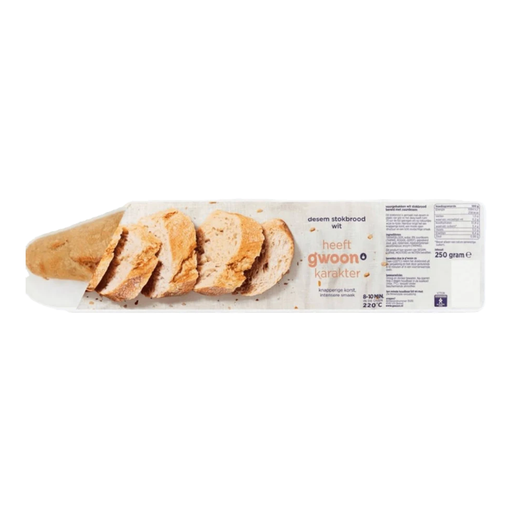 Image unavailable
A white baguette to consider if you’re also looking for sandwich bread for your first shop.
Net weight: 250 g. Check the packaging to see whether the ingredients and allergens suit your needs, and only compare nutritional values when they’re given on the same basis.
No. Sourdough and wholemeal describe different qualities of bread. Check the type of bread and compare the fibre content of the specific product; the Netherlands Nutrition Centre recommends replacing white bread with wholemeal or brown bread as much as possible.
Not necessarily: PLUS lists wheat and rye in its Korenlanders Desem Wit. Check the allergen information for a specific loaf before buying it, rather than relying on the name ‘sourdough’ alone.
Ask before buying if the information isn’t displayed with the bread. The Netherlands Food and Consumer Product Safety Authority states that allergen information for unpackaged products must be provided to consumers in a way other than on packaging.
For packaged bread, check the ingredients list for iodised baker’s salt. If the bread is sold loose, ask which salt has been used; the name or appearance of the bread won’t tell you.
It depends on the product range and retailer. PLUS has an online product page for Korenlanders Desem Wit, while Jumbo says its rustic sourdough loaves are only available in store and can’t be ordered online. Check how you can order the bread you want to buy.