Choose white sourdough bread for your university lunch if you’re mainly looking for a subtle sourdough tang and the shape of the loaf works with your filling. If fibre matters more, look for bread explicitly labelled wholemeal: according to the Netherlands Nutrition Centre, wholegrain products contain more fibre and other important nutrients than white grain products. In either case, check the current ingredients, nutritional information and allergens, and consider whether the bread is easy to take with you and use up.
Who is this choice for?
Students who put taste first
You’re buying bread to eat between lectures and looking for the subtle sour taste that Albert Heijn associates with sourdough. Think about the crust, crumb and shape too: bread you enjoy eating still needs to work with your filling and be easy to carry.
Lunch planners keeping an eye on fibre
You often have bread for lunch and want to compare white sourdough with wholemeal sourdough. The Netherlands Nutrition Centre says wholegrain products contain more fibre than white ones; the word ‘sourdough’ doesn’t tell you whether bread is wholemeal.
Shoppers checking allergens
You’re buying for yourself or someone else and need to know which ingredients and allergens the bread contains. The Netherlands Nutrition Centre says up-to-date label information is important if you have a food allergy. Don’t assume wheat sourdough is gluten-free.
What should you look for?
First decide whether taste or the wholemeal label matters most for your lunch. Then compare the size and read the latest product information, especially if allergens are a concern.
| What to consider |
What to check when buying |
Who it matters to |
| Fibre and type of bread |
Look for the explicit ‘wholemeal’ label and compare fibre on the same basis, for example per 100 g. |
If I regularly take bread with me, I want to know I’m choosing genuinely wholemeal bread, not just sourdough. For around 36% of shoppers, choosing for fibre is the top priority. |
| Taste and texture |
Check the shape of the bread and whether the crust and crumb work with your filling; don’t judge the taste of a specific loaf by the word ‘sourdough’ alone. |
Between lectures, I want a filled sandwich I enjoy eating, even if the crust is firmer. Around 29% of shoppers prioritise sourdough flavour and texture. |
| Taking it with you and storage |
Check the size, packaging and whether the bread is sliced. Plan what you’ll do with any portions left over. |
If I’m only preparing a few lunches, I don’t want to leave a whole loaf uneaten or have to slice it just before heading out. Around 21% of shoppers put convenience first. |
| Ingredients and allergens |
Read the current allergen information and ask for product details if buying loose bread; don’t assume it’s gluten-free because it says ‘sourdough’. |
If I’m buying bread for someone who needs to avoid allergens, I need to be able to check the ingredients before buying. For around 14% of shoppers, this is the main consideration. |
Common mistakes
-
Confusing sourdough with wholemeal
White sourdough bread is still a white grain product. According to the Netherlands Nutrition Centre, wholegrain products contain more fibre than white grain products; the method of preparation doesn’t change the type of bread.
Look for ‘wholemeal’ on the packaging or shelf label if that’s what matters most to you.
-
Assuming wheat sourdough is gluten-free
Sourdough doesn’t mean that the gluten has been removed from wheat bread. This distinction matters if you’re buying for someone who needs to avoid gluten or wheat.
Read the current ingredients and allergen information, and check any gluten-free claim on the product itself.
-
Relying only on an online product description
Albert Heijn and PLUS say that details such as ingredients, nutritional values and allergen information for their bread products may change.
Check the packaging when you buy, or ask for up-to-date product information if you’re buying loose bread.
-
Buying a whole loaf without a plan for leftovers
Bread you don’t eat in time can become dry or stale. The Netherlands Nutrition Centre recommends keeping opened wholemeal bread for 2–4 days in a kitchen cupboard or 1–3 months in the freezer.
Choose a size that suits your lunches and freeze any portions you won’t use within a few days. Throw away mouldy bread.
Throwing bread away also means wasting the lunch portions you didn’t use.
Brands to compare
You can compare types of bread at these supermarket chains, but a sourdough label alone tells you nothing about the ingredients or nutritional value of the bread you ultimately choose.
Albert Heijn
Albert Heijn offers white bread and sourdough options, including products from the Liefde & Passie range.
- Albert Heijn describes sourdough as bread made with a starter, with a subtle sour taste.
- Check the packaging: Albert Heijn says ingredients, nutritional values and allergy information may change.
Lidl
Lidl lists both rustic white sourdough and rustic wholemeal sourdough.
- These two types of bread give you a clear starting point for comparing white and wholemeal.
- Check which bread is available in store and read the label on the one you choose.
PLUS
PLUS lists Korenlanders White Sourdough and a white baguette made with sourdough.
- You can compare a loaf and a baguette as different options for lunch.
- PLUS warns that details such as ingredients and allergy information may change; check the current packaging.
ALDI
ALDI describes its fresh daily bread as available in white and wholemeal varieties, among others.
- White and wholemeal are types of bread you can compare for your lunch.
- If you prefer white sourdough, check that the bread you’re looking at is actually labelled as sourdough.
Dirk
Dirk lists white, wholemeal and sourdough bread in its range.
- These categories give you a starting point for considering the type of bread and how it’s made separately.
- If you’re looking for a specific white sourdough, ask about its current ingredients and check the product label.
White baguette for a campus lunch
This white baguette is an option to consider for a filled lunch. If sourdough is essential to your choice, check the current ingredients; if fibre is your priority, compare it with bread explicitly labelled wholemeal.
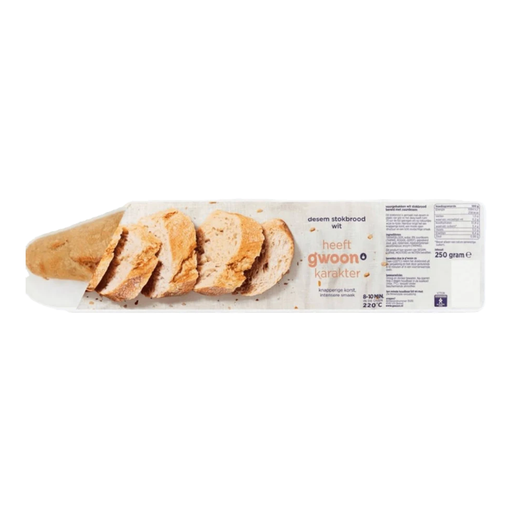 Image unavailable
G'woon White Rustic Baguette 250 g
A white baguette to consider if you’re looking for bread for a filled lunch.
Contents: 250 g. Check the current ingredients, allergens and nutritional information; also check whether you’ll need to slice the baguette before taking it with you.
View at Joybuy
Frequently asked questions
Does the sourdough in white sourdough bread mean it contains more fibre than ordinary white bread?
You can’t tell from the sourdough label. Sourdough describes how the bread is made; according to the Netherlands Nutrition Centre, wholegrain products contain more fibre than white grain products. Compare the fibre content of the breads you’re considering on the same basis.
Is wheat sourdough gluten-free?
No, sourdough doesn’t automatically make wheat bread gluten-free. Check the ingredients, allergens and any gluten-free claim on the current packaging, especially if you’re buying for someone who needs to avoid gluten or wheat.
How should I store bread for several campus lunches?
Buy an amount that suits the lunches you’re planning and freeze portions if needed. The Netherlands Nutrition Centre recommends keeping opened wholemeal bread for 2–4 days in a kitchen cupboard or 1–3 months in the freezer; also follow the instructions on the packaging and throw away mouldy bread.
Does all bread contain iodine through baker’s salt?
You can’t assume this is true of every loaf. The Netherlands Food and Consumer Product Safety Authority explains that iodine compounds may be added to bread through baker’s salt; this doesn’t confirm that every type of bread contains that salt. If the ingredients matter to you, check the current product information or ask the seller.


