
Vandaag of morgen in huis

Kwaliteit gegarandeerd

Welkomstaanbiedingen ontgrendelen: GRATIS bezorging | Tot 80% korting | Gratis 30 dagen JoyPlus-proefperiode
Download de app
A white frying pan gives your kitchen a calm, modern look. But choosing one isn’t just about colour. A pan that looks good can disappoint in practice if it has an unsuitable base, a delicate coating or a size that doesn’t suit your hob.
For Dutch households, induction compatibility, easy care and the right diameter are particularly important. Read on to find out which features to check and which models suit different cooking habits.
A ceramic frying pan often consists of a metal pan with a ceramic non-stick coating. That’s different from a pan made entirely of ceramic. Aluminium with a ceramic coating can heat up quickly and be relatively lightweight, but the coating does need careful handling.
Wooden, silicone or nylon utensils are best. Metal utensils, scouring pads and prolonged heating without food in the pan can damage the coating. According to product information from various brands, hand-washing can also help keep the coating in good condition for longer, even when the product is dishwasher-safe.
When choosing an induction frying pan, look for a magnetic base. A pan may be suitable for gas and ceramic hobs but not induction if its base doesn’t contain magnetic material. Always check the specifications rather than relying on the term “all heat sources”.
A frying pan for all heat sources will usually state clearly that it’s compatible with induction, gas, electric and ceramic hobs. You may need to check with the manufacturer for compatibility with halogen or infrared hobs.
A 24 cm frying pan often has a smaller flat base than its overall width suggests. This matters with induction, as the base needs to sit properly on the cooking zone. As well as the diameter, check the base diameter, pan height and capacity.
An aluminium pan with a ceramic coating generally heats up quickly. Stainless steel with an aluminium core also distributes heat efficiently, but behaves differently from a traditional non-stick frying pan. With uncoated steel, you’ll need to control the temperature and may need more cooking fat to help prevent food sticking.
Claims such as “PFAS-free”, “PFOA-free” or “PTFE-free” should be treated as product information provided by the brand. According to the brands’ own product information, certain models are free from these substances or have not had them deliberately added. Check the current packaging, technical information and any relevant conformity documents before making a purchase. Such a statement isn’t a medical claim, nor does it mean that cooking without oil is necessary for everyone.
A dishwasher-safe frying pan sounds practical, but dishwasher detergents, high temperatures and contact with other crockery can put extra strain on coatings. Hand-washing with a soft sponge is often a gentler option. Let the pan cool first and avoid moving it straight from the heat into cold water.
Also check whether only the pan is dishwasher-safe, or whether the lid and handle are too. If the handle is detachable, make sure it’s securely locked in place before use.
Oven suitability varies considerably from model to model. According to their product descriptions, some ceramic pans are suitable for temperatures up to 230 or 260 °C. If the pan comes with a lid, you may need to remove it. Other models, such as the USELUCK set, are listed as not oven-safe in their specifications.
Always check:
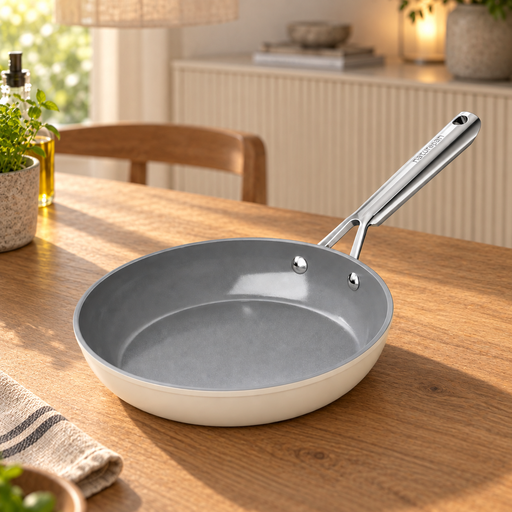
Why it suits this type of cook: Its diameter is practical for everyday portions, and the pan is suitable for induction, gas, electric and ceramic hobs.
The product information clarifies that it’s aluminium with a ceramic coating, not solid ceramic. Hand-washing is recommended to protect the coating.
24 cm diameter; suitable for induction; oven-safe up to 230 °C without the lid; dishwasher-safe according to the product description.
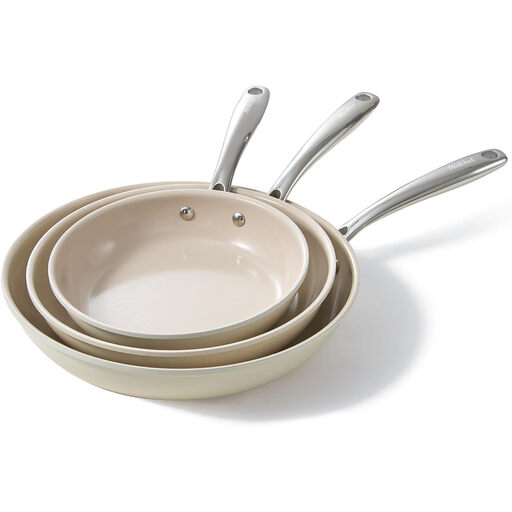
Why it suits this type of cook: The set includes 20, 24 and 28 cm pans, so you can cook different portion sizes without buying three pans separately.
The three diameters make it easier to choose the right pan size for the amount of food you’re cooking. According to the product information, the set is suitable for induction, gas and electric hobs.
20, 24 and 28 cm; ceramic coating; oven-safe according to the product information; dishwasher-safe, although hand-washing is recommended to preserve the coating.
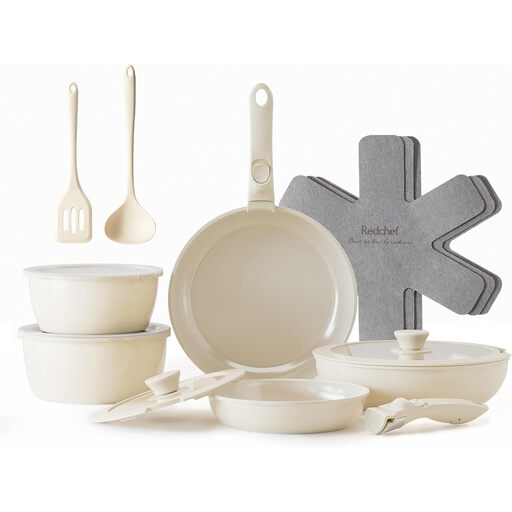
Why it suits this type of cook: Handy for compact kitchens, campervans and households that want to stack their pans or move them from the hob to the oven or fridge.
The detachable handle helps save cupboard space. Always check that it’s securely locked in place before lifting the pan.
16-piece set; suitable for all the hobs listed; according to the product information, the ceramic coating is free from PFAS, PTFE and PFOA; oven- and dishwasher-safe.
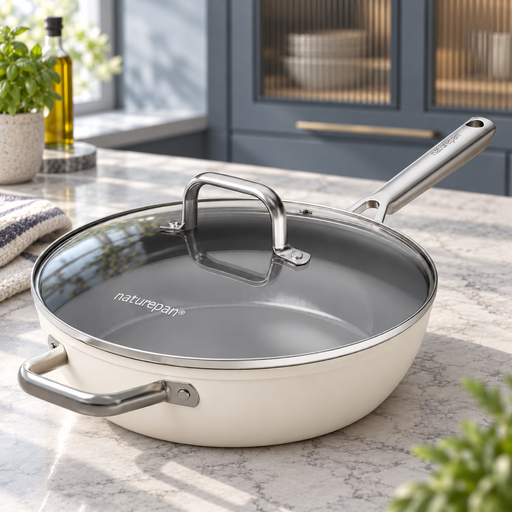
Why it suits this type of cook: The higher sides and included lid are practical for stir-frying, simmering and cooking meals for several people.
The specifications list the diameter, height and base diameter separately. This makes it easier to check whether the pan will fit your cooking zone.
28 cm diameter; 7,5 cm-high pan; matching lid; suitable for induction, gas, electric and ceramic hobs.
We’ve put together a complete, up-to-date list of products that meet these strict selection criteria and the applicable European safety regulations.
A 20 cm pan is usually enough for one person. A 24 cm frying pan is suitable for small everyday meals. Choose 28 cm for two to four portions, or 32 cm if you regularly cook larger quantities. For induction, also check the diameter of the magnetic base.
No. PFAS-free and dishwasher-safe are different features. According to the product information, a pan with no deliberately added PFAS, PTFE or PFOA may still come with care instructions recommending hand-washing. Check both specifications separately.
Don’t leave the pan heating while empty for too long, use low to medium heat and choose gentle utensils. Let the pan cool before cleaning it, and avoid abrasive cleaning products. If in doubt, hand-wash it rather than using an intensive dishwasher cycle.
