
Vandaag of morgen in huis

Kwaliteit gegarandeerd

Welkomstaanbiedingen ontgrendelen: GRATIS bezorging | Tot 80% korting | Gratis 30 dagen JoyPlus-proefperiode
Download de app
White dinnerware is the foundation of nearly every dining table. It's timeless, versatile, and makes any dish look its best. But the search for the right set can be surprisingly difficult. Many marketing promises don't hold up in practice, leaving you with dinnerware that quickly becomes unsightly or impractical. Before you invest in a new set, it's wise to know where the pitfalls lie.
The most common problems can often be traced back to two issues:
white dinnerware set, but after a year or two, a plate breaks. You search for a replacement only to discover that the entire series has been discontinued. Now you're stuck with an incomplete set and have to replace everything.Making a good choice is about seeing through these kinds of problems. It's not about the most expensive brand, but about the right specifications for your needs.
To avoid a bad purchase, there are a few technical aspects you need to check. These determine the long-term durability and usability of your dinnerware.
The terms are often used interchangeably, but there is a significant difference in quality and durability.
Pay close attention to the specifications provided by the manufacturer. A dishwasher-safe dinnerware set is the norm, but the quality varies.
white plates with an awkward shape or a high, raised edge take up much more space in your kitchen cabinets. Flat, uniform dinner plates are the most efficient to store.Based on these criteria, we have selected a number of products that suit different needs and households.
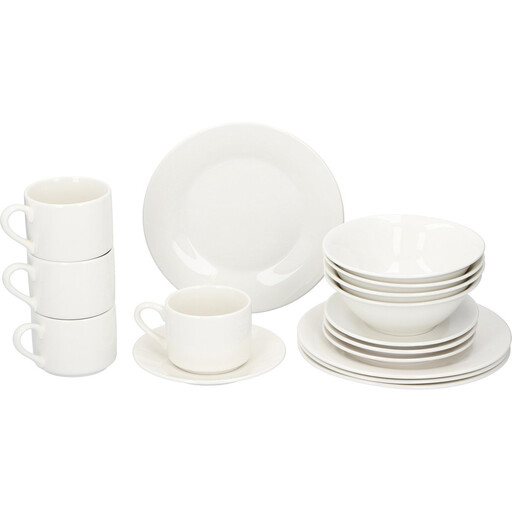
Why This Fits Their Persona: Ideal for anyone starting a new household who wants a complete, affordable foundation right away. This set includes everything you need for four people, from breakfast to dinner.
This set solves the problem of incomplete series by immediately providing a full 16-piece breakfast and dinner set. You won't have to hunt for matching pieces.
According to the manufacturer, this stoneware set is suitable for both the dishwasher and the microwave, which is essential for daily convenience.
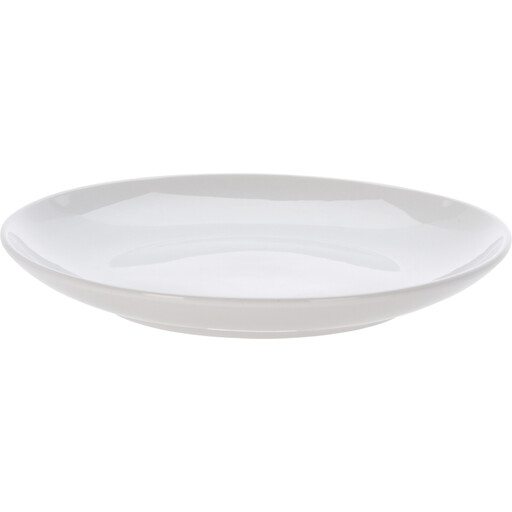
Why This Fits Their Persona: For households where dinnerware is used intensively and a broken plate needs to be replaced quickly and without hassle. A no-nonsense choice that focuses on functionality.
Because these white plates are available individually, you bypass the problem of the irreplaceable set. If something breaks, you can simply order a new one.
Made of strong porcelain, making it more durable and resistant to impact than stoneware. Suitable for the dishwasher and microwave.
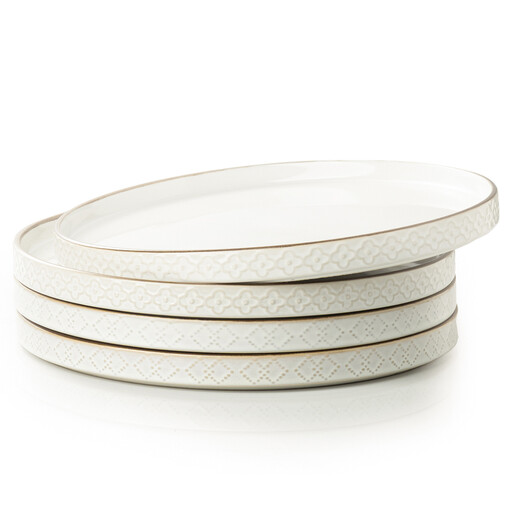
Why This Fits Their Persona: For those seeking a modern dinnerware set that's a little different. The subtle embossed pattern provides a unique texture and look without sacrificing the minimalist white base.
According to the manufacturer, the embossed pattern is integrated into the ceramic itself, not printed on top. This makes the pattern wear-resistant and durable, even after many dishwasher cycles.
Highly versatile: according to the product information, the plates are safe for the oven, microwave, freezer, and dishwasher, offering maximum flexibility.
We have compiled a complete, up-to-date list of products that fully meet these strict selection criteria and local regulations.
In short: porcelain is fired at a higher temperature, making it stronger, less porous, and more resistant to chipping. Stoneware is often thicker, heavier, and slightly more fragile, but can have a beautiful, rustic appearance. For intensive daily use, porcelain is generally the more durable choice.
Grey marks are usually not scratches, but metal residue from your cutlery. This happens more often with lower-quality stainless steel cutlery. The solution is twofold: use high-quality cutlery (designated as 18/10 stainless steel) and avoid abrasive cleaning agents or sponges. If you do have marks, there are special ceramic cleaners that can remove them.
This depends on your situation. A complete dinnerware set is often more cost-effective and immediately provides a uniform look. The downside is the risk that you may not be able to add to the set later. Buying individual pieces offers more flexibility. You can build your set over time and easily replace broken items, provided you choose a timeless, open-stock model. For a family with young children, this can be a practical consideration.
