
Vandaag of morgen in huis

Kwaliteit gegarandeerd

Welkomstaanbiedingen ontgrendelen: GRATIS bezorging | Tot 80% korting | Gratis 30 dagen JoyPlus-proefperiode
Download de app
A white desk fits easily into a bright bedroom, student room or home office. But a sleek appearance tells you little about how it will work day to day. A desk may look spacious in photos, but in practice it might not leave enough legroom, wobble or have nowhere to keep cables and documents.
So pay particular attention to the dimensions, storage and assembly requirements. Read on to find out which common pitfalls are often overlooked and which models suit different needs.
A desk that is 80 or 90 cm wide may seem suitable for a small room. However, the depth determines how much space you really have for a laptop, monitor, keyboard and stationery. With a depth of 40 cm, your working area will be limited. That may be fine for a laptop or occasional use, but less practical for a large monitor.
Measure the space behind and beside the desk too. Remember to allow for skirting boards, plug sockets, an office chair and enough room to open a drawer or cupboard.
The term ‘desk with storage’ could refer to an open compartment, shelves or actual drawers. An open compartment is handy for books and folders, but offers less protection from dust. Drawers keep small items out of sight, but take up legroom beneath the desktop.
So check the layout of the furniture, not just the product title. Product descriptions and specification tables may sometimes differ. Before buying, check which storage features are actually included with the model.
According to the product information, several desks with a cupboard section or high shelves need to be fixed to the wall to prevent them from tipping over. This is not a minor detail. Check that your wall is suitable for the fixings supplied, and plan the assembly before deciding where to position the desk.
A fixed desk height of around 72 to 76.5 cm is common. Whether that height feels comfortable depends on your height and the height of your chair. When typing, your forearms should be roughly horizontal, without your shoulders being hunched.
Pay attention to these measurements:
A compact desk can be a sensible choice for a student room desk or a small flat. For daily home working with a monitor, a deeper desktop is often more practical.
The models listed are made from engineered wood, MDF panels or chipboard, combined with wooden or steel components. A smooth white surface is easy to wipe with a slightly damp cloth. Avoid harsh acidic or alkaline cleaning products if the product information advises against them.
When choosing engineered wood, check:
Dust and marks show up more easily on a white surface. This makes it easy to see when it needs cleaning, but does mean it requires regular care.
A height-adjustable desk is particularly useful if you want to alternate between sitting and standing. Check the adjustment range, maximum static load, controls and the amount of clear space needed around the desktop.
According to the product information, the JOYFURNOS model has an adjustment range of 72 to 120 cm, an electrically adjustable frame, a memory function and a maximum static load of 70 kg. The product description also mentions a USB-C connection, cable grommets and a safety feature on the controls. Do not position an electric desk right up against a wall if the desktop needs room to move when its height is adjusted.
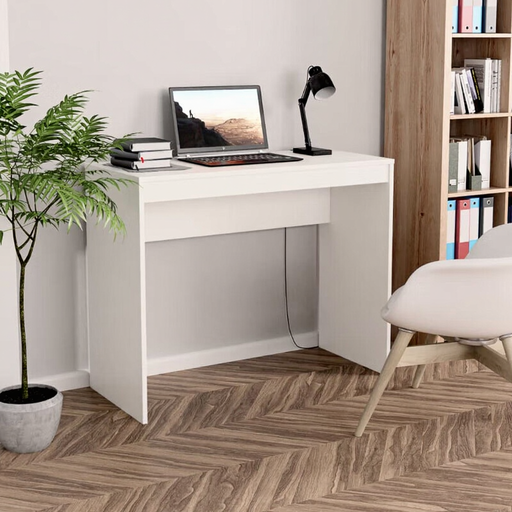
Why it suits this user: At 90 cm wide and 40 cm deep, this compact desk fits into a student room, bedroom or small study. It is suitable for a laptop, writing or occasional computer use.
The exact measurements make it clear from the outset that this is a small desk, so you will not expect it to provide a workspace for several monitors.
Compact size, white finish and a surface that can be cleaned with a damp cloth, according to the product description.
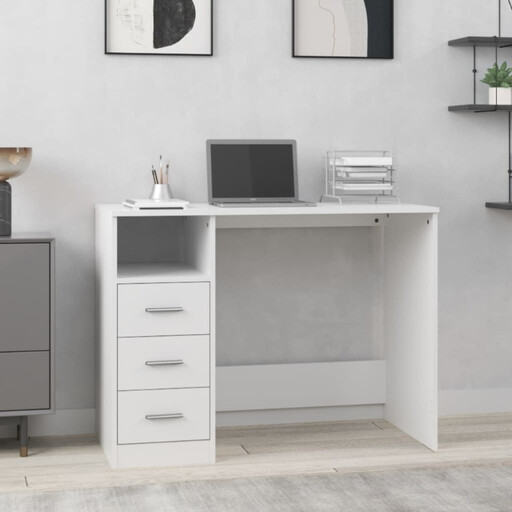
Why it suits this user: This model is 102 cm wide and 50 cm deep, making it a good choice for anyone who wants to combine a work surface with organised storage.
The product description mentions three drawers and an open compartment, while a specification table gives different information. Check the current details before buying.
50 cm deep, moisture-resistant engineered wood according to the product information, and a listed weight of 29,56 kg.
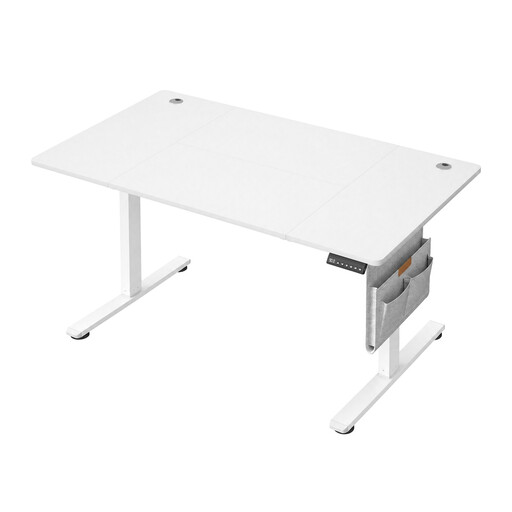
Why it suits this user: This spacious desk is designed for people who work or study every day and need to adjust their working height. The 160 x 70 cm desktop has room for several devices.
The adjustment range and maximum load are clearly stated. However, check that there is enough space around the desk for the moving desktop.
Electric height adjustment from 72 to 120 cm, a memory function, USB-C connection and a stated load capacity of 70 kg.
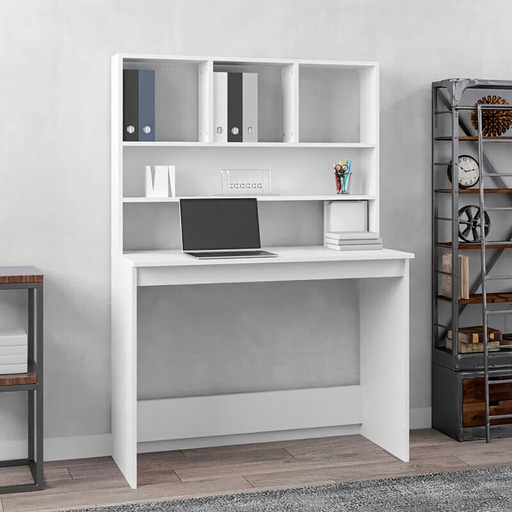
Why it suits this user: Combining a 102 x 45 cm desktop with vertical shelves makes good use of the height in a small room.
The shelves make the storage space easy to see. Remember that the desk must be fixed to the wall to prevent it from tipping over.
Vertical storage, a compact work surface and care with a damp cloth, according to the product description.
We’ve put together a complete, up-to-date list of products that meet these strict selection criteria and the applicable European safety regulations.
For a laptop alone, a desk that is 80 to 90 cm wide and 40 cm deep may be enough. For a monitor, keyboard and documents, around 100 cm wide and 50 cm deep is more practical. If you use several screens, you will need a larger work surface.
Use a soft, slightly damp cloth, then dry the surface. Avoid abrasive materials and harsh cleaning products. Always check the care instructions for the specific material.
A desk with drawers keeps small items out of sight, but can take up legroom. A desk with shelves makes use of vertical space and is handy for books and folders. Choose based on what you use every day, and check whether the desk needs to be fixed to the wall.
