
For sharing with dips and spreads
For mezze, soup or sauces, bread that’s easy to slice or break into pieces is practical. Check that its shape suits the way you want to serve it at the table.


Choose rustic white sourdough if you want the bread itself to be something everyone can share. If you’d like to bake it just before eating, part-baked tear-and-share bread or baguettes fit the plan, as long as you have oven space. If the bread is mainly a neutral accompaniment, simple white bread may be all you need. Whatever you choose, check the size, preparation instructions, ingredients and type of salt.
For mezze, soup or sauces, bread that’s easy to slice or break into pieces is practical. Check that its shape suits the way you want to serve it at the table.
Part-baked tear-and-share bread or baguettes are a good fit if you have a specific time in mind for serving. Check that you have enough oven space and that the baking instructions work alongside the rest of the menu.
If you have an allergy or coeliac disease, or want to know whether a product contains iodised salt, the current product information is what matters. The words ‘white bread’ or ‘sourdough’ don’t tell you which ingredients or allergens are listed for a particular loaf.
Choose this: if you want to slice a whole loaf and serve it as a centrepiece for everyone to share.
Bear in mind: ‘rustic’ doesn’t tell you how long the dough has been proving or what it contains. Check the information for the specific loaf.
Choose this: if you want to bake the bread just before eating and serve it in pieces.
Bear in mind: baking takes time and oven space, which you may also need for other dishes.
Choose this: if the bread is mainly for toppings or to accompany sauces, and you don’t want to bake it.
Bear in mind: assess the shape and ingredients separately. A rustic-sounding name doesn’t prove how the bread was made.
| What to consider | What to check when buying | Who is this important to? |
|---|---|---|
| Bread to share at the table | Check whether the bread is sold whole, sliced or as tear-and-share bread, and whether its shape suits the table. | If the bread is served alongside the dishes, I want guests to be able to help themselves easily. For around 31% of consumers, being able to share the bread is the main priority. |
| Shape to suit the dish | Choose a size and shape that you can slice, dip or fill as the menu requires. | With a dish served with sauce, I want pieces of bread that are easy to dip, while a filled dish may call for a different shape. Around 23% of consumers prioritise how well the bread goes with the dish. |
| Serving time | Check whether the bread needs baking, and read the temperature and baking time on the packaging. | If I want to bake the bread just before eating, it needs to fit in with the other dishes. For around 23% of consumers, timing is the most important factor. |
| Ingredients and salt | Read the latest allergen information. If you want to check for iodine, look for ‘baker’s salt’ or ‘iodised salt’ in the ingredients. | When ingredients matter to my guests, I don’t want to rely on the name of the bread. Around 23% of consumers put this check first. |
The Voedingscentrum says that bakers aren’t required to use baker’s salt. So the type of bread alone won’t tell you which salt has been added.
For packaged bread, look for ‘baker’s salt’ or ‘iodised salt’ in the ingredients list. If the bread isn’t packaged, ask which type of salt has been used if it matters to your choice.
A product name or appearance doesn’t prove a particular proving time, amount of sourdough or nutritional value. These can vary from one loaf to another.
Compare the product description, ingredients and serving format of the bread you’re actually planning to buy. Treat retailers’ comments about flavour as their own product descriptions, not as an independent taste test.
If the bread still needs baking, you may need to prepare it at the same time as your other dishes.
Before buying, check the temperature and baking time on the packaging and plan when you’ll bake the bread. If the oven is already in use, choose bread that doesn’t need baking.
As well as wheat, white sourdough bread may contain other ingredients or carry warnings about the possible presence of allergens. The name of the bread isn’t a complete ingredients list.
If you have an allergy or coeliac disease, check the current packaging and allergen information for the specific product.
These examples show how Dutch retailers describe different types of white table bread. The features apply to the products mentioned, not automatically to every loaf from that brand.
This range includes white sourdough bread that you can bake at home.
Jumbo describes rustic white sourdough loaves and part-baked white sourdough tear-and-share bread.
PLUS describes Korenlanders Desem Wit as a white loaf made with wheat and rye.
Lidl describes its rustic white sourdough bread as a white wheat sourdough loaf.
ALDI describes both rustic white bread and white bread varieties to bake at home.
Dirk describes white baguettes to bake at home and a white batard loaf to serve at the table.
These white baguettes are options to serve alongside dishes or break into pieces to share. Check the packaging for each product to see whether it needs baking and how to prepare it.
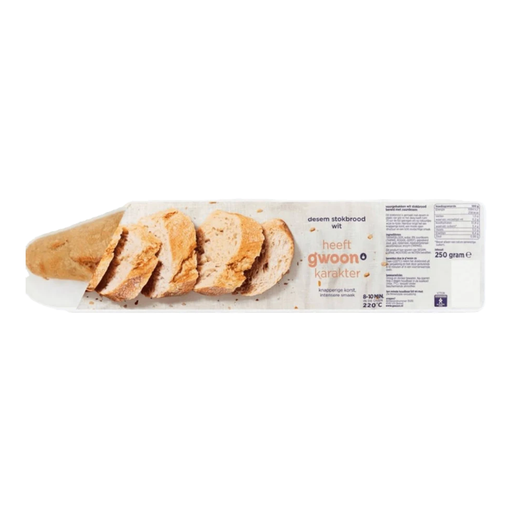 Image unavailable
A baguette-shaped loaf to serve alongside your dishes and break into pieces to share.
Pack size: 250 g. Check the packaging to see whether the bread needs baking, and read the latest ingredients information if you have allergies.
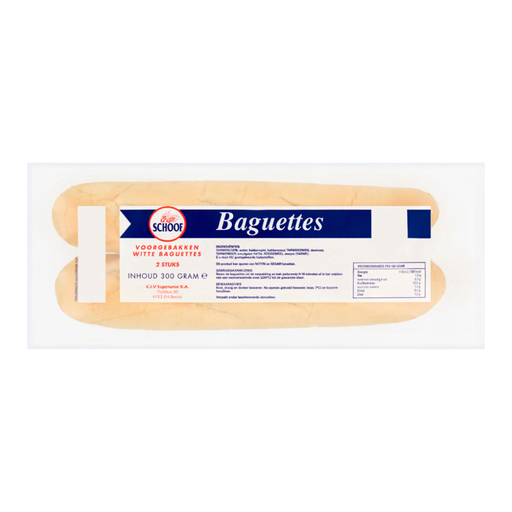 Image unavailable
Two baguettes are handy if you want to serve bread in more than one place on the table.
Pack size: 2 pieces, 300 g in total. Check the preparation instructions before setting aside oven space, and read the latest ingredients information if you have allergies.
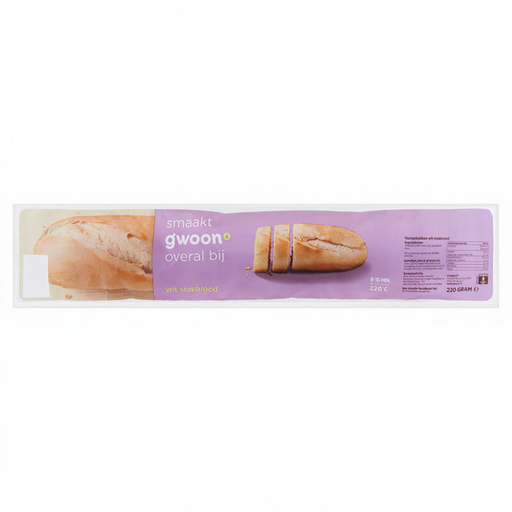 Image unavailable
Slice this white baguette into pieces to serve alongside your meal.
Pack size: 220 g. If you want to bake it just before eating, check the instructions on the packaging first. You’ll also find the latest allergen information there.
No, how you serve the bread matters more than what type it is. Rustic sourdough works well if you want to slice a whole loaf at the table. Part-baked baguettes or tear-and-share bread are a good fit if you want to bake the bread just before eating, while simple white bread may be enough to accompany other dishes.
No, don’t assume that it does. The Voedingscentrum says that bakers aren’t required to use baker’s salt. For packaged bread, look for ‘baker’s salt’ or ‘iodised salt’ in the ingredients list. If the bread isn’t packaged, ask which type of salt has been used.
Check the allergen information for the specific loaf, including details about wheat and other cereals containing gluten. Ingredients and warnings about possible traces vary by product, so check the current packaging if you have an allergy or coeliac disease.
Yes, as long as you can follow the storage instructions for your chosen bread and fit the baking into your plans. Check the packaging for storage guidance, whether the bread can be frozen, and the temperature and baking time required.