
Making lunches for several days
You use bread for several lunches and want as little as possible to go to waste. A whole loaf is a good fit if you can freeze the portions you have left.


A whole white loaf can cover several lunches if you use it all up or freeze portions. For a single lunch with little left over, individual white rolls are more practical. Check the pack size and the label for the exact product, too. If fibre is important to you, compare white bread with brown and wholemeal bread; the Netherlands Nutrition Centre recommends replacing white bread with these types of bread as much as possible.
You use bread for several lunches and want as little as possible to go to waste. A whole loaf is a good fit if you can freeze the portions you have left.
You need one or a few rolls and don’t want to store a whole loaf. Individual white rolls suit this kind of lunch, but check whether they’re ready to eat.
You want white bread, but you also take fibre, salt, ingredients and allergens into account. Compare the nutritional information for the exact products rather than relying on their names alone.
Work out how much bread you’ll need for your upcoming lunches. Then choose between a whole loaf and individual portions, and check the nutritional information and preparation instructions for your chosen product.
| What to consider | What to check before buying | Who is this most important to? |
|---|---|---|
| Bread for several lunches | Check the pack size, how many portions you’ll use and whether you can freeze the rest. | If I take sandwiches with me on several days, I want to be able to use the whole loaf. For around 42% of consumers, using up the bread is the top priority. |
| Ready to eat, with little left over | Check how many rolls are in the pack and whether they’re ready to eat or need to be baked first. | A whole loaf isn’t much use for one lunch if I then have to store the rest. Individual portions are the main priority for around 33% of consumers. |
| Nutritional information and ingredients | Check the fibre and salt per 100 g, the ingredients and the allergens for the exact product. | I want to know what’s in my bread before choosing between products. For around 25% of consumers, the label matters most. |
A large loaf is less suitable for a single lunch if the remaining slices are left uneaten or go stale.
Divide the loaf into portions after buying it, and freeze any you won’t use in time.
Ingredients, allergens and nutritional values can vary between products. A name or the colour of the bread won’t tell you what’s on the label.
Check the allergens and nutritional information per 100 g for the exact product, especially if a particular ingredient affects your choice.
These supermarkets offer different types of bread. Compare the exact product and its label, rather than the name of the shop alone.
Albert Heijn describes AH Wit heel as a whole white wheat loaf that can be eaten straight away or frozen.
Jumbo lists several types of its own-brand white bread, including casino, round, toast and tiger bread.
Lidl lists white bread and 800 g casino white bread in its range.
ALDI offers, among other things, a single white Kaiser roll for a lunch with one roll.
PLUS stocks a range of bread and provides ingredients, allergens and nutritional values for individual products.
Dirk lists products such as Bakker van der Akker Boeren tiger white whole loaf, described as bread for breakfast or lunch.
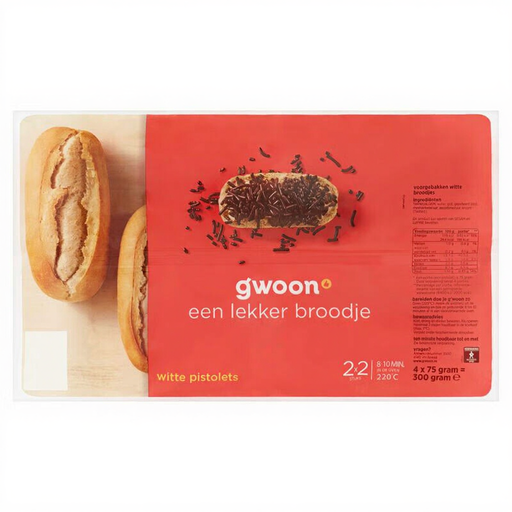
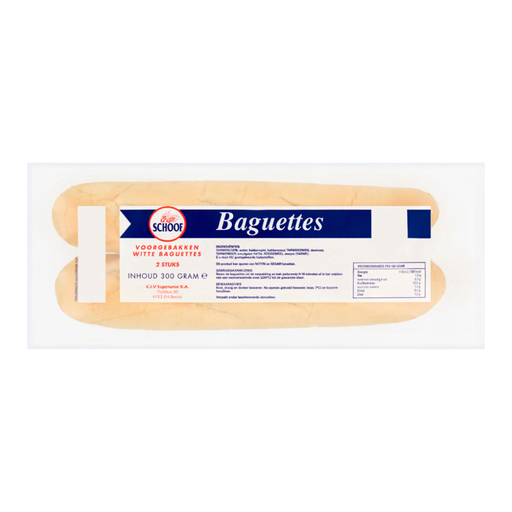
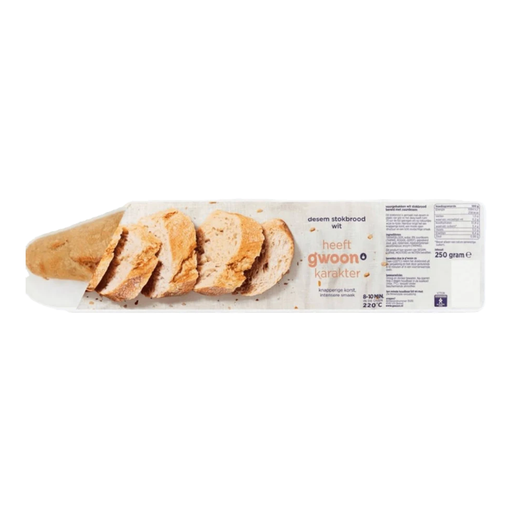
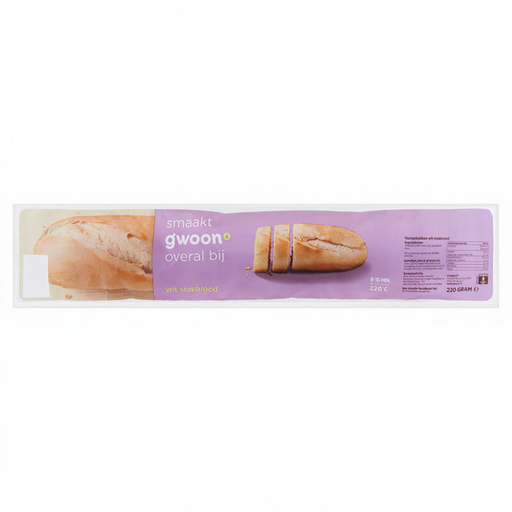
These individual white rolls and baguettes are suited to a lunch in portions or a sandwich. When choosing, check the number of items, the pack weight and whether they need to be prepared.
 No image available
Four individual rolls are a good choice if you want to divide your lunches into portions. Check the packaging to see if they’re ready to eat, and read the allergen information if it’s important to your choice.
 No image available
Two baguettes are a good choice if you want individual portions for lunch. Check the preparation instructions and ingredients on the packaging before using them.
 No image available
This 250 g baguette is designed as a base for a sandwich. Check whether it needs to be baked, and read the ingredients and allergens on the label.
 No image available
This 220 g baguette can be used as a base for a sandwich. It needs to be baked, so allow time for oven preparation and follow the instructions on the packaging.
Choose a whole white loaf if you’ll use it for several lunches and can store or freeze what’s left. For one lunch, individual rolls are often more practical if you’d otherwise have a lot of bread left over.
Freeze the bread in portions if you don’t expect to use it in time. Follow the storage instructions on the packaging, too, so you only defrost what you need.
No, the colour of the bread doesn’t tell you what type of salt has been used. Check the ingredients list for the exact product; for example, Albert Heijn lists iodised salt for AH Wit heel.
Compare the fibre per 100 g in the nutrition table for the breads you’re considering. The Netherlands Nutrition Centre recommends replacing white bread with wholemeal or brown bread as much as possible; then see which product suits your lunch.