
Students looking to keep lunch costs down
You’re looking for bread for regular lunches and want to work out whether a whole or half loaf is right for how much you actually eat.


Choose a whole white loaf if you’re making several lunches with it and will eat it in time or freeze it according to the product instructions. If you eat fewer slices and don’t want to store any, a half loaf is a better fit. Also consider how much you’ll actually use, and check the ingredients and allergen information on the packaging.
You’re looking for bread for regular lunches and want to work out whether a whole or half loaf is right for how much you actually eat.
You’d rather buy a smaller amount, or keep portions of a whole loaf for lunches later in the week.
You want to check the ingredients, allergens and nutritional information for the specific loaf before buying it.
First, work out how much bread you’ll need for your lunches and whether you can store portions. Then choose the type of loaf and check the label on the product you’re buying.
| What to consider | What should you check? | Who is this most important for? |
|---|---|---|
| Amount per purchase | Compare the weight and choose a whole or half loaf based on how many lunches you’re planning. | If you take bread with you almost every day, you’ll want enough without having to buy more each time. Getting the right amount is the top priority for around 40% of consumers. |
| Storing bread | Work out how much you’ll eat in time and follow the freezing instructions for the product you choose. | If my days in class are spread out, I want to avoid having bread left over. That’s the main consideration for around 30% of consumers. |
| Type of bread for lunch | Choose a type that suits your filling and how you’ll take your lunch with you. | If you pack sandwiches or rolls, you’ll want a type that suits your lunch. This is the deciding factor for around 20% of consumers. |
| Label information | Read the ingredients and allergen information; compare nutritional values per 100 g if needed. | If I need to watch out for certain ingredients, I want to be able to read the current label. For around 10% of consumers, checking the label is the top priority. |
Bread you don’t eat can still end up in the bin. The Voedingscentrum lists bread as a food that is often wasted.
Choose a smaller amount if you don’t eat much bread. If you want to keep a whole loaf, follow the freezing instructions for that product; Albert Heijn says to freeze AH Wit heel on the day you buy it.
The name doesn’t tell you which allergens or type of salt the specific loaf contains.
Read the ingredients and allergen information on the current packaging, even if you’ve bought the product before.
AH Wit heel is a whole white wheat loaf for several lunches.
Jumbo offers a range of half and whole white loaves, including tiger bread.
Lidl lists an 800 g white loaf as an in-store product.
ALDI describes its Wit brood as a whole white tin loaf with a soft crumb.
With PLUS, it’s worth checking the product description carefully, as the name of a loaf may not tell you everything.
Dirk lists Bakker van der Akker Casino wit heel for breakfast or lunch.
These products are white baguettes and white rolls in 300 g packs. Choose between the two types based on how you want to take your lunch with you; they aren’t directly comparable with a whole or half sliced loaf.
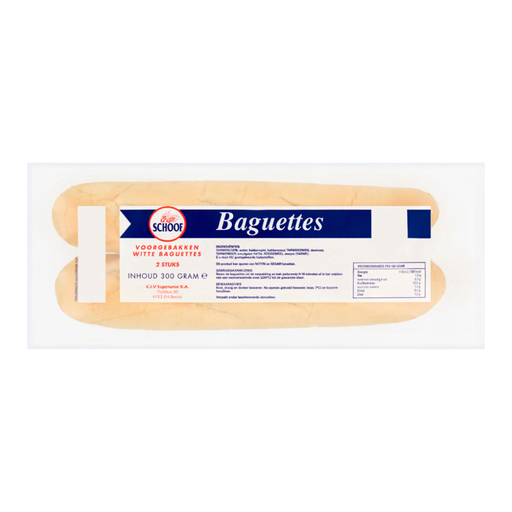 Image unavailable
Two white baguettes could be a good fit for a lunch of filled baguettes.
The pack contains 2 pieces with a total weight of 300 g. Check that the ingredients information shown is for this g'woon variety.
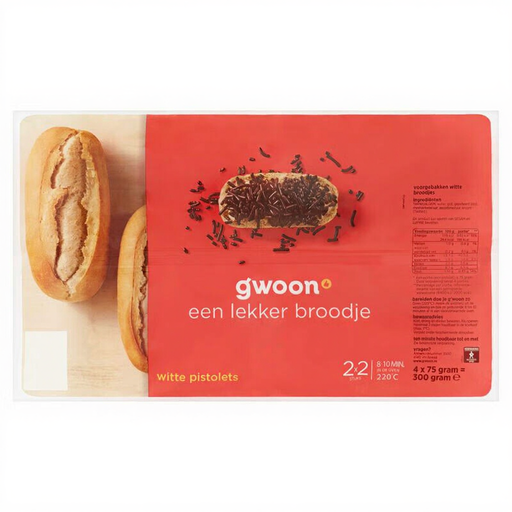 Image unavailable
Four individual rolls are a good fit if you want to split your lunch into smaller portions.
The pack contains 4 pieces with a total weight of 300 g. Check the packaging for ingredients, allergen information and storage instructions.
A half loaf is a better fit if you eat only a few slices and don’t want to freeze any bread. If you’re planning several lunches, a whole loaf could work; Albert Heijn says AH Wit heel can be frozen at home on the day you buy it and should be used within a month.
Compare the nutritional values per 100 g of the breads you’re considering. The Voedingscentrum lists 1,2 g of fibre in a 45 g white roll and 3,3 g in a 35 g slice of wholemeal bread, so those portions don’t weigh the same.
Check the ingredients on the current packaging for baker’s salt or iodised salt. Albert Heijn lists iodised salt for AH Wit heel, but you can’t assume this is the case for every product just because it’s white bread.
Always check the allergen information for the specific loaf. For AH Wit heel, Albert Heijn lists wheat, soya and barley, among other ingredients, and warns that the product may contain milk and sesame. Ingredients and declarations can vary from product to product.