
Families who don’t get through much bread
If you only use a few slices at breakfast, it’s worth considering how much bread you can store or freeze. A smaller pack may be convenient, but you can also freeze a whole loaf in portions.


White bread can be a practical choice if your toddler finds a soft slice easier to eat. However, the Netherlands Nutrition Centre advises replacing white bread with brown or wholemeal bread as often as possible. Choose an amount you’ll use at home, or freeze slices in portions; if allergies are a concern, always check the label on the bread you buy.
If you only use a few slices at breakfast, it’s worth considering how much bread you can store or freeze. A smaller pack may be convenient, but you can also freeze a whole loaf in portions.
If your toddler prefers a soft slice of white bread, the shape of the loaf and the portion size matter. At the same time, the Netherlands Nutrition Centre advises replacing white bread with brown or wholemeal bread as often as possible.
If your child has a relevant allergy, or you’re sending bread to nursery, it’s important to check the information for the exact product. Also check the arrangements at the nursery your child attends.
Start with how much bread you eat at home and the type your toddler will accept. Then check the nutritional information and, where necessary, the allergens listed on the current packaging.
| What to consider | What to check when buying | Who it matters to |
|---|---|---|
| Quantity and food waste | Compare the weight and choose between a whole loaf, half a loaf or individual rolls. Check whether you can freeze any slices you don’t use. | If we only get through a few slices at home, I don’t want the rest to go stale. Around 40% of consumers say reducing waste is their top priority. |
| Bread type and acceptance | Choose a type that suits the amount your toddler eats; don’t assume they’ll like it based on the product name alone. | If my toddler prefers a soft slice, I want to be able to serve a breakfast portion that suits them. For around 30% of consumers, this is the main priority. |
| Label and ingredients | Check the ingredients, allergens and fibre per 100 g on the current packaging. For unwrapped bread, ask about allergen information before buying. | If I’m sending bread to nursery, I need to know which allergens are in the variety I’ve chosen; the ingredients also matter when I’m making my choice. Around 30% of consumers prioritise checking the label. |
Half a loaf may suit a household that doesn’t use much bread, but a whole loaf won’t go stale if you freeze the slices in good time.
Choose a pack size that matches what you eat at home, and freeze a whole loaf in portions if needed.
The Netherlands Nutrition Centre advises replacing white bread with brown or wholemeal bread as often as possible. Even if your toddler enjoys white bread, it’s still worth considering the alternatives.
White bread’s soft texture can be handy at breakfast; see whether your toddler will also eat brown or wholemeal bread.
White bread can contain other allergens too. For example, PLUS lists soya and milk as well as wheat in its Boeren wit heel loaf.
Read the current packaging for the exact variety. If you’re buying unwrapped bread, ask about allergen information first.
Ingredients and other product information can change. PLUS notes in its product information that the packaging takes precedence.
Use the product page as a guide, then check the packaging of the product you actually receive.
AH Wit heel is a whole white wheat loaf.
Jumbo offers several own-brand varieties of white bread, including half and whole loaves.
Lidl offers pre-packed white bread and in-store bread; the white bread pack described contains 800 g.
ALDI lists freshly baked white bread in whole and half loaves.
PLUS Boeren wit heel is an 800 g white wheat loaf, with ingredients and nutritional information available online.
Dirk describes Bakker van der Akker Casino wit heel as a whole white casino loaf.
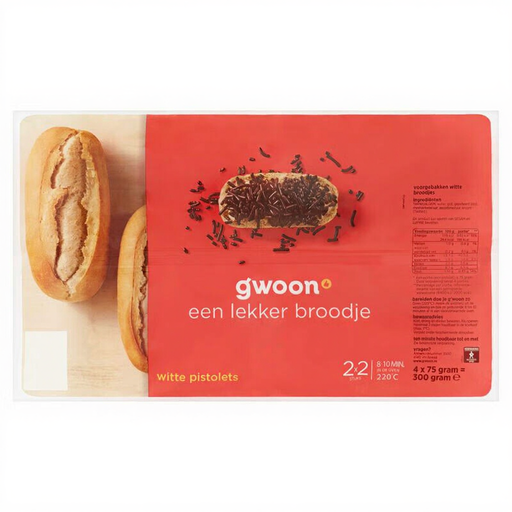
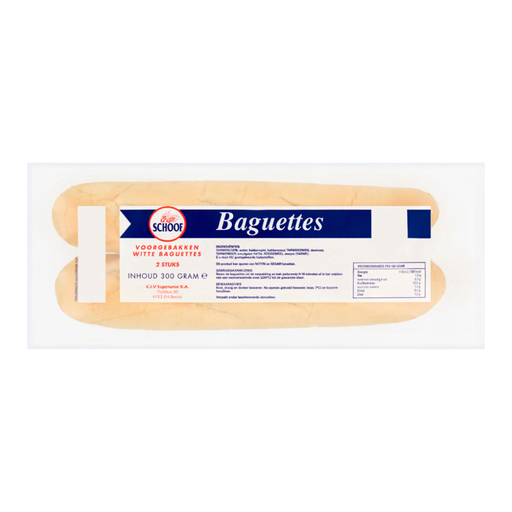
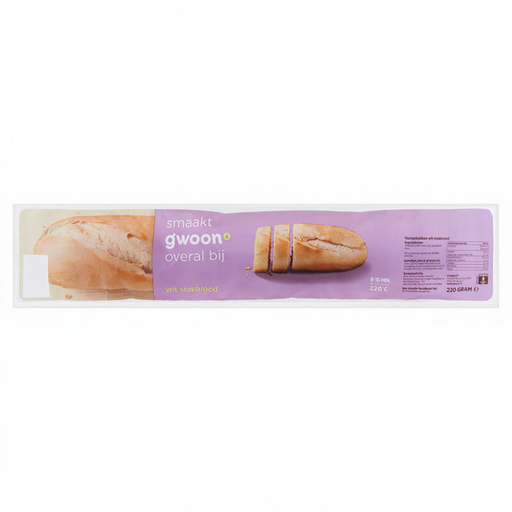
These Joybuy products are white rolls and baguettes in a range of pack sizes. For a toddler’s breakfast, consider the portion, any preparation needed and the current information on the packaging.
 No image available
Individual rolls may suit you if you want to use a small amount for each breakfast.
The pack contains four rolls weighing 300 g in total. Check the current packaging for cereals containing gluten, sesame seeds and any other relevant allergens.
 No image available
This pack of two baguettes may suit you if you want to spread the bread across separate mealtimes.
The two baguettes weigh 300 g in total. Check the current packaging for wheat and any stated risk of traces of sesame.
 No image available
This baguette has a lower stated weight than the packs above, but the product description says it needs to be baked in the oven before serving.
The baguette weighs 220 g. Check the current packaging for cereals containing gluten, lupin, sesame seeds and any other relevant allergens.
White bread can be a practical choice if your toddler enjoys it, but the Netherlands Nutrition Centre advises replacing white bread with brown or wholemeal bread as often as possible. Choose a portion that suits how much your child eats.
Yes. The allergen information for the exact variety may list other ingredients or possible traces. For example, PLUS lists soya and milk in its Boeren wit heel loaf. If your child has a relevant allergy, check the current packaging; for unwrapped bread, ask for allergen information before buying.
Freeze the bread in portions after buying it, then take out what you need. Also check the storage instructions on the packaging of the bread you choose.
No. Check the ingredients for the bread you’ve chosen, or ask the seller. For example, PLUS lists baker’s salt in the ingredients for its Boeren wit heel loaf; that doesn’t tell you anything about another variety.
Check the allergens on the packaging of the bread you’re sending, and ask the nursery what arrangements apply there. Don’t assume a nursery’s policy based on the information on a bread pack.