
If you want to put one loaf on the table
You can slice a whole artisan or rustic white loaf at the table. This works well when guests can choose from a selection of toppings; just decide in advance whether a whole loaf might be too much.


Choose a whole white loaf if you want to slice it at the table and offer a selection of toppings. If you’d rather serve everyone their own warm roll, part-baked rolls are a better fit, as long as you have the time and space to prepare them just before breakfast. Choose an amount to suit the number of people eating, and check the packaging of your chosen bread if you have any dietary or allergen requirements.
You can slice a whole artisan or rustic white loaf at the table. This works well when guests can choose from a selection of toppings; just decide in advance whether a whole loaf might be too much.
Individual part-baked rolls are a good choice for a breakfast with individual portions. Just remember to allow for the preparation time and follow the instructions on the packaging.
Check the latest ingredients and allergen information for the exact variety. If baker’s salt is relevant to your choice, check whether it appears on the ingredients list too.
First, decide whether you want to slice a loaf or serve individual rolls. Then check the quantity, preparation instructions and packaging to make sure they suit your breakfast.
Choose this: if you want to put sliced bread on a shared table, with a selection of toppings.
Bear in mind: a whole loaf may leave you with leftovers if there are only a few people eating.
Choose these: if you want to prepare warm rolls for each person just before breakfast.
Bear in mind: the preparation time and oven space you’ll need.
| What to consider | What to check when buying | Who it matters to |
|---|---|---|
| Serving and slicing | Whether it’s a whole or half loaf, the shape of the bread and availability at your shop. | If you want to serve slices to several people, the shape of the loaf is an important consideration. Around 30% of consumers prioritise bread that can be sliced and shared. |
| Serving warm and portion sizes | The number of rolls, preparation method and timings on the packaging. | If everyone is having their own warm roll, make sure you have time to prepare them in the morning. For around 30% of consumers, this is the top priority. |
| Ingredients and allergens | The latest ingredients and allergen information for the exact variety; check for baker’s salt too if that matters to you. | If you need to know what’s in the bread before serving, checking the label matters more than presentation. This is a priority for around 20% of consumers. |
| Quantity and availability | The pack size and the range at your chosen shop; think about what you’ll do with any leftovers. | If you’re catering for a small group, you won’t want lots of uneaten bread left over or to make a wasted trip to the shop. Around 20% of consumers prioritise this practical consideration. |
According to the Netherlands Nutrition Centre, using baker’s salt when baking is not compulsory. So a bread’s name or origin won’t tell you whether it has been used.
Check the ingredients list or ask the baker if baker’s salt is relevant to your choice.
A name such as artisan loaf doesn’t tell you which grains or other allergens the exact variety contains. Product information can also change.
Check the latest packaging of the bread you’re buying, including the allergen information.
A whole loaf may be more than you’ll use that morning if you’re having a small breakfast.
Consider buying half a loaf or freezing any portions you won’t use straight away.
If you can’t store it, leftover bread may go to waste.
Lidl says its fresh bread range can vary from one branch to another. ALDI links its range of freshly baked bread to shops with a bakery section.
Check the range at your chosen shop before planning breakfast around a particular loaf.
For anyone looking to compare different white bakery loaves at one supermarket, including white artisan loaves.
For anyone considering white rolls from the oven-fresh range.
For anyone choosing between bread from a bakery section and white rolls to bake at home.
For anyone wanting to check the label on a particular white artisan loaf, such as PLUS Beiers Vloerbrood wit heel.
For anyone considering white artisan bread with sunflower seeds as another option for breakfast.
These products include individual white rolls and white baguettes that you can serve in portions. If you want to serve the bread warm, check the packaging: preparation methods vary by product.
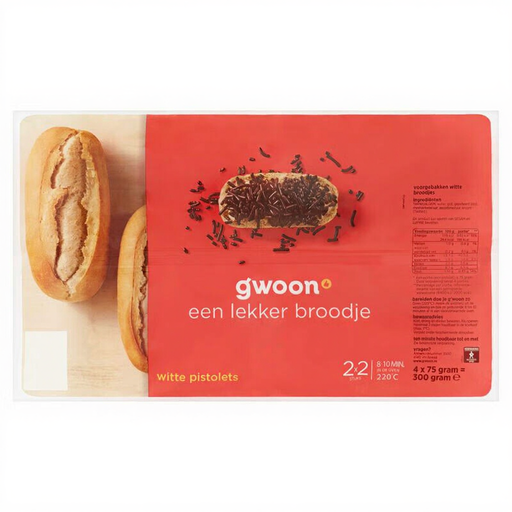 Image unavailable
For a breakfast where you want to serve individual rolls rather than slice a whole loaf.
The pack contains four white rolls with a total weight of 300 g. If you want to serve them warm, check the preparation instructions on the packaging.
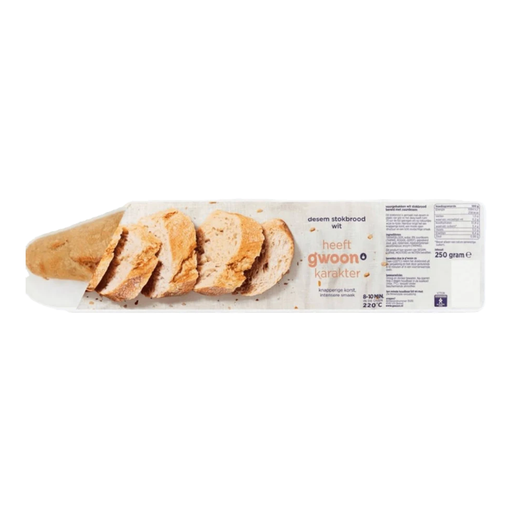 Image unavailable
A baguette for anyone who wants to slice and share one loaf at the breakfast table.
The loaf weighs 250 g. Check the packaging for preparation instructions and the latest ingredients and allergen information.
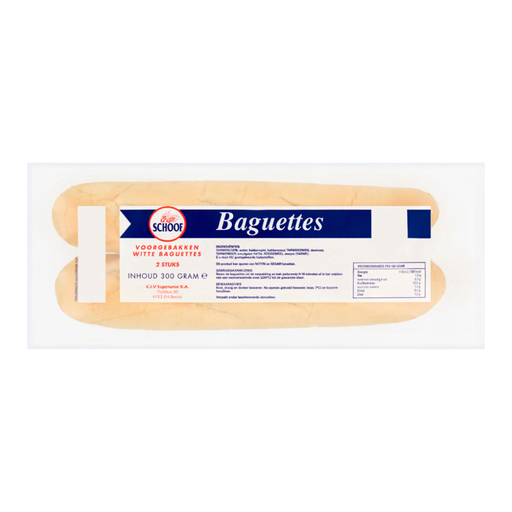 Image unavailable
For anyone wanting to share two white baguettes at the breakfast table or serve them sliced.
The pack contains two baguettes with a total weight of 300 g. Check the packaging before preparing or serving them warm.
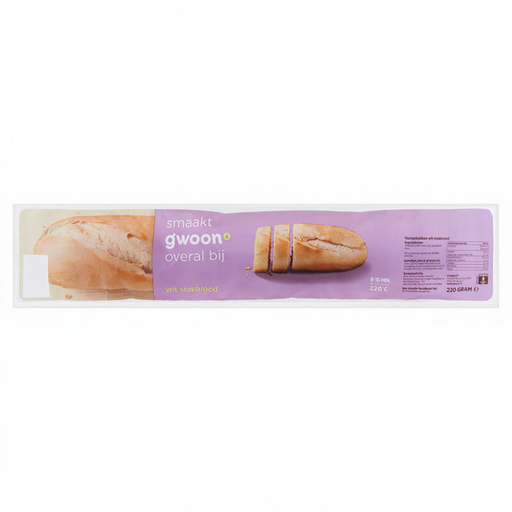 Image unavailable
A white baguette for anyone who’d rather serve one loaf sliced than individual rolls.
The loaf weighs 220 g. Choose an amount to suit the number of people eating, and check the packaging if you want to serve it warm.
No. According to the Netherlands Nutrition Centre, using baker’s salt in bread is not compulsory. To find out whether a particular loaf contains it, check the ingredients list or ask the baker.
Check the latest allergen information on the packaging of the exact variety you’re buying. Don’t rely solely on the product name or an earlier online description: ingredients can vary between loaves, and product information can change.
Freeze any portions you won’t use straight away if you want to eat them later. If you’re expecting only a few people, you could also choose half a loaf instead of a whole one.
For everyday eating, the Netherlands Nutrition Centre recommends replacing white bread with wholemeal or brown bread as often as possible. If you choose white bread for Sunday breakfast, consider the bread’s shape, quantity and ingredients as separate factors.